What Is the Best Credit Card for Rent in July 2026?
Best credit card for rent in July 2026: Bilt Card 2.0 vs 2.95% platform fees — net-value math, no-fee housing paths, and when flat-rate cards lose on rent. Compare payment methods before autopay.
Madeen compares public issuer terms with its card-rule catalog. Issuer pages control rewards, fees, benefits, exclusions, and eligibility; Madeen does not issue cards, make approval decisions, or provide financial advice.
What are the best credit cards for rent payments right now?
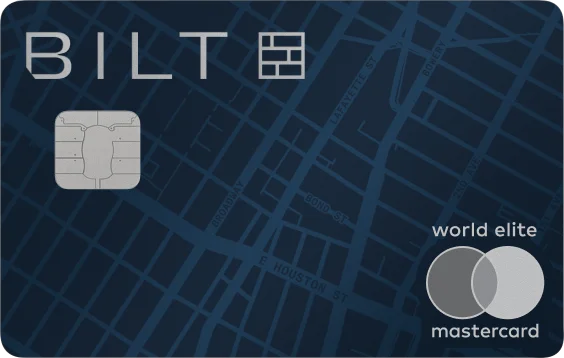
Bilt Blue Card
Best no-annual-fee Bilt option for renters who want housing rewards without a card transaction fee
- Rewards
- No annual fee; Bilt Cardholders can earn rewards on eligible rent or mortgage payments through Bilt with no Bilt transaction fee, using either Housing-only rewards or Flexible Bilt Cash.
- Annual fee
- $0
Pros
- Official Bilt Card 2.0 terms list a $0 annual fee for Bilt Blue.
- Bilt says cardholders are not charged a transaction fee by Bilt on eligible housing payments made through the Bilt app or website.
- Simplest Bilt option if you do not want to justify a premium annual fee.
Cons
- Housing rewards depend on the selected Bilt rewards option and, for Housing-only rewards, everyday-spend ratio.
- Flexible Bilt Cash must be redeemed to unlock housing-payment points.
- Not a universal way to avoid fees outside the Bilt housing-payment flow.
Issuer terms are authoritative. Card links may point to issuer pages or approved partners when available.
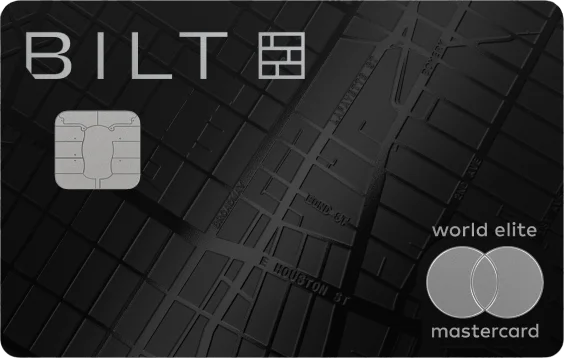
Bilt Obsidian Card
Best Bilt option if dining or grocery rewards can justify the $95 annual fee
- Rewards
- Bilt's offer terms describe a $95 annual fee, housing-payment rewards through Bilt, 3X on a selected dining or grocery category, and 2X on travel.
- Annual fee
- $95
Pros
- Adds an annual dining-or-grocery 3X choice, with Bilt terms noting a grocery cap.
- Includes Bilt housing-payment rewards mechanics without a Bilt transaction fee.
- Can fit renters who also spend heavily in the selected everyday category.
Cons
- The $95 annual fee must be justified by everyday category rewards and benefits, not rent alone.
- Grocery 3X is capped under current Bilt terms.
- The selected category and rewards option add complexity compared with Bilt Blue.
Issuer terms are authoritative. Card links may point to issuer pages or approved partners when available.
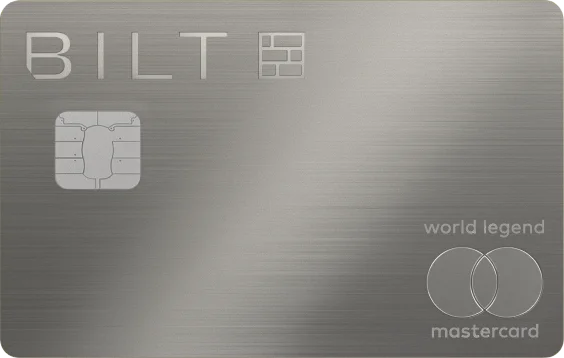
Bilt Palladium Card
Best premium Bilt option only for heavy Bilt users who can use the credits and 2X everyday structure
- Rewards
- Bilt's offer terms describe a $495 annual fee, 2X on everyday spend excluding housing payments, housing-payment rewards through Bilt, and premium Bilt credits and benefits.
- Annual fee
- $495
Pros
- Highest everyday base earning among the current Bilt Card 2.0 lineup.
- Includes premium Bilt Cash and Bilt Travel Hotel credits under current offer terms.
- Can make sense for renters or homeowners deeply using the Bilt ecosystem.
Cons
- High $495 annual fee makes this a poor fit if you only want rent rewards.
- Credits and premium benefits need to be valued conservatively.
- Housing-payment rewards still depend on Bilt's selected rewards option and rules.
Issuer terms are authoritative. Card links may point to issuer pages or approved partners when available.
Rent is one of the largest recurring payments many households make, so earning rewards on it is tempting. The problem is that ordinary credit cards often run into landlord or platform processing fees that can erase the reward.
The short version: use a rent-payment card only when the reward value beats the fee and you can pay safely. If you are choosing among current Bilt Card 2.0 options, Bilt Blue is the cleanest no-annual-fee starting point; Bilt Obsidian and Bilt Palladium need their annual fees and everyday benefits to make sense beyond rent. If you are still building credit, see FICO score ranges and secured vs unsecured cards before you chase rent rewards.
What is the best credit card for rent payments?
Use the card that gives the highest reliable net value after rent-payment fees, rewards-option rules, annual fees, and payoff risk. For most rent payments, the platform fee matters more than the headline reward rate — a 2% card loses money when the processor charges 2.95% or more. For recurring utility bills that are not rent, compare utility bill cards separately.
Madeen’s current in-app fallback catalog shows why rent is not like groceries, dining, gas, or travel. Across 3,944 cards, the runtime catalog does not model a broad rent bonus category. It does include 1,035 cards earning at least 1.5x or 1.5% on base purchases, 267 earning at least 2x or 2%, and 59 cash-back cards at 2% or better on base purchases. That is useful for ordinary purchases, but not enough when a rent platform charges a percentage fee.
The catalog also includes the current Bilt Blue, Bilt Obsidian, and Bilt Palladium card records with image assets, plus the older Wells Fargo-issued Bilt Mastercard record. For new rent-card decisions, use the current Bilt Card 2.0 terms because Bilt’s 2026 program changed how housing rewards work.
What are the best credit cards for rent payments right now?
The best rent card depends on whether you want the no-fee Bilt entry point, an everyday-category card, or a premium Bilt setup:
- Bilt Blue Card: best starting point for most renters because current Bilt terms list a $0 annual fee and no Bilt transaction fee on eligible housing payments made through Bilt.
- Bilt Obsidian Card: best if the $95 annual fee is justified by your selected dining or grocery category and Bilt benefits, not rent alone.
- Bilt Palladium Card: best only for heavy Bilt users who can use the premium credits, benefits, and 2X everyday structure enough to offset the $495 annual fee.
Issuer and program terms are authoritative. Before applying or moving a large rent payment, verify the current annual fee, rewards option, housing-payment eligibility, issuer, APR, exclusions, credits, and whether your rent can be paid through Bilt.
Why do rent-processing fees change the answer?
Rent payments are fee-sensitive because the bill is large and many non-Bilt card payment routes charge a percentage processing fee. A simple 2% card is not automatically profitable if the rent platform charges more than 2%.
For example, a $2,000 rent payment on a 2% card earns about $40 before exclusions. If the platform fee is 2.95%, the fee is about $59. The rewards lose about $19 before considering redemption friction, cash-flow risk, or interest. If the card earns 1.5%, the gap is worse.
That is why the best rent answer starts with the payment route, not the card art. If a platform lets you use a card with no fee and earn rewards under clear terms, the card can be useful. If the platform adds a percentage fee, do the fee-minus-reward math first.
How do Bilt Card 2.0 rent rewards work?
Bilt Card 2.0 changed the rent decision from the old “five transactions per statement period” framing. Current Bilt support and offer terms describe two reward options for Bilt Cards: Housing-only rewards and Flexible Bilt Cash.
Under Housing-only rewards, Bilt says eligible housing payments made through the Bilt app or website can earn points with no Bilt transaction fee. The multiplier depends on everyday spend relative to the housing payment during the billing cycle: at least 25% everyday spend can unlock 0.5X, at least 50% can unlock 0.75X, at least 75% can unlock 1X, and everyday spend equal to or greater than the housing payment can unlock 1.25X. If the minimum threshold is not reached, Bilt’s offer terms describe a 250-point floor for the billing cycle.
Under Flexible Bilt Cash, Bilt says cardholders can earn 4% back in Bilt Cash on everyday spend and redeem Bilt Cash to unlock up to 1X points on eligible housing payments. Current terms describe the unlock rate as every $3 of Bilt Cash redeeming for 100 Bilt Points, up to 1 point per $1 of the housing payment.
The practical takeaway: Bilt can be valuable, but the reward is not a simple flat rent multiplier for everyone. Your selected rewards option and everyday-spend pattern matter.
Which Bilt card should most renters start with?
Most renters should start their comparison with Bilt Blue because it has the least fee drag. Current Bilt terms list a $0 annual fee, and the card still participates in Bilt housing-payment rewards.
That does not mean every renter should apply. Bilt housing payments must be made through the Bilt app or website, you need a valid linked bank account under current terms, and the final reward depends on the rewards option you select. If your property manager does not work smoothly with Bilt, or if you do not want the added rewards-option complexity, using a lower-cost payment method may be cleaner.
Bilt Blue is also easier to evaluate than the premium cards. With no annual fee, the main questions are whether Bilt supports your rent payment, whether you want Bilt Points or Bilt Cash mechanics, and whether the card fits your broader wallet.
When is Bilt Obsidian worth the annual fee?
Bilt Obsidian is worth considering when its everyday categories do real work for you. Bilt’s current materials describe a $95 annual fee, 3X points on a selected dining or grocery category, 2X on travel, and Bilt housing-payment rewards. Bilt’s support page notes that grocery 3X is capped at $25,000 per year.
The rent payment alone should not be the whole reason to pay the annual fee. Compare Obsidian with Bilt Blue by asking:
- Will your dining or grocery spending reliably use the 3X category?
- Will the selected category beat cards you already carry?
- Will Bilt Travel Hotel credits or other benefits be used at close to face value?
- Are you comfortable managing Bilt’s rewards option each billing cycle?
If the answers are weak, Bilt Blue may produce a better net result even with fewer premium features.
When is Bilt Palladium too much card for rent?
Bilt Palladium can be too much card if you only want rent rewards. Current Bilt terms list a $495 annual fee, 2X on everyday spend excluding housing payments, and premium credits such as Bilt Cash and Bilt Travel Hotel credits.
Premium credits can be useful, but they should be valued conservatively. A $400 hotel credit is not the same as $400 cash if it requires booking through a portal, meeting stay rules, or changing normal travel behavior. A $200 Bilt Cash benefit is more straightforward only if you use Bilt Cash before expiration and within the program rules.
Palladium may fit someone deeply using the Bilt ecosystem for housing, travel, neighborhood benefits, and everyday spend. It is usually not the right answer for a renter who only wants a low-maintenance way to earn something on monthly rent.
Should you use a non-Bilt rewards card for rent?
Use a non-Bilt card for rent only when the net math is clearly positive or when a specific goal is worth the fee. A 2% cash-back card can be a great fallback for ordinary purchases, but a rent platform fee can turn it negative.
The clean formula is:
| Rent decision | What to compare | Practical rule |
|---|---|---|
| Bilt-supported rent with no Bilt transaction fee | Bilt rewards value minus annual fee and complexity | Usually compare Bilt Blue first |
| Rent platform charges 2.95% and card earns 2% | 2% rewards minus 2.95% fee | Usually a loss before interest |
| Rent platform charges a flat low fee | Reward value minus flat fee | Can work on larger payments if eligible |
| Chasing a welcome bonus | Bonus value minus platform fee and annual fee | Only consider if you can pay in full |
| Paying rent with a balance | Rewards versus APR cost | Avoid; interest overwhelms rewards — see balance transfer cards only for structured debt payoff, not rent platforms |
Do not treat rent as free spending for rewards. It is a large bill, so a small fee mismatch compounds quickly.
Large recurring bills also depend on merchant category coding when a platform routes your payment. If rewards look wrong after checkout, read how merchant category codes affect credit card rewards and how credit card reward caps work before changing cards mid-cycle.
For everyday categories that are not rent, compare gas and groceries card strategy, drugstore and pharmacy rewards, and summer travel rewards separately — those guides assume standard merchant coding, not housing-payment platforms. For June trip planning, see best credit card for summer vacation. For recurring household bills that are not rent, compare utility bill cards, insurance premium rewards, cell phone bill rewards, internet bill rewards, and Best Buy electronics spend when appliances are part of the household budget. For event spend that stacks on top of rent, see the sports and concert tickets hub.
How can Madeen help choose a rent card?
Madeen helps by keeping the card choice grounded in the wallet you actually carry. You select your cards on your iPhone, choose the relevant purchase category, and Madeen compares local reward rules without bank login, card numbers, or transaction history.
For rent, Madeen is a starting point rather than the final calculator. The app can show your best flat-rate cards and whether a Bilt card is in your wallet, but you still need to layer in rent-payment fees, Bilt rewards-option settings, annual fees, and whether the payment route qualifies under current Bilt terms.
For rent-specific card comparisons, see Bilt vs Chase Sapphire Preferred. For gas and grocery spend that stacks with housing decisions, compare the refreshed which credit card for gas hub (July 2026), are gas credit cards worth it, and which credit card for groceries. For privacy details, read the Madeen Privacy Policy or the product note on why Madeen does not ask for your bank login.
What should you do before paying rent with a card?
Check the rent platform fee first. Then check whether the card earns rewards on that payment, whether the issuer treats it as an eligible purchase or housing payment, and whether you can pay the card bill in full.
If you are comparing Bilt cards, choose the rewards option deliberately. Housing-only rewards and Flexible Bilt Cash can both be useful, but they reward different behavior. If the rules feel too complex for the value at stake, a no-fee bank payment may be the better rent strategy.
Related encyclopedia topics
Frequently asked questions
Which is the best card to pay rent?
For most renters who can pay through Bilt, Bilt Blue is the best starting card because current Bilt terms list a $0 annual fee and no Bilt transaction fee on eligible housing payments. Ordinary 2% cash-back cards usually lose money when a rent platform charges a 2.5%–3% processing fee.
Is it worth using a credit card for rent?
Only when net rewards beat the platform fee and you pay the statement balance in full. Bilt can work on eligible housing payments with no Bilt transaction fee under current terms. Most third-party rent processors charge a percentage fee that erases rewards from ordinary cash-back cards.
Is it worth paying rent with a 2% cash back card?
Usually not if your landlord or payment platform charges a percentage fee above the card's reward value. A 2% card loses money against a 2.95% processing fee before interest, redemption friction, or missed payoff risk.
How do Bilt Card 2.0 rent rewards work?
Bilt Card 2.0 lets cardholders choose Housing-only rewards, which can earn up to 1.25X on eligible housing payments based on everyday-spend ratio, or Flexible Bilt Cash, which earns Bilt Cash on everyday spend that can unlock up to 1X housing points.
Should I choose Bilt Blue, Obsidian, or Palladium for rent?
Start with Bilt Blue if you mainly want no-annual-fee housing rewards. Consider Obsidian only if the dining or grocery category and benefits offset $95, and consider Palladium only if premium Bilt credits, benefits, and 2X everyday earning offset $495.
Can you pay rent with a credit card without fees?
Sometimes through Bilt's housing-payment flow when current Bilt terms list no Bilt transaction fee on eligible payments. Most landlord portals charge a percentage fee that can erase rewards from ordinary cards.
Is it worth paying rent with a credit card for points?
Only when net rewards beat the platform fee and you pay the statement balance in full. A 2% card loses against a 2.95% rent-processing fee before interest. Bilt can work when eligible housing payments earn rewards with no Bilt transaction fee under current terms.
What credit card gives the most rewards on rent?
Among mainstream options, Bilt Cards can earn housing rewards through Bilt's payment flow with no Bilt transaction fee on eligible payments under current terms — but rewards depend on your selected Bilt rewards option and everyday-spend ratio. Ordinary 2% cards usually lose money when a rent platform charges a percentage fee above 2%.
Which credit card is good for rent payment?
A Bilt Card is usually the best fit when your rent can be paid through Bilt with no Bilt transaction fee and the rewards option matches your spending. For other platforms, compare the platform fee to your card's reward rate first — a 2% card loses against a 2.95% processing fee before interest.
Is it worth paying my rent with a credit card?
Only when net rewards beat the platform fee and you pay the statement balance in full. Bilt can work on eligible housing payments with no Bilt transaction fee under current terms. Most third-party rent processors charge 2.5%–3%, which erases rewards from ordinary cash-back cards.
Can Madeen choose a rent card without bank login?
Madeen can compare local reward rules for cards you select without bank login or card numbers, but rent-payment fees, Bilt rewards-option settings, and issuer terms still decide the final value.
What is the best payment method for paying rent?
Bank transfer or check is usually cheapest when your landlord accepts it with no fee. A Bilt Card through Bilt's housing-payment flow can beat card processors when current terms list no Bilt transaction fee and rewards exceed complexity. Third-party card rent platforms often charge 2.5%–3%, which erases rewards from ordinary 2% cash-back cards.
Sources and notes
- Madeen analysis Madeen card catalog Bilt and base-reward analysis - Madeen Accessed 2026-07-10.
- Issuer terms Bilt Card 2.0 Program Overview - Bilt Rewards Support Accessed 2026-05-24.
- Issuer terms Meet Bilt Card 2.0 - Bilt Accessed 2026-05-24.
- Issuer terms Bilt Rewards Card Offer Terms - Bilt Accessed 2026-05-24.
- Issuer terms Bilt Card - Bilt Accessed 2026-05-24.
- Regulator CFPB — Credit card rewards programs - Consumer Financial Protection Bureau Accessed 2026-05-24.