What Is the Best Credit Card for Internet Bills in June 2026?
Best credit cards for home internet bills in July 2026 — 5% utility categories, online-shopping rules, autopay discounts, merchant coding, and when a flat-rate card beats a bonus category.
Madeen compares public issuer terms with its card-rule catalog. Issuer pages control rewards, fees, benefits, exclusions, and eligibility; Madeen does not issue cards, make approval decisions, or provide financial advice.
What are the best credit cards for internet bills right now?
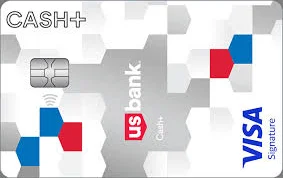
U.S. Bank Cash+® Visa Signature® Card
Best 5% cash back when you choose TV, Internet & Streaming Services each quarter
- Rewards
- 5% cash back on the first $2,000 in combined eligible purchases each quarter on two chosen categories, including TV, Internet & Streaming Services, after quarterly enrollment.
- Annual fee
- $0
Pros
- Highest straightforward internet-bill cash-back rate among the cards reviewed here.
- No annual fee.
- Can pair internet with another 5% category such as Home Utilities or Cell Phone Providers.
Cons
- Requires choosing and enrolling in categories each quarter.
- 5% applies only to the first $2,000 in combined quarterly purchases across both 5% categories.
- ISP coding must match the issuer's internet/streaming category rules.
Issuer terms are authoritative. Card links may point to issuer pages or approved partners when available.
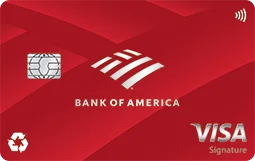
Bank of America® Customized Cash Rewards Credit Card
Best if your ISP bill codes as online shopping or fits the Online Shopping choice category
- Rewards
- 3% cash back in one selected choice category, including Online Shopping with cable, internet, and streaming service examples, on the first $2,500 in combined quarterly choice-category, grocery, and wholesale-club purchases.
- Annual fee
- $0
Pros
- Online Shopping choice category explicitly lists cable, internet, and streaming examples.
- No annual fee.
- Useful when internet, cable, and streaming are billed together online.
Cons
- 3% shares a combined quarterly cap with 2% grocery and wholesale-club purchases.
- You must keep Online Shopping selected for the strategy to work.
- Bank of America relies on merchant-provided transaction data — some ISP payments may not qualify.
Issuer terms are authoritative. Card links may point to issuer pages or approved partners when available.
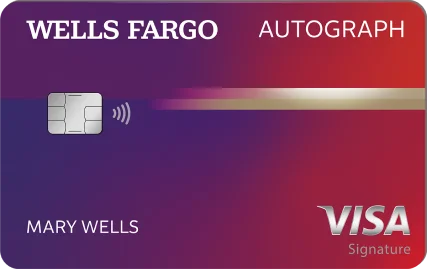
Wells Fargo Autograph® Card
Best simple unlimited 3X when internet is bundled with phone or streaming on one bill
- Rewards
- Unlimited 3X points on phone plans, popular streaming services, restaurants, travel, gas, and transit under current Wells Fargo terms.
- Annual fee
- $0
Pros
- No quarterly category enrollment.
- Strong when your provider bundles phone, internet, and streaming on one qualifying charge.
- Points are flexible for cash redemption or travel.
Cons
- Standalone home-internet-only bills may not earn 3X if they do not code as phone or streaming.
- 3X points may be worth more or less than 3% cash back depending on redemption.
- Merchant category coding still controls eligibility.
Issuer terms are authoritative. Card links may point to issuer pages or approved partners when available.
Home internet is a recurring bill, but ISP payments do not always code the way readers expect. Madeen’s catalog tracks 312 cards with points currencies and 1,842 cards with any category multiplier as of the July 2026 snapshot — yet only a handful reliably earn elevated rewards on internet-specific charges. The right card depends on whether your provider codes as TV/internet/Streaming, online shopping, Utilities, or plain telecommunications.
What is the best credit card for internet bills? {#internet-bills-answer-lead}
The best credit card for internet bills is usually the one in your wallet that earns the highest reliable rate on your specific ISP charge after caps, quarterly enrollment, and autopay discounts. For many readers that is U.S. Bank Cash+ at 5% when TV, Internet & Streaming Services is selected and the bill qualifies. Bank of America Customized Cash at 3% fits online-billed cable/internet/Streaming bundles. Wells Fargo Autograph at 3X is simpler when phone, internet, and Streaming share one qualifying charge.
How do internet bills earn credit card rewards?
Internet bills earn rewards only when the merchant category code (MCC) and issuer rules match a bonus category. A Comcast or Spectrum autopay charge may code as cable, telecommunications, or online services — not always “Utilities.” Cards that mention TV, Internet & Streaming Services, Online Shopping, or Home Utilities are the most relevant starting points.
Check your last statement or issuer reward detail before moving a bill. A card that earns 5% on Streaming apps may still earn 1% on the same provider’s broadband invoice if coding differs.
Comparison table: best cards for internet bills
| Card | Internet / utility earn | Annual fee | Best for |
|---|---|---|---|
| U.S. Bank Cash+ | 5% on chosen TV, Internet & Streaming (quarterly cap) | $0 | Highest rate when enrolled and bill qualifies |
| Bank of America Customized Cash | 3% Online Shopping choice (shared quarterly cap) | $0 | Bundled cable/internet/Streaming paid online |
| Wells Fargo Autograph | 3X on phone plans and popular Streaming (unlimited) | $0 | Simple unlimited earn when bill bundles services |
| Flat 2% Cash Back card | 2% everywhere | Varies | When ISP does not trigger bonus categories |
See category caps and our reward caps guide for how quarterly limits change effective returns on recurring bills. If you also pay electric or gas utilities on the same card, combined caps can fill faster than a single $80 internet line suggests.
When does a 5% category beat a flat-rate card?
Run the math on your actual bill and cap headroom. Example: $80/month internet is $960/year. At 5% that is $48 back on qualifying spend; at 2% it is $19.20. If your ISP adds a $5 card fee each month ($60/year), the 5% card still wins — but a $10/month autopay discount for bank debit ($120/year) beats both.
How do internet bills relate to cell phone and Streaming?
Many households stack internet, mobile, and Streaming on different cards. Our guides for cell phone bills, subscriptions, electric and gas utility bills, which credit card for gas (refreshed July 2026), and streaming services cover adjacent categories. For flat-rate fallbacks, see Wells Fargo Active Cash vs Capital One Quicksilver. U.S. Bank Cash+ lets you pair TV, Internet & Streaming with Cell Phone Providers or Home Utilities in the same quarter — useful when bills split across providers.
Should you use a credit card for internet autopay?
A credit card can make sense when rewards exceed any processing fee and you will not lose a larger autopay discount. Pay the statement in full so interest does not erase Cash Back. If your issuer treats the payment as a cash-advance category (uncommon but possible with some bill-pay portals), skip the card.
How Madeen helps at checkout
Madeen compares owned-card category rules locally on iPhone — no bank login required. Add the cards you use for Utilities and online shopping, pick the closest spend category, and Madeen surfaces the strongest multiplier among cards you already carry before you pay the bill.
Madeen is an educational credit card rewards optimizer. It does not issue cards, run credit checks, or guarantee how a merchant will code your ISP payment.
Related encyclopedia topics
Frequently asked questions
Which credit card should I use for internet bills?
Use the card in your wallet with the highest reliable return on your specific ISP payment after checking quarterly enrollment, category caps, whether the charge codes as internet/streaming or online shopping, and whether an autopay discount matters more than rewards.
Do internet bills count as utilities for credit card rewards?
Sometimes. A few cards treat internet under a utilities or TV/internet/streaming bucket, but many issuers classify ISP payments as cable, internet, online shopping, or telecommunications based on merchant category data — not how you think of the bill at home.
Is 5% cash back on internet better than 2% flat rate?
Five percent is better when the bill qualifies, the quarterly cap has room, and you remember enrollment. A flat 2% card is better when your ISP does not code into a bonus category, you are near a cap, or a debit/autopay discount is larger than the reward gap.
Should I pay internet with a credit card if my ISP charges a fee?
Compare the fee to expected rewards. A $5 card-processing fee on a $70 bill can erase 3%–5% returns quickly. If your provider offers a meaningful autopay discount for bank payments only, that discount may beat card rewards even on a 5% category card.
Can Madeen pick an internet-bill card without bank login?
Yes. Add the cards you carry and choose a utilities or online-shopping category, and Madeen compares local reward rules without bank credentials. Issuer terms and how your ISP codes the charge still decide whether the recommendation matches your real bill.
Which credit card should I use to pay for internet?
Start with the card already in your wallet that earns the highest reliable rate on your ISP charge after quarterly enrollment and caps. U.S. Bank Cash+ at 5% when TV, Internet & Streaming is selected is the top rate among cards reviewed here; Bank of America Customized Cash at 3% fits online-billed bundles; Wells Fargo Autograph at 3X is simpler when phone and streaming share the same charge.
Do fiber and cable internet bills code the same for rewards?
Not always. Fiber, cable, and fixed-wireless providers can code as cable, telecommunications, online services, or utilities depending on how the processor labels the MCC. Check one real statement before moving autopay — the same brand can code differently on web pay versus phone pay.
Which credit card is best for utility bills?
For home internet specifically, U.S. Bank Cash+ at 5% when TV, Internet & Streaming is enrolled usually beats general utility cards. For electric or gas, see the utility-bills guide — Home Utilities on Cash+ is a separate 5% bucket from internet. A flat 2% card is the fallback when coding is uncertain.
Should you pay an internet bill with a credit card?
Pay with a card when rewards plus convenience exceed any processing fee and you will not lose a larger bank-autopay discount. Skip the card if your ISP charges a card surcharge or offers a debit-only discount larger than the reward gap — run the net math on one real bill before moving autopay.
Sources and notes
- Madeen analysis Madeen card catalog and reward-rule analysis - Madeen Accessed 2026-06-07.
- Issuer terms U.S. Bank Cash+ Visa Signature Card - U.S. Bank Accessed 2026-06-07.
- Issuer terms Bank of America Customized Cash Rewards - Bank of America Accessed 2026-06-07.
- Issuer terms Wells Fargo Autograph Card - Wells Fargo Accessed 2026-06-07.
- Methodology What is the best credit card for cell phone bills? - Madeen Accessed 2026-06-07.
- Methodology Which credit card for streaming services? - Madeen Accessed 2026-06-07.