What Is the Best Credit Card for Cell Phone Bills in June 2026?
Best credit card for cell phone bills in July 2026: U.S. Bank Cash+ 5%, Wells Fargo Autograph 3X plus protection, quarterly caps, and when autopay discounts beat rewards.
Madeen compares public issuer terms with its card-rule catalog. Issuer pages control rewards, fees, benefits, exclusions, and eligibility; Madeen does not issue cards, make approval decisions, or provide financial advice.
What are the best credit cards for cell phone bills right now?
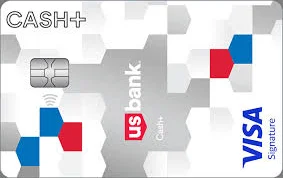
U.S. Bank Cash+ Visa Signature Card
Best 5% cash back if you choose Cell Phone Providers each quarter
- Rewards
- 5% cash back on the first $2,000 in combined eligible purchases each quarter on two chosen categories, including Cell Phone Providers, after quarterly enrollment.
- Annual fee
- $0
Pros
- Highest straightforward phone-bill cash-back rate among the cards reviewed here.
- No annual fee.
- Can pair Cell Phone Providers with another 5% category such as TV, Internet & Streaming Services or Home Utilities.
Cons
- Requires choosing and enrolling in categories each quarter.
- The 5% rate is capped at the first $2,000 in combined quarterly purchases across the two 5% categories.
- Purchases over the cap and non-qualifying bills earn the base rate.
Issuer terms are authoritative. Card links may point to issuer pages or approved partners when available.
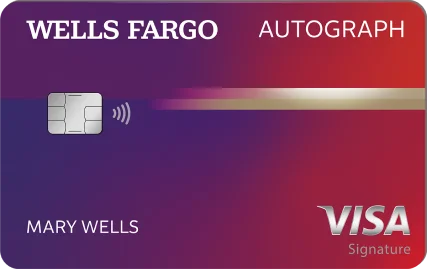
Wells Fargo Autograph Card
Best no-annual-fee phone-plan card without quarterly category selection
- Rewards
- Unlimited 3X points on phone plans from cell phone and landline providers, plus restaurants, travel, gas, transit, and popular streaming services under current issuer terms.
- Annual fee
- $0
Pros
- No quarterly activation or selected-category maintenance.
- Phone-plan category covers cell phone and landline providers under current Wells Fargo terms.
- Includes cell phone protection when the monthly bill is paid with an eligible Wells Fargo consumer credit card.
Cons
- 3X points may be worth more or less than 3% cash back depending on redemption.
- Merchant category coding still controls whether the bill qualifies.
- Cell phone protection has deductibles, claim limits, and exclusions.
Issuer terms are authoritative. Card links may point to issuer pages or approved partners when available.
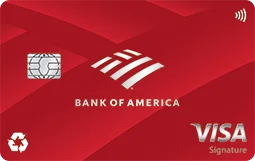
Bank of America Customized Cash Rewards Credit Card
Best if phone bills fit your Online Shopping choice category
- Rewards
- 3% cash back in one selected choice category, including Online Shopping with cable, internet, and streaming service examples, on the first $2,500 in combined quarterly choice-category, grocery, and wholesale-club purchases.
- Annual fee
- $0
Pros
- Online Shopping can be selected as the 3% choice category.
- Useful if your phone, cable, internet, or streaming bills are paid online and qualify.
- No annual fee.
Cons
- The 3% choice category shares a combined quarterly cap with 2% grocery and wholesale-club purchases.
- You must keep Online Shopping selected for the phone-bill strategy to work.
- Bank of America excludes some online payments and relies on merchant-provided transaction details.
Issuer terms are authoritative. Card links may point to issuer pages or approved partners when available.
Cell phone bills are recurring expenses, but the right credit card is not always the one with the biggest number in an ad. A phone bill can be a wireless-provider purchase, a landline or telecom purchase, an online payment, part of a cable bundle, or a third-party payment that does not fit the bonus category.
The short version: use a dedicated phone-bill card when the bill qualifies and the cap still has room. If your best phone-bill card requires quarterly enrollment, make sure the category is selected. If the bill does not clearly qualify, use your strongest flat-rate card instead of chasing a bonus that may post at 1%.
Which credit card should you use for cell phone bills?
Use the card in your wallet with the highest reliable phone-bill return after checking the issuer category, cap, enrollment requirement, and cell phone protection. A 5% category card can win when you enroll correctly and stay under the cap. A no-annual-fee 3X card can be better if you want simpler rewards, phone-plan coverage, and protection benefits in one place.
Madeen’s current in-app fallback catalog shows why this is a wallet-specific question. Across 3,944 cards, 30 cards have reward-rule language that mentions phone, cell, wireless, telecom, cable, or internet terms. By comparison, 1,035 cards earn at least 1.5x or 1.5% on base purchases, and 328 cards earn at least 2x or 2% on base purchases.
That gap matters because many wallets will not include a phone-plan bonus card. If yours does, it may be worth assigning the monthly bill to that card. If it does not, a reliable flat-rate card can be the better answer than a narrow category that does not actually apply.
For the source hierarchy behind this analysis, see the Madeen editorial methodology and Madeen Card Rules Index. The catalog supports cross-card comparison; issuer terms control the actual reward rate, protection benefit, cap, enrollment rule, and merchant eligibility.
What are the best credit cards for cell phone bills right now?
The best cell phone bill card depends on whether you want maximum Cash Back, simple no-enrollment rewards, or an online-shopping category that also handles related bills:
- U.S. Bank Cash+ Visa Signature Card: best if you choose Cell Phone Providers as one of your two 5% categories each quarter and stay within the shared quarterly cap.
- Wells Fargo Autograph Card: best if you want no-annual-fee 3X points on phone plans without quarterly category selection, plus cell phone protection when you pay the monthly bill with the eligible card.
- Bank of America Customized Cash Rewards Credit Card: best if your phone, cable, internet, or streaming payments fit the Online Shopping choice category and you can manage the combined quarterly cap.
Issuer terms are authoritative. Before applying for a new card or moving autopay, verify the current rewards, annual fees, category enrollment rules, caps, phone protection requirements, and exclusions on the issuer’s page.
Is 5% Cash Back better than 3X points for phone bills?
Five percent Cash Back is usually better than 3X points while the purchase qualifies and the cap has room. The tradeoff is maintenance: many 5% phone-bill cards require you to choose or activate a category and watch a quarterly cap.
U.S. Bank Cash+ is the clean 5% example. U.S. Bank says Cash+ earns 5% Cash Back on the first $2,000 in combined eligible purchases each quarter on two categories you choose, and its category list includes Cell Phone Providers. If you do not enroll each quarter, eligible purchases earn no more than the base rate. Purchases over the combined 5% cap also fall back to 1%.
Wells Fargo Autograph is the simpler 3X example. Wells Fargo says the card earns unlimited 3X points on phone plans from cell phone and landline providers considered telecommunication services, plus 1X on other purchases. If you value the points near one cent each, 3X is roughly a 3% return. If you redeem for less, the effective value is lower.
Do phone bills count as online shopping rewards?
Sometimes, but not automatically. An online payment screen does not guarantee that a phone bill will qualify for an online-shopping bonus.
Bank of America says its Online Shopping choice category includes purchases made online via a website or digital app, and its examples include Comcast, Netflix, Amazon, Etsy, Nordstrom, Ticketmaster, and Walmart. The same Bank of America category guidance also says purchases made by phone, mail, or in person are excluded, and that certain merchant classes, including utilities, insurance, government services, schools, medical providers, and other non-retail services, are excluded.
For phone bills, the practical question is how the issuer and merchant classify the payment. A direct online wireless-provider bill may qualify under one card’s rules and not another’s. A bill bundled with cable, internet, streaming, equipment financing, taxes, fees, or third-party payment processing can be less predictable.
Should cell phone protection change which card you use?
Cell phone protection can change the answer when the protection is real value to you, but it should not be treated as free insurance without reading the limits.
Wells Fargo lists Cellular Telephone Protection as an Autograph Card benefit when the monthly cell phone bill is paid with an eligible Wells Fargo Consumer Credit Card. Its disclosure describes coverage against damage or theft, subject to a deductible, claim limits, and exclusions. It also says coverage begins after the first qualifying billing payment and remains in effect when you continue charging the total monthly bill to the eligible card.
That can make a 3X card more attractive than a 5% card for some households. For example, if the reward difference on your monthly phone bill is only a few dollars per year, protection against a damaged or stolen phone may matter more than the extra Cash Back. If you already have carrier insurance or do not value the protection, the reward rate may matter more.
Is it smart to pay a phone bill with a credit card?
Paying a phone bill with a credit card can be smart when the rewards, cell phone protection, and convenience are worth more than any added cost. It is not smart if the provider adds a fee, removes an autopay discount, or routes the payment in a way that makes the card earn only its base rate.
Use a simple net check:
Expected rewards and protection value
- lost autopay discount or credit-card fee
- extra maintenance from caps or enrollment
= net phone-bill card value
If the answer is close, simplicity can win. A small monthly bill does not need a complicated setup unless the card also gives protection or fits other recurring bills in your wallet.
When should you use a flat-rate card for a phone bill?
Use a flat-rate card when the phone-bill bonus is unavailable, uncertain, capped out, or not worth the maintenance.
Common flat-rate situations include:
- The category is not selected. A quarterly 5% card may earn only 1% if you forget to enroll.
- The cap is used up. After a shared 5% cap, a 2% flat-rate card can beat the category card.
- The bill is bundled. Wireless, internet, cable, streaming, device financing, taxes, and fees may not all be treated the way you expect.
- The payment route is unusual. Third-party bill pay, digital wallets, or in-store payments can change how a transaction posts.
- The reward gap is small. Moving a small monthly bill for one extra percent may not be worth complexity unless the card also adds protection or other useful categories.
For the fallback framework, read Madeen’s guide to which credit card to use for everyday purchases.
If your phone-bill card depends on quarterly enrollment, a shared cap, or an online-shopping choice category, read how credit card reward caps and limits work before moving every bill.
How should you choose a card for wireless, landline, cable, and internet bills?
Separate the bill by merchant and payment method before choosing the card. A direct wireless bill, a landline bill, a cable-and-internet bundle, and an online streaming service may all fit different issuer definitions.
Use this order:
- Check for a direct phone-provider category. If you have U.S. Bank Cash+ selected for Cell Phone Providers or Wells Fargo Autograph for phone plans, compare those first.
- Check whether the bill is online shopping. If you use Bank of America Customized Cash Rewards, Online Shopping may help with eligible online cable, internet, phone, or streaming payments, but exclusions matter. For streaming-only bills, see which credit card for streaming.
- Check the cap. If the 5% or 3% card is capped or shares a cap with other categories, make sure the monthly bill still fits.
- Check protection. If a card includes cell phone protection, compare that benefit with any higher-reward alternative — and see how purchase protection works for big device purchases.
- Use the fallback. If the bill is unclear, use your best base-rate card and review how the first payment posts.
This keeps the decision practical. The best card for a direct Verizon or T-Mobile bill may not be the best card for an internet bundle, a device installment, or a payment routed through another service. For broadband-only bills, see which credit card for internet bills (refreshed July 2026 with fiber-vs-cable coding FAQs) and utility bill rewards. For commute spend that shares the same wallet, compare the refreshed gas credit card hub and are gas credit cards worth it before you over-allocate a quarterly 5% slot to phone alone. For shared quarterly caps across phone and internet, cross-check how credit card reward caps work. Households stacking phone, cable, and streaming on one autopay run should also read which credit card for streaming before assuming every line item earns the same bonus. If you are carrying a balance on a phone-financing charge, compare balance transfer options separately from everyday bill-pay rewards.
How can Madeen help choose a cell phone bill card?
Madeen helps because the phone-bill answer depends on the cards you already carry. You select your cards in the app, choose a category, and Madeen compares local reward rules without bank login, card numbers, or transaction history.
The catalog data also shows why this category should not be reduced to one universal “best card.” Phone-plan-specific reward language is relatively uncommon, while hundreds of cards have strong base rewards. Madeen can help identify a clear telecom winner when your wallet has one and point you back to the best fallback when it does not.
For privacy details, read the Madeen Privacy Policy or the product note on why Madeen does not ask for your bank login. If you are closing an old bill-pay card before switching autopay, see does closing a credit card hurt your score.
What should you do next?
Look at how your monthly phone bill is paid: direct wireless provider, landline provider, cable or internet bundle, online account portal, third-party bill pay, or in-store payment. Then match that payment route to the best card you already carry.
If you choose a quarterly category card, add a reminder to re-enroll before the next quarter. If you choose a card for cell phone protection, read the benefit guide and keep the full monthly bill on that card. If the first bill does not earn the expected bonus, switch to your flat-rate fallback and avoid over-optimizing a merchant that does not code the way the card requires.
Related encyclopedia topics
Frequently asked questions
Which credit card is best for paying a cell phone bill?
U.S. Bank Cash+ is best when you enroll Cell Phone Providers as a 5% category and stay under the quarterly cap. Wells Fargo Autograph is best for simple 3X phone-plan rewards plus cell phone protection. Bank of America Customized Cash Rewards can work when your bill codes as Online Shopping.
Which credit card should I use for cell phone bills?
Use the card in your wallet with the highest reliable phone-plan return after checking quarterly enrollment, caps, whether the bill qualifies as a phone provider or online-shopping purchase, and whether cell phone protection matters to you.
Is 5% cash back on cell phone bills better than 3X points?
Five percent is usually better while the bill qualifies and the 5% category cap has room. A 3X card can be simpler if you do not want quarterly enrollment or if it also includes phone protection you value.
Do cell phone bills count as online shopping rewards?
Sometimes, but only under the issuer's category rules and transaction data. A bill paid online may qualify for a card's online-shopping category, while phone, mail, in-person, utility, or third-party payments may not.
Should cell phone protection change which card I use?
It can if the protection is useful and you understand the deductible, claim limits, exclusions, and requirement to pay the monthly bill with the eligible card.
Is it smart to pay a phone bill with a credit card?
It can be smart when rewards, cell phone protection, and payment convenience are worth more than any card fee or lost provider discount. If a provider removes an autopay discount or adds a fee for credit-card payments, compare that cost before moving the bill.
Can Madeen choose a cell phone bill card without bank login?
Madeen can compare the catalog reward rules for cards you select locally, without bank login or card numbers, but issuer terms and merchant coding still decide whether a specific bill qualifies.
What card should I put my phone bill on?
Put the bill on U.S. Bank Cash+ when Cell Phone Providers is one of your enrolled 5% categories and the shared quarterly cap has room. Use Wells Fargo Autograph for simple 3X phone-plan rewards plus cell phone protection. If neither qualifies, use your best flat-rate card instead of chasing a bonus that will not post.
Which credit card has the best cell phone coverage?
Chase Freedom Flex and several Delta and Wells Fargo cards include cell phone protection when you pay the monthly wireless bill with the eligible card — verify deductibles and claim limits in the benefit guide. Protection can outweigh a small reward-rate gap; compare that value against U.S. Bank Cash+ 5% or Wells Fargo Autograph 3X before choosing.
Can I use a credit card to pay my cell phone bill?
Most major carriers accept credit cards for autopay and one-time payments, but some remove an autopay discount or add a processing fee for card payments. Before switching, compare the fee or lost discount against expected rewards and any cell phone protection on the card you plan to use.
What credit card should I pay my phone bill with?
Pay with U.S. Bank Cash+ when Cell Phone Providers is an enrolled 5% category and the shared quarterly cap has room. Use Wells Fargo Autograph for simple 3X phone-plan rewards plus cell phone protection. If neither qualifies, use your best flat-rate card instead of chasing a bonus that will not post.
Sources and notes
- Madeen analysis Madeen card catalog phone, telecom, and base-reward analysis - Madeen Accessed 2026-05-21.
- Methodology Madeen editorial methodology - Madeen Accessed 2026-05-21.
- Issuer terms U.S. Bank Cash+ Visa Signature Card - U.S. Bank Accessed 2026-05-21.
- Issuer terms U.S. Bank Cash+ Categories - U.S. Bank Accessed 2026-05-21.
- Issuer terms Wells Fargo Autograph Card - Wells Fargo Accessed 2026-05-21.
- Issuer terms Wells Fargo Autograph Visa Card Account Agreement and benefits disclosures - Wells Fargo Accessed 2026-05-21.
- Issuer terms Bank of America Customized Cash Rewards categories and exclusions - Bank of America Accessed 2026-05-21.