Which Credit Card Should You Use at Salons, Barber Shops, and Cosmetic Stores in May 2026?
Choose a credit card for salons, barber shops, and cosmetic stores by comparing self-select category rewards, merchant coding, point value, and flat-rate fallbacks.
Madeen compares public issuer terms with its card-rule catalog. Issuer pages control rewards, fees, benefits, exclusions, and eligibility; Madeen does not issue cards, make approval decisions, or provide financial advice.
What are the best credit cards for salons and beauty spending right now?
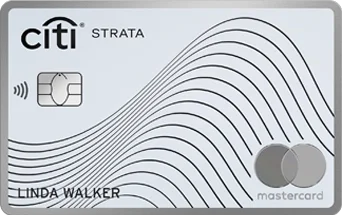
Citi Strata Card
Best no-annual-fee card when Cosmetic Stores, Barber Shops, and Hair Salons is your selected category
- Rewards
- Current Citi materials list 3X ThankYou Points on one eligible self-select category, including Cosmetic Stores, Barber Shops, and Hair Salons, plus no annual fee.
- Annual fee
- $0
Pros
- Rare explicit category for cosmetic stores, barber shops, and hair salons.
- No annual fee and useful 3X categories beyond the self-select option.
- Category can be changed once per calendar quarter under current Citi materials.
Cons
- Only one self-select category earns 3X at a time.
- ThankYou Point value depends on redemption choice.
- Merchant coding matters; not every spa, medical aesthetic service, or product purchase will necessarily qualify.
Issuer terms are authoritative. Card links may point to issuer pages or approved partners when available.
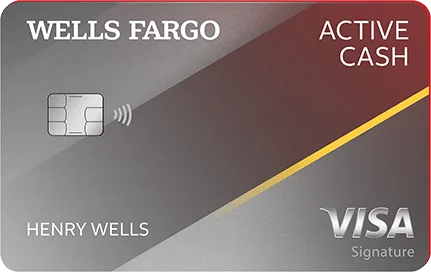
Wells Fargo Active Cash Card
Best simple cash-back fallback for salons or cosmetic purchases that do not qualify for a narrow category
- Rewards
- Wells Fargo lists unlimited 2% cash rewards on purchases with no categories to track and a $0 annual fee.
- Annual fee
- $0
Pros
- Reliable 2% cash rewards benchmark for personal-care spending.
- No self-select category, merchant list, or quarterly maintenance.
- Useful when salon, spa, or product merchant coding is unclear.
Cons
- Lower ceiling than a qualifying 3X self-select category.
- Does not add a beauty-specific category.
- Some nonpurchase transactions and fees do not earn rewards under Wells Fargo terms.
Issuer terms are authoritative. Card links may point to issuer pages or approved partners when available.
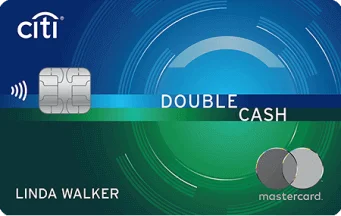
Citi Double Cash Card
Best Citi flat-rate fallback when you want cash back instead of tracking a beauty category
- Rewards
- Current Citi materials describe unlimited 2% cash back on purchases: 1% when you buy and 1% as you pay, with no annual fee.
- Annual fee
- $0
Pros
- Simple flat-rate cash-back alternative to points.
- No need to use your Citi Strata self-select slot on beauty spending.
- Good benchmark for one-off salon, barber, or cosmetic purchases.
Cons
- The full 2% structure depends on buying and paying under Citi's terms.
- A qualifying 3X category may be worth more if you redeem ThankYou Points well.
- No salon-specific reward language.
Issuer terms are authoritative. Card links may point to issuer pages or approved partners when available.
Salon, barber shop, and cosmetic-store purchases are easy to forget in a rewards setup. A haircut, color appointment, skin-care purchase, or quarterly product restock may not feel like a classic credit card category, so many people default to whatever card is already on file.
The short version: use an explicit salon or cosmetic-store category if your card has one, the merchant qualifies, and you have selected the right category. If not, use your best flat-rate card. A narrow 3X category can beat 2% cash back, but only when the category actually applies.
Which credit card should you use at salons, barber shops, and cosmetic stores?
Use the card with the highest reliable return for the specific merchant. Start by checking whether your card has explicit beauty, cosmetic-store, barber shop, or hair salon language. If it does not, treat the purchase as an everyday fallback transaction.
Madeen’s current in-app fallback catalog shows how narrow this category is. Across 3,944 card records, only one active personal card record has explicit Cosmetic Stores, Barber Shops, and Hair Salons reward-rule language. By contrast, 1,035 cards in the full catalog earn at least 1.5x or 1.5% on base purchases, and 328 earn at least 2x or 2% on base purchases.
That pattern matters because beauty spending is real but often under-modeled. If you have the narrow category, use it intentionally. If not, do not force a grocery, drugstore, online-shopping, or travel card onto a salon purchase just because it feels adjacent.
What are the best credit cards for salons and beauty spending right now?
The best salon and beauty card depends on whether you want a true self-select category, simple cash back, or a Citi flat-rate fallback:
- Citi Strata Card: best when Cosmetic Stores, Barber Shops, and Hair Salons is your selected 3X category.
- Wells Fargo Active Cash Card: best simple cash-back fallback for salons, spas, or product purchases with uncertain merchant coding.
- Citi Double Cash Card: best Citi flat-rate cash-back fallback when you do not want to use the Strata self-select slot on beauty spending.
Issuer terms are authoritative. Before applying for a card or changing a selected category, verify the current annual fee, reward rate, self-select category rules, redemption options, merchant exclusions, and whether the merchant’s category code matches the issuer’s terms.
When is Citi Strata best for salons and beauty purchases?
Citi Strata is best when your salon, barber shop, or cosmetic-store spending is meaningful enough to use the card’s self-select category slot. Current Citi materials list Cosmetic Stores, Barber Shops, and Hair Salons as one eligible self-select category for 3X ThankYou Points.
That category is unusually specific. It can fit readers who repeatedly pay for haircuts, color, barber services, or cosmetic-store purchases and want something more targeted than a flat-rate card. Citi’s current materials also describe the category as changeable once per calendar quarter, which matters if your spending shifts seasonally.
The tradeoff is choice. Citi Strata has one self-select category at a time, and other options include Fitness Clubs, Select Streaming Services, Live Entertainment, and Pet Supply Stores. If pet supplies, gym dues, or live events are a larger part of your budget, using the slot for salons may not be the best move.
Is 3X points better than 2% cash back for personal-care spending?
Three points per dollar can beat 2% cash back when the purchase qualifies and you redeem the points at a solid value. In Madeen’s catalog, Citi Strata is modeled with Citi ThankYou Points and a conservative estimated cash value assumption, which makes a qualifying 3X rule stronger than a plain 2% fallback in many simple comparisons.
But 3X is not the same as 3% cash back. Point value depends on redemption choices, program rules, and how you use the points. If you redeem poorly, forget to select the right category, or pay a merchant that does not code as a cosmetic store, barber shop, or hair salon, the expected advantage can disappear.
That is why a 2% flat-rate card remains the benchmark. Wells Fargo Active Cash and Citi Double Cash are not beauty-category cards, but they are easy fallback examples because the reward does not depend on the salon’s category code beyond being an eligible purchase.
Do spas, med spas, nail salons, and cosmetic procedures count?
Sometimes, but do not assume they all count the same way. Issuer category names are not the same as how a business describes itself in marketing.
A hair salon or barber shop may code cleanly under the expected personal-care merchant category. A spa, nail salon, med spa, dermatologist, cosmetic procedure provider, wellness clinic, or massage studio may code differently. A product purchase inside a salon may also post differently from an online cosmetic-store purchase.
If the category bonus matters, test one normal transaction before moving every appointment to that card. Once it posts, check the reward details in your issuer account. Merchant coding, not the sign on the door, is what usually decides the reward.
When should you use a flat-rate card instead?
Use a flat-rate card when the beauty category is unavailable, uncertain, or not worth maintaining. This is common for people who visit salons occasionally or split personal-care spending across many merchant types.
A flat-rate card is usually cleaner when:
- You do not have a beauty-specific category. Most cards in the catalog do not explicitly reward salons or cosmetic stores.
- You need your self-select slot elsewhere. Pet supplies, streaming, live entertainment, or fitness may be larger categories for your household.
- The merchant coding is unclear. Spas, med spas, and mixed-service merchants may not qualify.
- You want cash certainty. Two percent cash back can be easier to value than points.
- The purchase is one-off. A single product restock may not justify changing a quarterly category.
For general fallback strategy, read Madeen’s guide to which credit card to use for everyday purchases.
Should cosmetic-store purchases use a drugstore or online-shopping card?
Use a drugstore or online-shopping card only when the merchant and channel clearly qualify under that card’s terms. “Cosmetic purchase” is not automatically the same thing as “drugstore” or “online shopping.”
For example, a cosmetic purchase at a drugstore may follow the drugstore merchant category, while a purchase from a standalone cosmetics retailer may not. An online order can still depend on the issuer’s online-shopping definition and merchant exclusions. A salon product purchased after an appointment may simply follow the salon’s merchant code.
The practical order is simple: first check for explicit salon or cosmetic-store language, then check whether the purchase fits a broader online or drugstore category, then fall back to a flat-rate card.
How can Madeen help choose a salon or beauty card?
Madeen helps by keeping the reward comparison tied to the cards you already carry. You select your cards on your iPhone, choose the relevant purchase category where available, and Madeen compares local reward rules without bank login, card numbers, or transaction history.
For salons and beauty spending, use Madeen as the wallet check, then confirm the issuer-specific details. The app can help surface a category card or flat-rate fallback, but you still need to know whether your self-select category is active, whether the merchant qualifies, and whether your points are worth more than a cash-back alternative.
For privacy details, read the Madeen Privacy Policy or the product note on why Madeen does not ask for your bank login. For adjacent self-select category decisions, compare which credit card to use for gym memberships, which credit card to use for concerts and live entertainment, and which credit card to use for pet supplies.
What should you check before paying for a salon or cosmetic purchase?
Check the merchant and category before assuming a beauty reward applies. The best card should be easy to defend after the transaction posts.
Before you pay, review:
- Category language. Look for explicit Cosmetic Stores, Barber Shops, Hair Salons, or similar terms.
- Selected category. If the card uses a self-select category, confirm the current quarter’s selection.
- Merchant type. A salon, med spa, dermatologist, cosmetic retailer, and drugstore can code differently.
- Reward currency. Compare points with cash back using a conservative redemption value.
- Fallback rate. Know your best 2% or everyday card if the category is uncertain.
- Receipt pattern. If you tip separately or buy products separately, transactions may post differently.
- Issuer terms. Use issuer pages as the source of truth for categories, exclusions, annual fees, and redemption rules.
Related encyclopedia topics
Frequently asked questions
Which credit card should I use at salons and barber shops?
Use a card with explicit salon, barber shop, or cosmetic-store category rewards if the merchant qualifies and you have selected that category. Otherwise, use a strong flat-rate card, because many personal-care merchants earn only base rewards.
What is the best credit card for beauty purchases?
For an explicit beauty-related category, Citi Strata is the clearest current example because Citi lists Cosmetic Stores, Barber Shops, and Hair Salons as an eligible 3X self-select category. For simpler cash back, a 2% flat-rate card is the fallback benchmark.
Do cosmetic stores count the same as hair salons for credit card rewards?
Only when the issuer's category terms group them together and the merchant code matches. Citi's current self-select category language groups Cosmetic Stores, Barber Shops, and Hair Salons, but other cards may treat cosmetic stores, salons, spas, drugstores, and medical services differently.
Is 3X points better than 2% cash back for salon spending?
Three points per dollar can be better than 2% cash back if the purchase qualifies and you redeem points at a strong value. If the merchant does not qualify, or you prefer certain cash value, a 2% flat-rate card may be cleaner.
Can Madeen choose a salon card without bank login?
Madeen can compare local reward rules for cards you select without bank login or card numbers, but issuer category terms, self-select settings, merchant coding, and point redemption value still decide the final best card.
Sources and notes
- Madeen analysis Madeen card catalog salon, beauty, and base-reward analysis - Madeen Accessed 2026-05-31.
- Issuer terms Citi Strata Card - Citi Accessed 2026-05-31.
- Issuer terms Citi Strata Card Eligible Self-Select Category Benefit - Citi Accessed 2026-05-31.
- Issuer terms Wells Fargo Active Cash Credit Card - Wells Fargo Accessed 2026-05-31.
- Issuer terms Citi Double Cash Credit Card - Citi Accessed 2026-05-31.