What Are the Best Credit Cards for Groceries in August 2026?
Updated August 2026 picks for this category — compare reward rates, caps, annual fees, and issuer terms before you apply.
Madeen compares public issuer terms with its card-rule catalog. Issuer pages control rewards, fees, benefits, exclusions, and eligibility; Madeen does not issue cards, make approval decisions, or provide financial advice.
What are the top picks for August 2026?
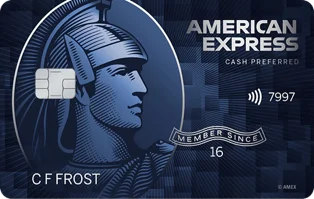
Blue Cash Preferred Card from American Express
Best for high eligible U.S. supermarket spending
- Rewards
- 6% cash back at U.S. supermarkets on up to $6,000 per calendar year in purchases, then 1%.
- Annual fee
- $95
Pros
- Strong eligible U.S. supermarket cash back rate.
- Easy-to-understand cash back instead of points or miles.
- Useful if you also value its other everyday categories.
Cons
- Annual fee means it needs enough grocery spending to pull ahead.
- Supermarket rewards are capped, then purchases earn a lower rate.
- Issuer supermarket rules exclude some store types.
Issuer terms are authoritative. Card links may point to issuer pages or approved partners when available.

- Rewards
- 5% cash back on your top eligible spend category each billing cycle, up to $500 spent.
- Annual fee
- $0
Pros
- No annual fee.
- Grocery stores can qualify as the top eligible spend category.
- Flexible if your highest category changes month to month.
Cons
- The higher rate is capped each billing cycle.
- If groceries are not your top eligible category, another category may get the bonus.
- Rewards are issued as Citi ThankYou Points, so redemption choice matters.
Issuer terms are authoritative. Card links may point to issuer pages or approved partners when available.

- Rewards
- Unlimited 3% cash back at grocery stores.
- Annual fee
- $0
Pros
- No annual fee on the current Savor product.
- Straightforward cash back.
- Useful across several everyday categories, not just groceries.
Cons
- Lower grocery rate than the highest capped supermarket cards.
- Capital One excludes superstores like Walmart and Target from grocery-store bonus rewards.
- May not beat a higher-rate card for heavy eligible supermarket spending.
Issuer terms are authoritative. Card links may point to issuer pages or approved partners when available.
August 2026 update: This month’s picks reflect Madeen’s catalog snapshot 2026-08-01. For the evergreen best credit card for groceries hub (crawled-not-indexed in GSC; citation cluster 0/6 engines W32), see which credit card for groceries. Browse programmatic rankings for full catalog coverage.
What are the best credit card picks for August 2026?
For August 2026, the best card depends on what you already carry, whether the purchase codes in the bonus category you expect, and whether an annual fee is worth it for your spend level. Madeen’s catalog tracks 3,937 U.S. cards — use the picks below as starting points, then confirm issuer terms before you apply.
What changed since July 2026?
Still featured: Blue Cash Preferred Card from American Express, Citi Custom Cash Card, Capital One Savor Cash Rewards Credit Card. Read the July 2026 guide for the prior month’s full analysis.
Best cards for groceries in August 2026
If you buy groceries every week, the right credit card can be worth more than a premium travel card you barely use. Groceries are frequent, predictable, and easy to optimize, but the “best” Grocery card still depends on where you shop and how much you spend.
What is the best credit card for groceries?
The best credit card for groceries is usually the card already in your wallet with the highest net supermarket reward after annual fees, spending caps, and store coding. Blue Cash Preferred fits heavy eligible U.S. supermarket spend; Citi Custom Cash works as a flexible no-fee category card; Capital One Savor is a simple unlimited Grocery pick. Madeen compares Grocery rules across cards you select—no bank login—and shows the strongest option at checkout. Browse Blue Cash Preferred, Citi Custom Cash, and Capital One Savor in the card finder.
The short version: start with cards that earn at least 3% back or 3x points at eligible Grocery stores, then check annual fees, caps, reward currency, and store exclusions before you call one the winner. If you split shopping between supermarkets and warehouse-club pharmacies, see how merchant category codes affect rewards.
Which credit card should you use for groceries?
Use the Grocery card with the highest net reward after annual fees, spending caps, reward currency, and store exclusions. A 6% Grocery card can beat a 3% no-fee card for many households, but not if you spend below the break-even point or mostly shop at merchants that do not code as Grocery stores.
In the current Madeen Card Rules Index, 605 cards have a Grocery reward rule, and the catalog contains 607 Grocery reward rules overall. Most Grocery rewards are not especially rich: 525 Grocery-earning cards top out at 2x or less, while only 5 reach 6x or higher.
That is why a useful Grocery-card answer needs both recommendations and caveats. The three cards above cover common use cases: maximum Cash Back, flexible no-annual-fee category rewards, and simple uncapped rewards.
How should you compare Grocery cards?
Grocery card marketing usually leads with a simple number: 3%, 5%, 6%, 4x, or 5x. That number is only the start.
Before treating a card as your Grocery default, check four things:
- Annual fee: A higher Grocery rate can still lose if the fee is larger than the extra rewards you earn.
- Spending cap: Some cards pay the bonus rate only up to a monthly or annual limit.
- Reward currency: 4x points is not the same as 4% Cash Back unless you value each point at one cent.
- Merchant coding: Superstores, warehouse clubs, delivery services, and specialty merchants may not code as Grocery stores.
The category caps reference explains why a capped Grocery card can stop being the best card after a threshold.
The card that wins for one shopper may be wrong for another shopper with different stores, spending, and redemption habits.
Is 6% Cash Back always better than 3% Cash Back for groceries?
No. A 6% Grocery card is better than a 3% Grocery card only when the extra rewards outweigh any annual fee and the purchase earns the bonus rate.
For example, if one card earns 6% at eligible supermarkets with a $95 annual fee and another earns 3% with no annual fee, the extra reward rate is 3 percentage points. The simple break-even is about $3,167 in annual eligible Grocery spend ($95 ÷ 0.03). If you spend more than that at qualifying supermarkets and stay under the card’s cap, the 6% card can pull ahead; if you spend less, a no-fee 3% card may be simpler.
This math changes if you compare points to cash back or if the card has other categories you use often. For the broader conversion framework, see how to compare cash back, points, and miles.
Do Walmart, Target, and Costco count as Grocery stores?
Often no. Many issuer Grocery categories exclude superstores and warehouse clubs, so those purchases may earn the base rate instead of a supermarket bonus. Check your card’s issuer terms before you assume a Grocery multiplier applies — the Target card guide and warehouse-club guide spell out common exclusions.
What should you do next?
Pick the Grocery stores where you spend most often, then check which of your cards actually earns a bonus there. For the evergreen decision guide, see which credit card for groceries. If you split supermarket runs with gas fill-ups, compare the August 2026 gas spoke and gas-and-groceries hub before you carry two category cards.
See Madeen methodology for how effective rates are calculated.
Related encyclopedia topics
Frequently asked questions
What are the best credit cards for groceries?
The best grocery credit card is the one with the highest net supermarket return in your wallet after caps, annual fees, and store coding — often Blue Cash Preferred for eligible supermarkets, Citi Custom Cash for flexible category rewards, or Capital One Savor for simple unlimited grocery cash back.
Which credit card should I use for groceries?
Use the grocery card in your wallet with the highest net reward after you account for spending caps, annual fees, reward currency, and whether the store actually codes as a grocery store.
Is 6% cash back always better than 3% cash back for groceries?
Not always. A 6% grocery card can be better for frequent grocery spending, but annual fees, caps, and store exclusions can make a no-fee 3% card better for some households.
Do Walmart, Target, and Costco count as grocery stores?
Often no. Many issuers exclude superstores and warehouse clubs from grocery or supermarket bonus categories, so those purchases may earn the base rate instead.
Can Madeen pick my grocery card without bank login?
Yes. You select the cards you carry, then Madeen compares their grocery reward rules locally and shows the strongest option for that category.
Should you use Capital One Savor or an H-E-B card for groceries?
Use the card that matches where you actually shop. A broad grocery card such as Savor can be useful at eligible grocery stores, while an H-E-B card may be better for H-E-B-specific purchases if its terms fit your spending.
What credit card gives 6% back on groceries?
Blue Cash Preferred from American Express earns 6% cash back at eligible U.S. supermarkets on up to $6,000 per calendar year in purchases, then 1% — verify issuer supermarket definitions and annual fee math before you apply.
Which card gives 3% on groceries?
Capital One Savor earns unlimited 3% cash back at grocery stores with no annual fee under current Capital One terms. Blue Cash Everyday earns 3% at U.S. supermarkets on up to $6,000 per year. Amex Gold earns 4X points at U.S. supermarkets on up to $25,000 per year if you value Membership Rewards.
Is 6% back on groceries worth it?
Six percent back is worth it when your eligible supermarket spend clears the annual fee and stays under the card's cap — roughly $3,167 per year in eligible purchases for a $95-fee 6% card versus a no-fee 3% card. Below that break-even, a 3% no-fee card is often simpler.
Why doesn't Walmart code as groceries on credit cards?
Many issuers classify Walmart as a superstore, not a supermarket, so grocery bonus categories do not apply. Merchant category codes at checkout decide the earn rate — check your issuer's retail rewards definitions before assuming a supermarket multiplier.
What credit card gives the most back for groceries?
Blue Cash Preferred from American Express often leads on eligible U.S. supermarket spend with 6% cash back up to $6,000 per calendar year, then 1% — but Citi Custom Cash or Capital One Savor can win after annual fees, caps, and store coding. Compare net rewards for where you actually shop.
What is the 3-3-3 rule for groceries?
The 3-3-3 rule is a budgeting shorthand some planners use for meal planning — not an issuer rewards rule. For credit cards, compare your actual supermarket earn rate, annual fee, and category cap instead: a 6% capped card only wins when eligible spend clears the fee and stays under the cap.
Is it a good idea to buy groceries with a credit card?
Yes, when you pay the statement balance on time and use a card that actually earns a grocery or supermarket bonus at that store. Rewards only beat debit or cash if you avoid interest and pick the card with the best net rate after caps, annual fees, and merchant coding — not every cart at Walmart, Costco, or Target qualifies.
What is the best credit card for gas and groceries?
Usually two cards — a supermarket bonus card at eligible grocers and a gas bonus card at the pump — because superstores and warehouse clubs often code outside both categories. Capital One Savor can cover both at 3% when merchants qualify; heavy spenders may pair Blue Cash Preferred with a dedicated gas card after caps and fees.
Which is the best grocery credit card?
The best grocery credit card is wallet-specific: Blue Cash Preferred for heavy eligible U.S. supermarket spend up to its annual cap, Citi Custom Cash when groceries are your top eligible category in a billing cycle, and Capital One Savor for simple unlimited 3% at eligible grocery stores with no annual fee.
Which grocery credit card works at Kroger?
Kroger purchases often qualify for supermarket bonus categories when the merchant codes as groceries under your issuer's terms — Blue Cash Preferred at 6% up to its annual cap is a common pick for eligible U.S. supermarkets. Verify Amex supermarket definitions and store coding before you assume every Kroger banner earns the bonus.
What card is best for groceries and dining?
Use your strongest grocery card at supermarkets and your strongest dining card at restaurants — they rarely match after caps and coding. Capital One Savor can cover both at 3% when categories fit; Amex Gold plus Blue Cash Preferred can win heavy spenders who clear fees and caps on both sides.
Sources and notes
- Madeen analysis Madeen card catalog and reward-rule analysis - Madeen Accessed 2026-06-02.
- Issuer terms Blue Cash Preferred Card from American Express - American Express Accessed 2026-05-25.
- Issuer terms American Express Retail Rewards Information - American Express Accessed 2026-05-25.
- Issuer terms Citi Custom Cash Card - Citi Accessed 2026-05-25.
- Issuer terms Capital One Savor Cash Rewards Credit Card - Capital One Accessed 2026-05-25.