Which Credit Card Should You Use for Food Delivery in May 2026?
Choose a food delivery credit card by comparing dining-delivery terms, delivery app credits, point value, annual fees, caps, and fallback cards.
Madeen compares public issuer terms with its card-rule catalog. Issuer pages control rewards, fees, benefits, exclusions, and eligibility; Madeen does not issue cards, make approval decisions, or provide financial advice.
What are the best credit cards for food delivery right now?

American Express Gold Card
Best for heavy restaurant delivery users who can use the monthly dining and Uber credits
- Rewards
- Current American Express materials list 4X Membership Rewards points at restaurants worldwide, plus takeout and delivery in the U.S., on up to $50,000 in purchases per calendar year, then 1X, with a $325 annual fee.
- Annual fee
- $325
Pros
- High restaurant, takeout, and U.S. delivery earning rate for frequent orders.
- Dining, Uber Cash, Resy, and Dunkin credits can offset real spending when they match existing habits.
- Also useful for U.S. supermarkets under current American Express materials.
Cons
- The annual fee is high if the monthly credits do not fit your normal spending.
- The 4X restaurant rate has an annual purchase cap before dropping to 1X.
- Grocery delivery, meal kits, convenience stores, and nonrestaurant merchants may not qualify the same way.
Issuer terms are authoritative. Card links may point to issuer pages or approved partners when available.
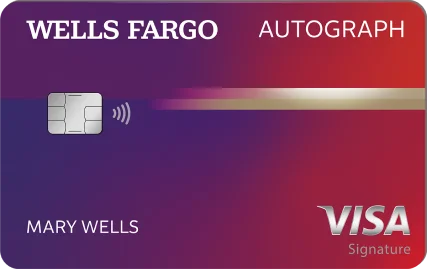
Wells Fargo Autograph Card
Best no-annual-fee card for restaurant delivery, takeout, catering, and dining
- Rewards
- Wells Fargo lists unlimited 3X points at restaurants, including dining in, takeout, catering, delivery and more, with no annual fee.
- Annual fee
- $0
Pros
- Clear official delivery and takeout language with no annual fee.
- Useful across restaurants, travel, gas, transit, streaming, and phone plans.
- No monthly app credit to remember before the reward rate makes sense.
Cons
- Lower ceiling than a qualifying 4X restaurant card.
- Grocery delivery and meal kits may follow different merchant codes.
- Point value depends on how you redeem Wells Fargo Rewards.
Issuer terms are authoritative. Card links may point to issuer pages or approved partners when available.

Chase Sapphire Preferred Card
Best for people who want delivery rewards inside a broader travel-points setup
- Rewards
- Current Chase materials list 3x points on dining, including eligible delivery services, takeout, and dining out, with a $95 annual fee.
- Annual fee
- $95
Pros
- Strong delivery and dining rate for cardholders who value Chase Ultimate Rewards.
- Pairs delivery spending with travel and other Sapphire Preferred benefits.
- Moderate annual fee compared with premium dining cards.
Cons
- Eligible delivery services are not the same as every app, grocery, or meal-kit purchase.
- The $95 annual fee needs value beyond occasional takeout.
- Ultimate Rewards value depends on the redemption path.
Issuer terms are authoritative. Card links may point to issuer pages or approved partners when available.
Food delivery is not just “dining with a fee.” A restaurant order can run through DoorDash, Uber Eats, Grubhub, the restaurant’s own site, a catering platform, a grocery app, or a meal-kit company, and each path can code differently.
The short version: use a card whose issuer terms explicitly include takeout or eligible delivery services when the order is restaurant delivery. Use app credits only if they offset spending you already make. For grocery delivery, meal kits, convenience items, or unclear marketplaces, compare your grocery card and flat-rate fallback before assuming a dining card wins.
Which credit card should you use for food delivery?
Use the card that earns the best net reward on the exact delivery order after annual fees, app credits, service fees, merchant coding, and reward currency are included. A 4X restaurant card can be excellent for frequent delivery users, but a no-annual-fee 3X card can be better for lighter ordering.
Madeen’s current in-app fallback catalog shows why delivery deserves its own answer instead of being buried inside a generic dining guide. The catalog has 453 card records with delivery, takeout, DoorDash, Uber Eats, Grubhub, or Seamless language and 535 matching reward rules, including 238 active personal cards. Among active personal cards, 191 reach at least 3x or 3% on a matching delivery or takeout rule, and 178 reach at least 4x or 4%.
Those numbers do not mean every delivery card is equal. Many high rates are points or miles, some cards have annual fees, some have caps, and some rely on monthly credits that only help if you already use the eligible apps or restaurants. Among the active personal delivery-matching cards in the current catalog, 217 use points, 12 use cash back, and 9 use miles, so a delivery-card comparison should translate the reward currency before treating a higher multiplier as the winner.
What are the best credit cards for food delivery right now?
The best food delivery card depends on whether you are optimizing heavy app orders, no-annual-fee simplicity, or a travel-points ecosystem:
- American Express Gold Card: best for heavy restaurant delivery users who can use the card’s monthly dining and Uber-related credits without changing their spending.
- Wells Fargo Autograph Card: best no-annual-fee option with explicit restaurant delivery, takeout, catering, and dining language.
- Chase Sapphire Preferred Card: best moderate-fee option when delivery rewards are part of a broader Chase Ultimate Rewards and travel setup.
Issuer terms are authoritative. Before applying for a card or moving recurring delivery orders, verify the current annual fee, restaurant and delivery definitions, eligible app language, purchase caps, monthly credit rules, and whether the merchant is the restaurant, the delivery platform, or another marketplace. If the shortlist mixes cash back, points, and miles, use the cash back, points, and miles guide before ranking the cards by multiplier alone.
Do delivery apps count as dining rewards?
Delivery apps count as dining only when the issuer’s dining category and the transaction’s merchant coding line up. Official terms often include phrases such as “takeout,” “delivery,” or “eligible delivery services,” but those words still depend on how the charge is routed.
Restaurant delivery is the cleanest case. If you order dinner from a restaurant through a platform that the issuer treats as eligible delivery, a dining card can work. The result is less certain when the basket includes convenience-store items, grocery delivery, alcohol delivery, meal kits, catering, delivery subscriptions, gift cards, tips, fees, or a third-party marketplace that does not code as a restaurant.
The merchant of record matters. The same restaurant meal can post differently when purchased through the restaurant, a delivery app, a hotel room-service platform, a stadium app, or a corporate catering marketplace. If the category matters, test a small order before moving a large or recurring pattern.
When is Amex Gold best for food delivery?
American Express Gold is best for frequent restaurant delivery users who can use the card’s credits at real value. Current American Express materials list 4X Membership Rewards points at restaurants worldwide, plus takeout and delivery in the U.S., on up to $50,000 in purchases per calendar year, then 1X. American Express also lists a $325 annual fee.
The card is strongest when two things are true. First, the reader values Membership Rewards points and orders enough restaurant delivery or dining to make 4X meaningful. Second, the monthly credits fit existing behavior instead of creating extra spending. If the card’s dining, Uber Cash, Resy, or Dunkin credits replace purchases you already make, they can offset part of the annual fee. If they require new purchases, they are not the same as cash.
The cap and merchant type matter too. A frequent delivery household can hit meaningful spend over a year, but the 4X restaurant rate has a purchase cap before dropping to 1X. Grocery delivery, wholesale-club delivery, convenience delivery, meal kits, and nonrestaurant merchants should be checked separately. For the broader cap framework, read how credit card reward caps and limits work.
When is a no-annual-fee delivery card enough?
A no-annual-fee delivery card is enough when the reward rate is strong and the household does not want to manage monthly credits or a premium annual fee. Wells Fargo Autograph is a clean example because Wells Fargo lists unlimited 3X points at restaurants, including dining in, takeout, catering, delivery and more, with no annual fee.
That makes the card a practical benchmark. A $0 annual fee 3X card can beat a higher-fee card for occasional delivery users, especially if they would not naturally use the premium card’s credits. It also reduces the chance that the user over-orders just to justify a card.
The tradeoff is ceiling. A qualifying 4X restaurant card can earn more on heavy delivery spending, and a card with app-specific credits can win when the credits are genuinely useful. But for many wallets, a clear 3X restaurant-delivery rule with no annual fee is the simpler answer.
When does Chase Sapphire Preferred make sense for delivery?
Chase Sapphire Preferred makes sense when food delivery is part of a broader travel-points strategy. Current Chase materials list 3x points on dining, including eligible delivery services, takeout, and dining out, along with a $95 annual fee.
The card is not the highest delivery rate in this shortlist, but it can fit a reader who already uses Chase Ultimate Rewards, travels enough to value the Sapphire ecosystem, and wants delivery, dining, travel, and other benefits on one moderate-fee card. That is different from choosing a card only because it has a delivery logo or a temporary app promotion. If the annual fee is the main tradeoff, compare it with the break-even approach in the annual-fee guide.
The caution is eligibility. “Eligible delivery services” does not mean every food, grocery, alcohol, convenience, or meal-kit app. If the transaction posts outside the dining category, the delivery order may earn a base rate instead of 3x.
Should grocery delivery use a dining card or a grocery card?
Grocery delivery should not automatically use a dining card. Start by asking what the merchant is: a supermarket, an online grocery service, a wholesale club, a delivery marketplace, a convenience store, or a restaurant.
Use this order:
- Restaurant delivery: compare dining cards with explicit takeout or eligible delivery language.
- Supermarket delivery: compare grocery cards and check whether online grocery purchases qualify.
- Wholesale-club delivery: compare warehouse-club rules, because many grocery cards exclude wholesale clubs.
- Meal kits: check the issuer’s terms and merchant coding instead of assuming grocery or dining.
- Convenience delivery: compare gas, grocery, convenience-store, and flat-rate cards only when the issuer language supports it.
- Mixed baskets: use the card that best fits the merchant of record, not every item in the basket.
For adjacent decisions, compare Madeen’s guides to which credit card to use for dining, which credit card to use for groceries, and which credit card to use for everyday purchases. When delivery is part of a broader points strategy, see Amex Gold vs Chase Sapphire Preferred, how to value credit card points, and how to redeem credit card points before you chase a headline multiplier. For the current monthly dining spoke, see best credit cards for dining (June 2026).
How do delivery fees and credits change the math?
Delivery fees and credits change the answer because the best card is about net value, not the headline multiplier. A 4X card is less impressive if delivery fees, tips, service charges, menu markups, and unused credits cause extra spending.
Use this simple check:
| Delivery situation | Usually compare first | Why |
|---|---|---|
| Frequent restaurant delivery and natural app-credit use | High dining-rate card with credits | Credits can offset the fee only when they replace real spending |
| Occasional restaurant delivery | No-annual-fee 3X dining card | Strong return without a fee or monthly checklist |
| Grocery delivery | Grocery card, online grocery card, or flat-rate card | The transaction may not be dining |
| Unclear marketplace or mixed basket | Flat-rate fallback | Merchant coding may erase the category bonus |
| Delivery app subscription fee | Card terms and app benefits | A subscription charge may not code like the food order |
Do not let rewards justify ordering more often than you otherwise would. A 3% or 4X reward cannot offset unnecessary delivery fees or menu markups. Rewards are useful only after the underlying purchase already makes sense.
How can Madeen help choose a food delivery card?
Madeen helps by keeping the comparison tied to cards you already carry. You select your cards on your iPhone, choose the relevant category where available, and Madeen compares local reward rules without bank login, card numbers, or transaction history.
For food delivery, use Madeen as the wallet check, then add the app-specific details. The app can help surface a dining, grocery, or flat-rate candidate in your wallet, but issuer definitions, delivery-platform eligibility, merchant coding, monthly credits, and purchase caps still decide the final best card.
For privacy details, read the Madeen Privacy Policy or the product note on why Madeen does not ask for your bank login.
What should you check before setting a default delivery card?
Check the issuer terms and the first posted transactions before making a card your default across delivery apps. The right card should keep working after the order type, merchant, credits, and fees are all included.
Before saving a card in a delivery app, review:
- Issuer category language. Look for takeout, delivery, eligible delivery services, restaurants, grocery, or online grocery.
- Merchant of record. The restaurant, app, grocery store, or marketplace may be the transaction merchant.
- Annual fee. A delivery card should be worth keeping beyond one app.
- Credits. Count monthly credits only when they replace spending you already make.
- Caps. Restaurant or grocery bonus rates can drop after a purchase cap.
- Fees and markups. Rewards do not erase delivery fees, service charges, tips, or higher app menu prices.
- Issuer terms. Use official issuer pages as the source of truth for rewards, exclusions, annual fees, and credit rules.
Food delivery is a good example of why the best card is not always the highest visible multiplier. Use the card whose terms match the order in front of you, and keep a strong fallback ready when the app or merchant code is uncertain.
For pre-show dining around a concert night, compare the dining guide and the concerts and live entertainment hub.
Related encyclopedia topics
Frequently asked questions
Which credit card should I use for food delivery?
Use a card whose dining terms explicitly include takeout or eligible delivery services. For heavy delivery users, compare app credits and annual fees. For occasional orders, a no-annual-fee dining card or a flat-rate fallback is often simpler.
Do DoorDash, Uber Eats, Grubhub, and takeout count as dining?
Sometimes. Many issuer dining categories include takeout and eligible delivery services, but the final result depends on the issuer terms, the delivery platform, and how the merchant codes the transaction.
Is Amex Gold worth it for delivery orders?
Amex Gold can be worth it for frequent restaurant delivery users who naturally use its monthly credits and stay within the restaurant purchase cap. If the credits feel forced, a lower-fee or no-fee dining card may be better.
Is a 4X delivery card always better than a 3X delivery card?
No. A 4X delivery card is better only if the points are worth enough, the annual fee and credits make sense, the order qualifies, and any cap has room. A no-fee 3X card can be better for simpler or lighter delivery spending.
Should grocery delivery use a dining card?
Not automatically. Grocery delivery may code as grocery, online grocery, delivery, marketplace, or another category depending on the merchant and issuer. Compare the grocery card, dining card, and flat-rate fallback before assuming.
Can Madeen choose a delivery card without bank login?
Madeen can compare local reward rules for cards you select without bank login or card numbers, but delivery-app eligibility, merchant coding, credits, caps, and issuer terms still decide the final best card.
Sources and notes
- Reference Madeen card catalog food delivery and takeout reward analysis - Madeen Accessed 2026-05-18.
- Reference American Express Gold Card - American Express Accessed 2026-05-18.
- Reference American Express Gold Card dining rewards guide - American Express Accessed 2026-05-18.
- Reference Wells Fargo Autograph Card - Wells Fargo Accessed 2026-05-18.
- Reference Chase Sapphire Preferred Credit Card - Chase Accessed 2026-05-18.