Which Credit Card Should You Use for College Tuition? (Fees vs Rewards) (May 2026)
Compare school card convenience fees to credit card rewards before paying tuition — when 2% cash back loses to a 3% portal fee, and which flat-rate cards still make sense.
Madeen compares public issuer terms with its card-rule catalog. Issuer pages control rewards, fees, benefits, exclusions, and eligibility; Madeen does not issue cards, make approval decisions, or provide financial advice.
What are the best credit cards for college tuition right now?

Robinhood Gold Card
Best for already-eligible Robinhood Gold members when the school card fee is below the card's reward rate
- Rewards
- Robinhood lists 3% cash back on all categories, no annual fee, and no foreign transaction fees, but earning 3 points per dollar requires an active annual Robinhood Gold subscription and cash-back redemption requires a Robinhood Financial brokerage account.
- Annual fee
- $0 annual fee; active annual Robinhood Gold subscription required to earn 3%
Pros
- The listed 3% rate is one of the few flat rates that can approach common school convenience fees.
- No bonus category or merchant code is needed if the tuition charge is an eligible purchase under card terms.
- Can be useful for other uncategorized purchases if you already fit the Robinhood Gold requirements.
Cons
- A 3% school fee leaves almost no margin before subscription cost, taxes, reward limitations, or excluded transactions.
- The card is available through Robinhood and requires current Gold and brokerage-account terms to fit.
- It is not a good reason to carry a tuition balance, because interest can overwhelm rewards quickly.
Issuer terms are authoritative. Card links may point to issuer pages or approved partners when available.
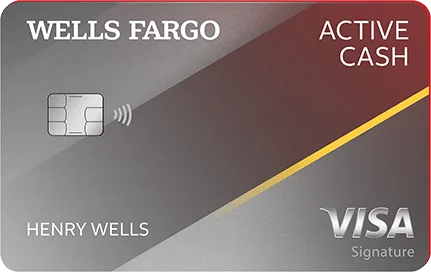
Wells Fargo Active Cash Card
Best simple 2% benchmark when the school card fee is waived or clearly below 2%
- Rewards
- Wells Fargo lists unlimited 2% cash rewards on purchases with no categories to track or quarterly activations and a $0 annual fee.
- Annual fee
- $0
Pros
- Simple 2% cash-rewards benchmark for tuition portals that charge no fee or a low fee.
- No education category, activation, or quarterly cap to manage.
- Useful outside tuition as an everyday flat-rate fallback.
Cons
- A 2.95% or 3% tuition convenience fee is usually larger than the 2% reward.
- Wells Fargo excludes cash advances, cash equivalents, balance transfers, fees, interest, and other nonpurchase activity from rewards.
- It does not solve affordability; the tuition balance still needs to be paid in full to avoid interest.
Issuer terms are authoritative. Card links may point to issuer pages or approved partners when available.
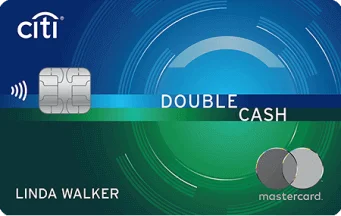
Citi Double Cash Card
Best 2% alternative for people who already prefer Citi's buy-and-pay reward structure
- Rewards
- Citi describes up to 2% cash back on purchases: 1% when you buy and 1% as you pay, with no annual fee.
- Annual fee
- $0
Pros
- A clear flat-rate fallback when tuition does not qualify for any education bonus category.
- No school-specific merchant code or selected category is required.
- Can make sense when a school charges no card fee and the balance will be paid on time.
Cons
- The second 1% depends on paying, which makes carrying a tuition balance especially unattractive.
- A common 3% school convenience fee usually beats the reward.
- It does not provide a tuition payment plan or lower-cost financing by itself.
Issuer terms are authoritative. Card links may point to issuer pages or approved partners when available.
College tuition is one of the largest bills a household may be allowed to put on a credit card. That makes the rewards tempting, but bursar payment portals often add a non-refundable card fee that is larger than ordinary Cash Back. Many tuition charges also code outside bonus categories — see how merchant category codes affect credit card rewards for why the posted transaction matters.
The short version: use a credit card for tuition only when the net reward beats the school’s card fee and you can pay the statement balance in full. If the school charges about 3% and your card earns 2%, ACH, e-check, check, financial aid, or a tuition payment plan is usually cheaper.
Which credit card should you use for college tuition?
Use the card with the best net value after the school convenience fee, purchase eligibility, reward rate, welcome-bonus math, and financing cost. For many families, the best “card” choice is actually no credit card: a no-fee e-check, ACH transfer, paper check, or official school payment plan can beat rewards.
Madeen’s current in-app fallback catalog shows why tuition needs a separate answer. The catalog has 3,944 card records and 3,944 active personal cards, but no active personal reward rule explicitly mentions tuition, education, college, university, or student-account payments. Only two active personal records mention school anywhere in the runtime export, and neither has a tuition reward rule.
That absence matters. Tuition should usually be treated as an uncategorized purchase unless the school payment portal, card issuer, and reward terms clearly say otherwise. The catalog does include many flat-rate fallbacks: 425 active personal cards earn at least 1.5x or 1.5% on base purchases, 208 earn at least 2x or 2% or better, and 12 cash-back cards earn at least 2% on base purchases.
What are the best credit cards for college tuition right now?
The best tuition card depends less on the school name and more on the fee:
- Robinhood Gold Card: best for already-eligible Robinhood Gold members when the school card fee is below the card’s listed 3% cash-back rate.
- Wells Fargo Active Cash Card: best simple 2% benchmark when a school charges no card fee or a card fee clearly below 2%.
- Citi Double Cash Card: best 2% alternative for people who already prefer Citi’s 1% when you buy and 1% as you pay structure.
Issuer and school terms are authoritative. Before using a card for a tuition bill, verify the current annual fee or subscription requirement, reward exclusions, whether the tuition payment counts as an eligible purchase, the school’s card fee, refund treatment, payment-plan rules, and whether a debit card is processed like a credit card.
What tuition fee makes a credit card worth it?
A tuition card is worth considering only when the net reward is greater than the non-refundable card fee. If the fee is 3% and the card earns 2%, the reward does not cover the cost. If the fee is 2.95% and the card earns 3%, the margin is tiny before any subscription cost, tax issue, or reward limitation.
Here is the simple break-even math for a $5,000 tuition payment:
| School card fee | Fee on $5,000 | Reward at 2% | Reward at 3% | What it means |
|---|---|---|---|---|
| 0% | $0 | $100 | $150 | A flat-rate card can make sense if the charge earns rewards and you pay in full. |
| 2% | $100 | $100 | $150 | A 2% card roughly breaks even before exclusions; a 3% card has room. |
| 2.95% | $147.50 | $100 | $150 | A 2% card loses money; a 3% card has almost no margin. |
| 3% | $150 | $100 | $150 | A 2% card loses money; a 3% card only breaks even before other costs. |
Official school pages show why this math matters. New York Tech says domestic credit card payments incur a 2.95% non-refundable convenience fee and international cards incur 4.25%, assessed by its third-party processor. Georgetown says credit and debit card payments incur a 3.00% fee for USD payments or 4.25% for non-USD payments, while e-check payments from U.S. checking or savings accounts do not incur the same fee. The University of North Alabama also lists 3.00% for domestic debit or credit transactions and 4.25% for international transactions.
Those are examples, not universal rules. Your school’s bursar office controls the current fee, accepted card networks, refund process, and fee-free payment methods. Check that page before chasing any reward.
When is Robinhood Gold Card worth considering for tuition?
Robinhood Gold Card is worth considering only if you already fit the card’s requirements and the school card fee is below the reward rate. Robinhood lists 3% Cash Back on all categories, no annual fee, and no foreign transaction fees, but it also says earning three points per dollar of eligible purchases requires an active annual Robinhood Gold subscription. Robinhood also says a Robinhood Financial brokerage account is required to redeem Cash Back.
That makes the card interesting for tuition math but not automatic. A 3% card against a 2.95% fee leaves only five basis points of gross margin. On a $5,000 payment, that is about $2.50 before subscription cost, reward limitations, taxes, or any purchase exclusion. Against a 3.00% fee, it is a break-even calculation before those details.
The card can still be useful if your school charges less than the reward rate or waives card fees for a particular payment path. It is much weaker if you would subscribe to a service only for one tuition payment, if the transaction is excluded from eligible purchases, or if paying the bill by card means carrying a balance.
When is a 2% Cash Back card enough for tuition?
A 2% card is enough when the school charges no card fee, charges a fee below 2%, or a planned welcome bonus changes the math without causing extra spending. Wells Fargo Active Cash is a useful benchmark because Wells Fargo lists unlimited 2% cash rewards on purchases, no categories to track, no quarterly activations, and a $0 annual fee.
Citi Double Cash is another flat-rate benchmark. Citi describes up to 2% Cash Back on purchases: 1% when you buy and 1% as you pay, with no annual fee. That “as you pay” structure is especially relevant for tuition because the reward is not the win if interest accrues. The bill should be paid on time and in full unless you have deliberately chosen a lower-cost financing option.
The main caveat is that common school card fees are often higher than 2%. Georgetown’s FAQ says the 3.00% convenience fee will almost invariably be a greater cost than any benefit awarded by a card company. That is the right mindset for any 2% card: it is the fallback benchmark, not a reason to ignore a larger fee.
Can you pay student loans with a credit card?
Tuition bills and student loan payments are different. A college or university bursar may accept credit cards through a third-party tuition portal. A federal student loan servicer may not offer credit card payments as a standard method.
For example, Edfinancial’s Federal Student Aid payment-method page lists auto pay from a bank account, online payments through the loan account, bank bill pay, mail by check or money order, phone payments, and co-signer mail or phone options. It does not present credit card payment as the normal repayment path.
Avoid treating student loan workarounds like ordinary rewards transactions. Third-party bill-payment services, balance transfers, cash advances, and cash-like transactions can add fees, interest, or reward exclusions. If the issue is affordability, start with the official loan servicer, income-driven repayment options, deferment or forbearance rules, and the school’s financial aid office rather than a rewards card.
Should tuition payment plans or ACH change the card choice?
Yes. A fee-free or low-fee school payment method can be worth more than a credit card reward. Georgetown says e-check payments from U.S. checking or savings accounts do not have the card convenience fee. UNA says check, e-check, and cash carry no additional convenience fee. New York Tech says e-check payments have a small ACH convenience fee, while card payments have much larger percentage fees.
Payment plans can also change the answer. A school-sponsored installment plan may charge an enrollment fee but avoid credit card interest. Compare the total plan cost with the card fee and the cost of carrying a credit card balance. If the card’s APR will apply, a reward is usually the wrong lens.
Also check refund rules. Schools may return overpayments to the card used, and convenience fees may be non-refundable. That can matter when financial aid, scholarships, housing charges, dropped classes, or insurance adjustments change the final balance after payment.
How can Madeen help choose a tuition card?
Madeen helps by keeping the reward comparison tied to cards you already carry. You select your cards on your iPhone, choose the closest available category or everyday fallback, and Madeen compares local reward rules without bank login, card numbers, or transaction history.
For tuition, use Madeen as the wallet check, then add the school-specific facts: the bursar card fee, whether debit is treated like credit, whether e-check is free, payment-plan costs, reward exclusions, student loan servicer rules, and whether the balance will be paid in full. That keeps the decision grounded in the actual bill instead of assuming every large payment should go on a rewards card.
For privacy details, read the Madeen Privacy Policy or the product note on why Madeen does not ask for your bank login. Students building credit before tuition decisions should read how to build credit with a credit card and how long it takes to build credit. If you might carry a balance, understand credit card grace periods and why minimum payments are not a payoff plan. For adjacent fee-sensitive decisions, compare which credit card to use to pay taxes, which credit card to use for rent, and which credit card to use for medical bills.
What should you check before paying tuition by credit card?
Check the payment portal before paying, especially when the bill is large or financial aid has not finalized. A non-refundable fee can wipe out rewards instantly.
Before submitting the payment, review:
- Card fee. Compare the exact domestic or international card fee with the reward rate.
- Fee-free options. Check ACH, e-check, paper check, cash, wire, 529-plan disbursement, and official payment-plan costs.
- Debit treatment. Some schools process debit cards through the credit card rail and charge the same fee.
- Eligible purchase terms. Confirm the card earns rewards on the tuition portal transaction and is not treated as cash-like activity.
- Refund treatment. Convenience fees may be non-refundable, and overpayments may return to the original card.
- Student loan rules. Do not assume a student loan servicer accepts credit cards just because a bursar accepts them.
- Payoff plan. Credit card interest can erase any reward many times over if the statement balance is not paid in full.
The practical rule is simple: rewards are useful only after the tuition payment method is already affordable. If the school fee is higher than the reward, the better card choice is usually the fee-free bank payment.
Related encyclopedia topics
Frequently asked questions
Which credit card should I use for college tuition?
Use a credit card for college tuition only if the school's card fee is lower than the card reward or a planned welcome bonus changes the math without overspending. With common 2.95% to 3% school fees, ACH, e-check, check, a payment plan, or financial aid is often cheaper than a 2% rewards card.
Is it worth paying tuition with a 2% cash back card?
Usually not if the school charges a 2.95% or 3% convenience fee. On a $5,000 tuition payment, a 3% fee costs $150 while a 2% card earns about $100 before exclusions, leaving a roughly $50 loss.
What rewards rate beats a tuition convenience fee?
The card's net reward rate must be higher than the school's non-refundable card fee. A 3% card only breaks even against a 3% fee before subscription costs, taxes, excluded transactions, and the risk of carrying a balance.
Can you pay student loans with a credit card?
Federal student loan servicer payment-method pages generally list bank-account auto pay, online payments, bill pay, mail, phone, check, or money order rather than credit cards. Tuition bills and student loan repayments are separate decisions, so check the actual servicer before trying any workaround.
Can Madeen choose a tuition card without bank login?
Madeen can compare local reward rules for cards you select without bank login or card numbers, but the school convenience fee, tuition portal rules, student loan servicer rules, card purchase exclusions, and whether you pay in full decide the final answer.
Do merchant category codes affect tuition rewards?
Yes. Education and tuition payments often code outside ordinary bonus categories or are excluded from rewards entirely. If a tuition charge posts at base rate, see how merchant category codes affect credit card rewards for the broader framework.
Sources and notes
- Reference Madeen card catalog tuition and flat-rate fallback analysis - Madeen Accessed 2026-05-14.
- Reference Credit Card Convenience Fees - New York Tech Accessed 2026-05-14.
- Reference FAQ: Credit Card and Debit Card Payments - Georgetown University Accessed 2026-05-14.
- Reference Credit Card Convenience Fee - University of North Alabama Accessed 2026-05-14.
- Reference Payment Methods - Edfinancial Services / Federal Student Aid Accessed 2026-05-14.
- Reference Robinhood Gold Card - Robinhood Accessed 2026-05-14.
- Reference Wells Fargo Active Cash Credit Card - Wells Fargo Accessed 2026-05-14.
- Reference Citi Double Cash Credit Card - Citi Accessed 2026-05-14.