Which Credit Card Should You Use to Pay Taxes in May 2026?
Decide whether to pay taxes with a credit card by comparing IRS processor fees, flat-rate rewards, welcome-bonus math, debit fees, and payoff risk.
Madeen compares public issuer terms with its card-rule catalog. Issuer pages control rewards, fees, benefits, exclusions, and eligibility; Madeen does not issue cards, make approval decisions, or provide financial advice.
What are the best credit cards for paying taxes right now?
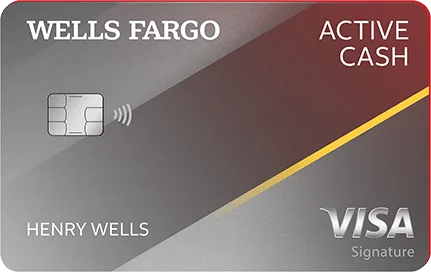
Wells Fargo Active Cash®
Best simple 2% cash-rewards card when the IRS processor fee is lower
- Rewards
- Unlimited 2% cash rewards on eligible purchases under current Wells Fargo materials, with no annual fee and no categories to track.
- Annual fee
- $0
Pros
- Official Wells Fargo materials describe unlimited 2% cash rewards on purchases.
- No annual fee and no quarterly category activation.
- Straightforward cash rewards make processor-fee math easy.
Cons
- A 2% card only barely beats current IRS consumer credit-card fees before any interest or redemption friction.
- Cash advances, cash equivalents, fees, interest, balance transfers, and other excluded transactions do not earn rewards under Wells Fargo terms.
- Not worth using for taxes if you cannot pay the statement balance in full.
Issuer terms are authoritative. Card links may point to issuer pages or approved partners when available.
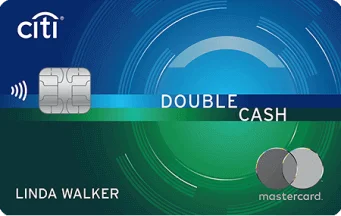
- Rewards
- Earn 2% cash back on purchases as 1% when you buy and 1% as you pay, according to current Citi materials.
- Annual fee
- $0
Pros
- Official Citi materials describe unlimited 2% cash back on every purchase: 1% when you buy and 1% as you pay.
- No annual fee and no bonus category to select.
- Useful when you already use Citi ThankYou points and can redeem them at cash value.
Cons
- The second 1% depends on paying for the purchase, so tax-payment math assumes you pay the bill.
- The net gain over IRS processor fees is small unless a welcome bonus or other goal also matters.
- Rewards are issued as ThankYou points, so redemption choice can affect practical value.
Issuer terms are authoritative. Card links may point to issuer pages or approved partners when available.

Bank of America® Premium Rewards®
Best for existing Preferred Rewards members who can earn an elevated base rate
- Rewards
- Earn 1.5 points per dollar on non-travel and non-dining purchases, with a 25%-75% Preferred Rewards bonus available to eligible Bank of America customers.
- Annual fee
- $95
Pros
- Preferred Rewards can lift the card's base earn above a 2% fee threshold for eligible customers.
- Official Bank of America materials describe 1.5 points per dollar on all other purchases and 2 points on travel and dining.
- Can make sense if you already have the card, qualify for Preferred Rewards, and value points at cash-like value.
Cons
- The $95 annual fee and Preferred Rewards balance requirements change the break-even math.
- Without Preferred Rewards, the 1.5x base rate is usually below current IRS credit-card fees.
- Not a reason by itself to open a premium card unless the broader card benefits fit.
Issuer terms are authoritative. Card links may point to issuer pages or approved partners when available.
Paying taxes with a credit card can feel like free rewards on a bill you already owe. The catch is that the IRS does not absorb the card fee. Third-party processors charge a separate fee, so the best card is the one whose reliable value beats that fee after payoff risk.
The short version: use a credit card for taxes only when rewards, a welcome bonus, or another card goal is worth more than the processor fee and you can pay the statement balance in full. If you only want to pay the IRS cheaply, debit or bank payment is usually cleaner.
Which credit card should you use to pay taxes?
Use the card with the highest reliable net value after the tax-payment fee. For most people, that means a 2% cash-back card is the benchmark, not a grocery, dining, gas, or travel card.
The IRS currently lists two card processors for tax payments. Pay1040 charges a 1.75% consumer credit-card fee with a $2.50 minimum, while ACI Payments charges a 1.85% consumer credit-card fee with a $2.50 minimum. No part of the card service fee goes to the IRS, according to the IRS page.
Madeen’s current in-app fallback catalog supports the same conclusion. Across 3,944 cards, the runtime catalog has no dedicated tax-payment category. It does have 1,035 cards earning at least 1.5x or 1.5% on base purchases, 328 cards at 2x or 2% or better on base purchases, and 59 cash-back cards at 2% or better on base purchases.
That makes tax payments a flat-rate, fee, and payoff decision. If your card earns less than the fee, the processor wins. If your card earns a little more than the fee, the margin is small. If a welcome bonus is involved, do the math before assuming it is worth the added cost.
What are the best credit cards for paying taxes right now?
The best tax-payment card depends on whether you want simple 2% cash rewards, Citi ThankYou cash-redemption flexibility, or an elevated Bank of America rate you already qualify for:
- Wells Fargo Active Cash: best simple 2% cash-rewards benchmark because Wells Fargo’s current materials describe unlimited 2% cash rewards on purchases and no annual fee.
- Citi Double Cash: best Citi option when you understand the 1% when you buy plus 1% as you pay structure and plan to redeem ThankYou points at cash value.
- Bank of America Premium Rewards: best for existing Preferred Rewards members whose rewards bonus lifts the card above ordinary flat-rate math.
Issuer terms are authoritative. Before paying a large tax bill, verify that the processor charge will be treated as an eligible purchase, check current card terms, and make sure the available credit line and payoff timing are safe.
When does a 2% card beat the IRS credit-card fee?
A 2% card beats the current lowest IRS consumer credit-card fee only by a thin margin. With Pay1040’s 1.75% fee, the gross spread is about 0.25 percentage points. With ACI Payments’ 1.85% fee, the spread is about 0.15 percentage points.
| Tax payment | Pay1040 1.75% fee | 2% rewards before exclusions | Approximate net before payoff cost |
|---|---|---|---|
| $1,000 | $17.50 | $20.00 | $2.50 |
| $2,500 | $43.75 | $50.00 | $6.25 |
| $10,000 | $175.00 | $200.00 | $25.00 |
That table explains why tax payments are not automatically a rewards win. A $25 net gain on a $10,000 tax payment can disappear quickly if you redeem poorly, pay interest, trigger a fee, or choose a processor with a higher rate.
The IRS debit-card fees are flat instead of percentage-based. On a large payment, a $2.10 or $2.15 consumer debit fee can be much cheaper than a credit-card fee if you are not earning a reward that more than offsets the percentage charge.
Should you use a credit card to meet a welcome bonus?
A tax payment can help meet a welcome-bonus spending requirement, but the processor fee is the price of doing that. The clean way to compare is:
- Estimate the card reward and any welcome bonus you reasonably expect to earn.
- Subtract the processor fee.
- Subtract any annual fee or other cost you would not otherwise pay.
- Confirm you can pay the statement balance in full before interest starts.
For example, a $4,000 tax payment through a 1.75% processor costs $70 in card fees. That fee may be reasonable if it helps unlock a much larger welcome bonus you would not otherwise reach through normal spending. It is not reasonable if it creates revolving debt, cash-flow stress, or a card you only opened for a one-time tax bill.
Avoid treating a welcome bonus as guaranteed. Issuers define what counts as a qualifying purchase, who is eligible for a bonus, and when the bonus posts. Read the issuer’s current offer terms before counting a tax payment toward the bonus.
Is Wells Fargo Active Cash a good tax-payment card?
Wells Fargo Active Cash is a good tax-payment benchmark because its reward structure is simple. Wells Fargo’s current materials describe unlimited 2% cash rewards on purchases and a $0 annual fee.
The math is still narrow. On Pay1040’s current 1.75% credit-card fee, the difference between 2% rewards and the processor fee is about 0.25%. On ACI’s current 1.85% fee, it is about 0.15%. That means the card can work when you already have it, redeem for cash value, and pay in full.
It is not a reason to carry a tax balance. Wells Fargo terms list several transactions that do not earn cash rewards, including cash advances and cash equivalents, balance transfers, fees, interest, and certain other excluded transactions. The tax payment needs to post as an eligible purchase, and interest would overwhelm the small rewards spread.
When is Citi Double Cash better for taxes?
Citi Double Cash can be useful if you already use Citi and want a no-annual-fee 2% structure. Citi’s current materials describe 2% Cash Back on purchases as 1% when you buy and 1% as you pay.
That “as you pay” language matters for taxes. The tax-payment decision should assume you pay the card bill, not just charge the tax bill. If you revolve the balance, interest can erase rewards and make the payment more expensive than using a direct IRS payment method.
Citi rewards are issued as ThankYou points, so use a cash-value redemption assumption when comparing against the IRS fee. If you plan a redemption that is worth less than one cent per point, the effective return can fall below the fee.
When can Bank of America Premium Rewards make sense?
Bank of America Premium Rewards can make sense for tax payments when you already have the card and qualify for a Preferred Rewards bonus. Bank of America materials describe 1.5 points per dollar on non-travel and non-dining purchases, and Preferred Rewards can add a 25% to 75% bonus for eligible members.
At the highest Preferred Rewards tier, a 1.5x base rate with a 75% bonus becomes 2.625 points per dollar before considering the $95 annual fee and your redemption value. That can beat a 1.75% or 1.85% processor fee more comfortably than a plain 2% card if your points are worth about one cent each.
Without Preferred Rewards, the same card’s 1.5x base rate is usually below current IRS consumer credit-card fees. The annual fee also matters. Do not open or keep a premium card for taxes alone unless the card’s travel, dining, credits, protections, and broader rewards fit your normal spending.
What tax-payment mistakes should you avoid?
The biggest mistake is comparing only the reward rate and ignoring the payment fee. A 2% card is not a 2% profit when the processor charges 1.75% or 1.85%.
Also avoid these traps:
- Paying interest. Credit card APR costs can overwhelm any reward from a tax payment.
- Using a card with a weak base rate. A 1% or 1.5% card usually loses to current IRS credit-card fees unless a bonus changes the math.
- Ignoring debit and bank options. IRS Direct Pay, electronic funds withdrawal, and debit-card fees may be cheaper when rewards do not justify the credit-card fee.
- Assuming every processor is the same. The IRS lists different card fees by processor and payment context, and e-file card fees can differ.
- Overlooking frequency limits. The IRS says there is a maximum number of card payments allowed based on tax type and payment type.
For business taxes, the IRS notes that card processing fees are tax deductible for business taxes. That can change net cost, but it is a tax-specific question to handle with your own tax records or tax professional.
How can Madeen help choose a tax-payment card?
Madeen helps because the right card is usually the best flat-rate card already in your wallet, not a tax-specific category card. You select your cards on your iPhone, choose the relevant purchase category, and Madeen compares local reward rules without bank login, card numbers, or transaction history.
For tax payments, use Madeen as a starting point for reward value, then manually subtract the IRS processor fee. If Madeen shows a 2% card and the processor charges 1.75%, the gross spread is small but positive. If Madeen shows a 1.5% card, the processor fee probably beats the reward unless a welcome bonus or special bank relationship changes the outcome.
For privacy details, read the Madeen Privacy Policy or the product note on why Madeen does not ask for your bank login.
If you are opening a card mainly to hit a welcome bonus with a large tax payment, read how to evaluate a credit card welcome bonus and does applying for a credit card hurt your credit score so the fee math and inquiry timing stay in view. How credit utilization affects your credit score matters when a tax charge reports before you pay it off.
What should you do before paying taxes with a card?
Check the IRS payment page on the day you pay, choose the lowest processor fee for your card type, and compare that fee with your card’s reliable reward value. If the reward is not clearly higher, use a lower-cost payment method.
If you still use a credit card, keep the transaction boring: charge only what you can pay in full, save the confirmation, confirm the payment posts to the IRS, and check the card statement to make sure the reward earned as expected.
Related encyclopedia topics
Frequently asked questions
Which credit card should I use to pay taxes?
Use a credit card for taxes only when the reward value, welcome bonus, or card goal is worth more than the IRS processor fee and you can pay the card in full. A simple 2% cash-back card barely beats the lowest current IRS consumer credit-card fee.
Is it worth paying IRS taxes with a 2% cash back card?
Sometimes, but the margin is small. With Pay1040's current 1.75% credit-card fee, a 2% card nets about 0.25% before any redemption friction. With ACI Payments' current 1.85% fee, the margin is about 0.15%.
Is a debit card better than a credit card for tax payments?
A debit card is often better if you are not chasing rewards or a card bonus. The IRS lists flat consumer debit fees that can be much lower than percentage-based credit-card fees on larger tax payments.
Do tax payments earn credit card rewards?
They can if the issuer treats the processor charge as an eligible purchase, but tax payments usually do not earn a special bonus category. Issuer exclusions for cash equivalents, fees, and non-purchase transactions still apply.
Can Madeen choose a tax-payment card without bank login?
Madeen can compare the reward rules for cards you select without bank login or card numbers, but tax-payment processor fees, issuer exclusions, and your ability to pay in full determine whether using a card is worthwhile.
Sources and notes
- Madeen analysis Madeen card catalog flat-rate reward analysis - Madeen Accessed 2026-06-01.
- Regulator Pay your taxes by debit or credit card or digital wallet - Internal Revenue Service Accessed 2026-06-01.
- Issuer terms Wells Fargo Active Cash Credit Card - Wells Fargo Accessed 2026-06-01.
- Issuer terms Wells Fargo Active Cash Visa Credit Card Terms and Conditions - Wells Fargo Accessed 2026-06-01.
- Issuer terms Citi Double Cash Credit Card - Citi Accessed 2026-06-01.
- Issuer terms Bank of America Premium Rewards Credit Card - Bank of America Accessed 2026-06-01.
- Issuer terms Increase Your Preferred Rewards with an Eligible Bank of America Credit Card - Bank of America Accessed 2026-06-01.