Which Credit Card Should You Use for Clothing Stores in May 2026?
Choose a clothing-store credit card by comparing selected clothing categories, department stores, online retail rules, quarterly caps, and flat-rate fallback cards.
Madeen compares public issuer terms with its card-rule catalog. Issuer pages control rewards, fees, benefits, exclusions, and eligibility; Madeen does not issue cards, make approval decisions, or provide financial advice.
What are the best credit cards for clothing stores right now?
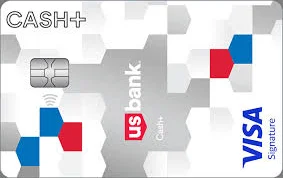
U.S. Bank Cash+ Visa Signature Card
Best for standalone clothing stores, department stores, or sporting goods stores when you select and activate the right 5% category
- Rewards
- U.S. Bank lists 5% cash back on the first $2,000 in combined eligible purchases each quarter on two chosen 5% categories, with options that include Department Stores, Sporting Goods Stores, and Select Clothing Stores, plus no annual fee.
- Annual fee
- $0
Pros
- Strong 5% ceiling for qualifying clothing-related categories after quarterly selection and activation.
- Official U.S. Bank category materials list department stores, sporting goods stores, and a specific Select Clothing Stores category.
- No annual fee under current U.S. Bank materials.
Cons
- The 5% rate requires quarterly category enrollment and applies only to the first $2,000 in combined eligible purchases each quarter.
- Select Clothing Stores includes only the merchants U.S. Bank lists, so many apparel, boutique, resale, or off-price stores may not qualify.
- Purchases outside selected categories earn the card's base rate.
Issuer terms are authoritative. Card links may point to issuer pages or approved partners when available.
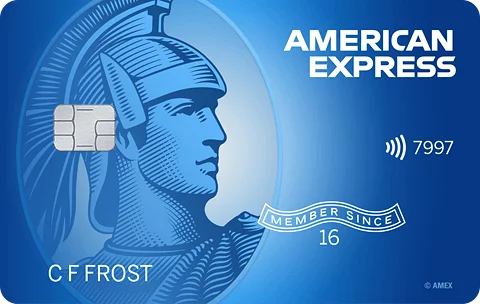
Blue Cash Everyday Card
Best for U.S. online clothing orders when you want a broad online retail category
- Rewards
- American Express lists 3% cash back on U.S. online retail purchases on up to $6,000 per year in purchases, then 1%, with no annual fee.
- Annual fee
- $0
Pros
- Good fit for online apparel, shoes, accessories, and department-store orders that qualify as U.S. online retail purchases.
- Annual online retail cap is separate from the card's U.S. supermarket and U.S. gas station caps.
- No annual fee under current American Express materials.
Cons
- The 3% rate is capped at $6,000 per year in U.S. online retail purchases, then drops to 1%.
- In-store clothing purchases do not become online retail purchases just because the retailer has a website.
- American Express acceptance can vary by merchant.
Issuer terms are authoritative. Card links may point to issuer pages or approved partners when available.
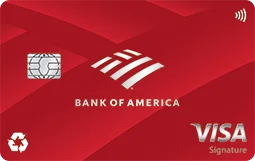
Bank of America Customized Cash Rewards
Best for online clothing shoppers who want one flexible 3% choice category across multiple retailers
- Rewards
- Bank of America lists 3% cash back in a chosen category such as online shopping, 2% at grocery stores and wholesale clubs, and 1% elsewhere, with the 3% and 2% rewards capped on the first $2,500 in combined purchases each quarter.
- Annual fee
- $0
Pros
- Bank of America's online-shopping category examples include fashion and Nordstrom.
- Choice category can be changed monthly if another spending lane becomes more useful.
- No annual fee under current Bank of America materials.
Cons
- The 3% and 2% rewards share a quarterly $2,500 combined-purchase cap before dropping to 1%.
- Phone, mail, in-person purchases, and online orders paid in store do not qualify as online shopping under Bank of America's terms.
- A selected online-shopping category may be less useful for in-store apparel, resale shops, or department-store purchases.
Issuer terms are authoritative. Card links may point to issuer pages or approved partners when available.
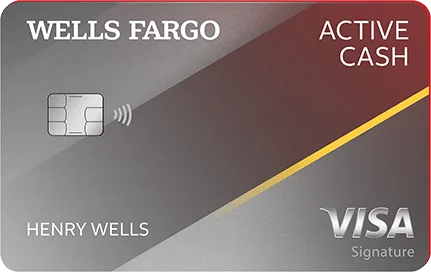
Wells Fargo Active Cash Card
Best simple fallback when clothing-store category rules, caps, or merchant coding are unclear
- Rewards
- Wells Fargo lists unlimited 2% cash rewards on purchases with no categories to track or quarterly activations and a $0 annual fee.
- Annual fee
- $0
Pros
- Simple 2% benchmark for boutiques, thrift stores, off-price retailers, uniforms, tailoring, or unclear merchant codes.
- No selected category, quarterly activation, or clothing-store list to manage.
- Useful outside clothing as an everyday flat-rate fallback.
Cons
- Lower ceiling than a qualifying 5% selected-category card or 3% online retail card.
- Does not solve merchant-specific exclusions or store financing tradeoffs.
- Cash equivalents, fees, balance transfers, and other excluded activity do not earn rewards under Wells Fargo terms.
Issuer terms are authoritative. Card links may point to issuer pages or approved partners when available.
Clothing rewards are easy to overestimate because “clothing store” can mean a mall store, a department store, a sporting goods retailer, a resale shop, an online boutique, a uniform supplier, a marketplace seller, or a store card checkout offer.
The short version: use a clothing-specific or department-store category only when the merchant clearly qualifies and the category is activated. Use an online retail card for qualifying website or app purchases. If the store, channel, cap, or merchant code is unclear, a simple 2% flat-rate card is the safer benchmark.
Which credit card should you use for clothing stores?
Use the card that matches the purchase channel: selected clothing or department-store category for qualifying in-store purchases, online retail for qualifying website or app purchases, and flat-rate Cash Back when the store does not fit a clean category. The best card is usually different for Old Navy, Nordstrom.com, a thrift shop, a local tailor, and a sports-uniform store.
Madeen’s current in-app fallback catalog shows why clothing purchases need a narrower answer than “use your shopping card.” The catalog has 3,944 card records and 3,944 active personal cards. In the runtime reward fields, no active personal card has a category rule that explicitly labels clothing, apparel, fashion, shoes, or department stores. Only five active personal cards have explicit online-shopping or online-retail language, while 425 active personal cards earn at least 1.5x or 1.5% on base purchases and 328 earn at least 2x or 2% on base purchases.
That pattern matters. Some issuer programs do have clothing-adjacent categories, but the app catalog often models them as broader selected-category or “other” rules. For a real purchase, issuer category definitions, merchant coding, and caps decide whether a clothing haul earns 5%, 3%, 2%, or a base rate.
What are the best credit cards for clothing stores right now?
The best clothing-store card depends on whether the purchase is at a qualifying standalone store, department store, online retailer, or ambiguous merchant:
- U.S. Bank Cash+ Visa Signature Card: best for qualifying selected clothing, department-store, or sporting-goods purchases after category selection and activation.
- Blue Cash Everyday Card: best for qualifying U.S. online retail clothing orders with a straightforward annual online-retail cap.
- Bank of America Customized Cash Rewards: best for online clothing shoppers who want a flexible selected online-shopping category across multiple merchants.
- Wells Fargo Active Cash Card: best fallback when clothing-specific rules, caps, or merchant coding are unclear.
Issuer terms are authoritative. Before applying for a card or moving a large apparel purchase, verify the current annual fee, selected category, cap, activation requirement, online-retail definition, merchant list, excluded transaction types, and whether the merchant processes the charge directly or through another checkout provider.
When is U.S. Bank Cash+ the best clothing-store card?
U.S. Bank Cash+ is best when you can plan around its selected 5% categories. U.S. Bank lists 5% Cash Back on the first $2,000 in combined eligible purchases each quarter on two categories you choose, 2% Cash Back on one everyday category you choose, 1% Cash Back on other eligible purchases, and no annual fee.
The clothing angle comes from the official category list. U.S. Bank lists 5% choices that include Department Stores, Sporting Goods Stores, and Select Clothing Stores. Its sample merchant page says Select Clothing Stores covers standalone clothing stores, but also says the category includes only the listed merchants, such as Aeropostale, American Eagle Outfitters, Ann Taylor, Banana Republic, Eddie Bauer, Express, Forever 21, GAP, J.Crew, Jos. A Bank, Old Navy, and Talbots.
That narrow list is the tradeoff. U.S. Bank Cash+ can beat a 2% card when the merchant qualifies and you have activated the right category. It is weaker for boutiques, thrift shops, luxury stores not on the list, uniforms, tailoring, marketplace sellers, or any purchase after the quarterly 5% cap is used.
Should online clothing orders use an online retail card?
Online clothing orders should use an online retail or online shopping card when the issuer terms clearly include the checkout path. This is often the simplest answer for apparel bought through a retailer’s website or app.
Blue Cash Everyday is a useful benchmark because American Express lists 3% Cash Back on U.S. online retail purchases on up to $6,000 per year in purchases, then 1%, with no annual fee. That can fit online apparel, shoes, accessories, and department-store orders when the purchase qualifies as U.S. online retail under American Express terms.
Bank of America Customized Cash Rewards is the flexible selected-category benchmark. Bank of America says its Online Shopping category includes purchases made online via a website or digital application, based on merchant-provided information. Its official category page describes the category as covering fashion, electronics, toys, and more, and lists Nordstrom as a merchant example. Bank of America also says the 3% choice category and 2% grocery/wholesale-club rewards apply to the first $2,500 in combined purchases each quarter, then earn 1%.
What clothing purchases may not qualify for a bonus category?
Many clothing purchases can fall outside the obvious bonus category. Merchant category codes are assigned through the payment network and merchant processor, not by the shopper’s receipt description.
Examples that need extra checking include:
- Off-price and discount stores. A broad retailer may not be treated like a standalone clothing store.
- Department-store marketplaces. A third-party seller or marketplace checkout can process differently from the retailer name on the page.
- Online orders paid in store. Bank of America says online orders paid in store do not qualify as online shopping.
- Mobile-wallet purchases in store. In-store contactless payments are not online shopping just because a phone was used.
- Tailoring, uniforms, cleaning, or alterations. These can code as services rather than apparel retail.
- Sporting goods and outdoor gear. They may need a sporting-goods category rather than a clothing-store category.
- Gift cards and cash-like purchases. These often have separate issuer exclusions.
This is why the same jacket can point to different cards depending on where and how you buy it. A qualifying Old Navy purchase might fit one category, a Nordstrom.com order another, and a local resale shop a flat-rate fallback.
When is a 2% flat-rate card enough for clothing?
A 2% flat-rate card is enough when the higher category is uncertain, capped, inactive, or too narrow for the merchant. Wells Fargo Active Cash is a useful benchmark because Wells Fargo lists unlimited 2% cash rewards on purchases with no categories to track or quarterly activations and a $0 annual fee.
Use the flat-rate benchmark for ambiguous purchases: boutiques, thrift stores, local tailors, school uniforms, specialty workwear, off-price retailers, checkout providers, or clothing bought from a merchant that mainly sells something else. A clean 2% return can be better than guessing wrong with a card that drops to 1%.
The fallback is not meant to beat a qualifying 5% category. It is the no-drama option when the exact store or checkout path is not worth micromanaging, or when the selected-category cap has already been used.
Should store cards or financing change the choice?
Store cards can change the answer when they offer an instant discount, loyalty benefit, or promotional financing that is clearly better than your general rewards card. They can also make the decision worse if the reward is store-only, the APR is high, the financing is deferred interest, or the card only makes sense at one retailer.
For clothing, compare the total value, not just the headline checkout pitch. A one-time discount on a large purchase may be useful. A store card with low ongoing value may not beat a general 3% online retail card or 2% flat-rate card if you shop across many brands.
If you use promotional financing, separate that from rewards. A no-interest offer can help cash flow only if the repayment terms are clear and the balance is paid before any deferred-interest deadline. If you will pay in full, rewards and discounts are easier to compare.
How can Madeen help choose a clothing-store card?
Madeen helps by keeping the decision tied to cards you already carry. You select your cards on your iPhone, choose the closest spending category, and Madeen compares local reward rules without bank login, card numbers, or transaction history.
For clothing stores, use Madeen as the wallet check, then add the issuer-specific facts: selected category, online versus in-store checkout, cap room, merchant list, gift-card exclusions, and whether the purchase is processed by the expected retailer. That keeps the answer practical instead of treating every apparel purchase as generic shopping.
For privacy details, read the Madeen Privacy Policy or the product note on why Madeen does not ask for your bank login. For adjacent decisions, compare which credit card to use for online shopping, which credit card to use at Target, and which credit card to use for everyday purchases.
What should you check before paying for clothing?
Check the store, checkout channel, and category cap before using a category card for a large apparel purchase.
Before paying, review:
- Store type. Standalone clothing store, department store, sporting goods store, boutique, tailor, resale shop, or broad retailer can code differently.
- Online versus in store. Online-shopping categories depend on issuer rules and merchant-provided transaction data.
- Category activation. Selected-category cards may need quarterly enrollment before the purchase.
- Cap room. A 5% or 3% card may drop after quarterly or annual limits.
- Merchant list. Select clothing categories may cover only named merchants.
- Store card terms. Compare discounts, financing, rewards, APR, and redemption limits.
- Issuer exclusions. Gift cards, cash equivalents, fees, and third-party checkout paths can be treated differently.
Clothing is a good example of why the best card is not always the card with “shopping” in its pitch. Use a selected category when the merchant clearly fits, an online retail card when the checkout path qualifies, and a strong flat-rate card when the category is uncertain.
Related encyclopedia topics
Frequently asked questions
Which credit card should I use for clothing stores?
Use a selected-category card when the store and category clearly qualify, an online retail card for qualifying online clothing orders, and a 2% flat-rate card when merchant coding is unclear. U.S. Bank Cash+ can be strongest for selected clothing-related categories, while online retail cards can fit website and app purchases.
Is U.S. Bank Cash+ good for clothing stores?
It can be strong if you select and activate the right 5% category and the merchant qualifies. U.S. Bank lists Department Stores, Sporting Goods Stores, and Select Clothing Stores among 5% choices, but Select Clothing Stores includes only listed merchants and the 5% rate is capped on the first $2,000 in combined eligible purchases each quarter.
Do online clothing orders count as online shopping rewards?
They can, but issuer terms decide. Bank of America says online shopping includes website or app purchases based on merchant-provided information, while American Express lists a U.S. online retail category. In-store, phone, mail, and orders paid in store may not qualify.
Should I use a store card for apparel purchases?
Use a store card only if its discount, financing, or loyalty benefits beat your best rewards card and you understand the terms. A general 3% to 5% category card or 2% flat-rate card may be simpler if you shop across many clothing retailers.
Can Madeen choose a clothing-store card without bank login?
Madeen can compare local reward rules for cards you select without bank login or card numbers, but the final answer still depends on whether the purchase is online, in store, in a selected category, under a cap, or coded by the merchant as expected.
Sources and notes
- Madeen analysis Madeen card catalog clothing-store, online-retail, and flat-rate analysis - Madeen Accessed 2026-05-25.
- Issuer terms U.S. Bank Cash+ Visa Signature Card - U.S. Bank Accessed 2026-05-25.
- Issuer terms U.S. Bank Cash+ Card Sample Merchants - U.S. Bank Accessed 2026-05-25.
- Issuer terms Blue Cash Everyday Card - American Express Accessed 2026-05-25.
- Issuer terms Bank of America Customized Cash Rewards Card: Categories and Exclusions - Bank of America Accessed 2026-05-25.
- Issuer terms Wells Fargo Active Cash Credit Card - Wells Fargo Accessed 2026-05-25.