Which Credit Card Should You Use for Car Repairs in May 2026?
Choose a car-repair credit card by comparing auto-service categories, dealership service rewards, tire stores, towing, car washes, promotional financing, and flat-rate fallback cards.
Madeen compares public issuer terms with its card-rule catalog. Issuer pages control rewards, fees, benefits, exclusions, and eligibility; Madeen does not issue cards, make approval decisions, or provide financial advice.
What are the best credit cards for car repairs right now?

Upgrade Triple Cash Rewards
Best for broad auto-service purchases when the merchant codes inside Upgrade's auto category
- Rewards
- Upgrade lists 3% cash back on home, auto, and health purchases when paid back, 1% cash back on other purchases, and no annual fee.
- Annual fee
- $0
Pros
- Official Upgrade materials list auto merchant categories such as automotive service shops, tire stores, car washes, towing services, dealers, parts, and rentals.
- No annual fee under current Upgrade materials.
- Can be stronger than a 2% flat-rate card when the repair merchant qualifies.
Cons
- Cash back is earned when eligible purchases are paid back, not simply when the charge posts.
- Merchant category codes decide eligibility, so a shop, mobile mechanic, payment app, or third-party checkout may not appear as expected.
- Upgrade describes the card as a credit line with fixed-rate loan-style repayment, so compare financing terms before carrying a repair balance.
Issuer terms are authoritative. Card links may point to issuer pages or approved partners when available.
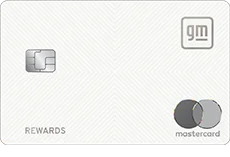
GM Rewards Mastercard
Best for GM owners paying for eligible GM dealership service, GM Genuine Parts, ACDelco parts, accessories, OnStar, or other qualifying GM purchases
- Rewards
- Barclays and GM list up to 10x points on eligible GM purchases, 3x points on other eligible net purchases, qualifying GM purchase promotional APR offers, and a $0 annual fee.
- Annual fee
- $0
Pros
- Useful if your repair is customer-paid Certified Service at a GM dealership or eligible GM Genuine or ACDelco parts through GM channels.
- Official materials list a $0 annual fee.
- Can pair dealership-service earning with GM Rewards redemption for GM products and services.
Cons
- The strongest earning is narrow and tied to qualifying GM purchases, merchant identifiers, and GM Rewards terms.
- Points are GM Rewards points, not general cash back.
- Promotional APR terms apply only to qualifying GM purchases and should not justify a repair balance you cannot repay.
Issuer terms are authoritative. Card links may point to issuer pages or approved partners when available.
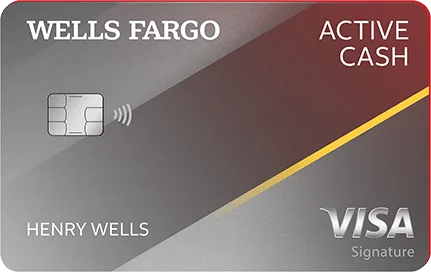
Wells Fargo Active Cash Card
Best simple fallback when repair-shop coding, dealer terms, tire-store eligibility, or payment fees are unclear
- Rewards
- Wells Fargo lists unlimited 2% cash rewards on purchases with no categories to track or quarterly activations and a $0 annual fee.
- Annual fee
- $0
Pros
- Simple 2% benchmark for independent mechanics, mobile repair, mixed parts-and-labor invoices, and uncertain merchant codes.
- No auto category, selected category, quarterly activation, or brand-specific redemption to manage.
- Wells Fargo also lists Roadside Dispatch as a pay-per-use benefit for eligible cardholders.
Cons
- Lower ceiling than a qualifying 3% auto category or narrow dealership reward.
- Does not provide auto-repair-specific category guarantees.
- Cash equivalents, fees, balance transfers, interest, and other excluded activity do not earn rewards under Wells Fargo terms.
Issuer terms are authoritative. Card links may point to issuer pages or approved partners when available.
Car repairs are not the same as gas purchases. A road-trip tune-up, tire replacement, brake job, oil change, towing bill, dealership service invoice, parts order, or car wash can post under different merchant data, and a card that is great for fuel may earn only a base rate on the repair.
The short version: use a true auto-category card when the merchant clearly qualifies, a manufacturer or dealership card when the repair fits that brand’s official service terms, and a 2% flat-rate card when coding or financing is unclear. If a shop adds a card fee or you need to carry the balance, the payment cost can matter more than the reward.
Which credit card should you use for car repairs?
Use the card that matches how the repair purchase is likely to post: auto service for qualifying mechanics, tire stores, car washes, towing, and parts; dealership rewards for eligible brand service; and flat-rate Cash Back when the merchant, checkout path, or fee is uncertain. The right answer can be different for a local mechanic, Discount Tire, a mobile locksmith, a GM dealership, a body shop, and an online parts order.
Madeen’s current in-app fallback catalog shows why car repairs deserve a separate answer. The catalog has 3,944 card records and 3,944 active personal cards. In the current runtime reward fields, no active personal category reward rule explicitly mentions auto repair, automotive service, tire stores, car washes, towing, or mechanics. At the same time, 232 active personal card records mention auto-related terms somewhere in benefits or detail metadata.
That gap matters. Many cards have rental-car coverage, roadside-dispatch language, gas rewards, or auto words in benefits, but fewer cards have clear auto-service reward categories. The catalog also has 423 active personal cards earning at least 1.5x or 1.5% on base purchases, 208 earning at least 2x or 2% on base purchases, and 12 cash-back cards earning at least 2% on base purchases. In practice, a strong repair answer often starts by checking for a true auto category, then comparing it with a simple flat-rate card.
What are the best credit cards for car repairs right now?
The best car-repair card depends on whether the transaction is a broad auto-service purchase, a brand-specific dealership purchase, or an uncertain bill:
- Upgrade Triple Cash Rewards: best broad auto-category option when the merchant codes as an eligible auto purchase.
- GM Rewards Mastercard: best narrow option for GM owners paying for eligible GM dealership service, parts, accessories, OnStar, or other qualifying GM purchases.
- Wells Fargo Active Cash Card: best simple fallback when repair category coding, payment fees, or dealership terms are unclear.
Issuer terms are authoritative. Before applying for a card or moving a large repair bill, verify the current annual fee, reward rate, category list, payment-fee policy, merchant coding, redemption rules, promotional APR terms, and whether the charge is a purchase rather than a cash advance, financing transaction, or excluded payment path.
When is Upgrade Triple Cash Rewards best for auto service?
Upgrade Triple Cash Rewards is best when the repair purchase clearly fits Upgrade’s auto category and you are comfortable with the card’s repayment structure. Upgrade lists 3% Cash Back on home, auto, and health purchases, 1% Cash Back on all other purchases, and no annual fee. Upgrade also says Cash Back is earned when eligible purchases are paid back.
The auto category is unusually direct for this topic. Upgrade’s help page lists auto merchant categories that include automobile rental agencies, automotive paint shops, automotive service shops, tire stores, top and body shops, new and used car and truck dealers for sales, service, repairs, parts, and leasing, car washes, motor vehicle supplies and new parts, towing services, and truck and utility trailer rentals. Merchant examples include Discount Tire, Firestone, Tires.com, Mavis Tire, and Tractor Supply Co.
That makes Upgrade a strong candidate for tires, brakes, body work, car washes, towing, parts, and dealership service when the merchant category fits. The limitation is not the headline category; it is the payment and coding detail. Upgrade says merchants set their own category codes, so purchases may not appear in categories as expected. It also describes rates, terms, and loan-style repayment details, so compare the total cost before using the card for a repair balance.
When is GM Rewards Mastercard better for dealership service?
GM Rewards Mastercard is better only when the repair is a qualifying GM purchase and you value GM Rewards points. Barclays and GM list up to 10x points on eligible GM purchases when using the GM Rewards Mastercard plus GM Rewards membership earning, 3x points on other eligible net purchases, and a $0 annual fee.
For repairs, the key official term is “qualifying GM purchases.” Barclays describes qualifying GM purchases as including customer-paid Certified Service at a GM dealership, GM Genuine and ACDelco parts purchased at a GM dealership or online through GM websites, GM Accessories, OnStar transactions, GM Energy purchases, General Motors Insurance purchases, and other specified GM channels as determined by merchant identification numbers. GM’s rewards page also lists paid Certified Service, eligible GM Genuine Parts and ACDelco Parts, and eligible accessories as GM Rewards earning activities.
The tradeoff is that this is not a universal auto-repair card. The highest value is narrow, brand-specific, and tied to GM Rewards redemption rather than cash. If you drive a non-GM vehicle, use an independent mechanic, buy third-party parts, or do not want GM-specific redemptions, compare a general auto-category card or flat-rate card instead.
When is a 2% flat-rate card enough for car repairs?
A 2% flat-rate card is enough when the repair-shop category is uncertain, the auto-category card has awkward repayment terms, the shop adds a card fee, or you do not want brand-specific points. Wells Fargo Active Cash is a useful benchmark because Wells Fargo lists unlimited 2% cash rewards on purchases, no categories to track or quarterly activations, and a $0 annual fee.
Use the flat-rate benchmark for ambiguous repair spending: an independent mechanic with unclear coding, a mobile repair service, a mixed invoice with parts and labor, a payment link from a service writer, a third-party financing portal, a local body shop, a car audio or tint shop, a locksmith, or a small shop that charges extra for credit cards.
The fallback is not meant to beat a clean 3% auto category. It is the no-drama option when a missed category would drop the purchase to 1%, when a branded card’s points are not useful, or when the shop’s payment method creates uncertainty. If you want the broader fallback-card framework, compare this repair decision with which credit card to use for everyday purchases. If the provider charges a 3% card fee, even a 2% card can be a losing choice before interest.
Do tires, towing, car washes, parts, and dealership repairs count the same way?
They may not count the same way. Merchant category codes are assigned through the merchant and payment network, not by the wording on the estimate. A tire chain, dealership service lane, body shop, car wash, towing company, parts counter, online marketplace, mobile mechanic, and repair-financing provider can all send different transaction data.
Examples that need extra checking include:
- Tire stores and tire repair. Some auto-category programs explicitly name tire stores, while a warehouse club tire center or online marketplace may post differently.
- Dealership service. A manufacturer card may reward eligible brand service, but the same card may be weaker at an independent mechanic.
- Towing and roadside help. A towing company may fit an auto category, while a roadside-dispatch benefit may be pay-per-use and separate from rewards.
- Car washes and detailing. Some auto categories name car washes; others treat them like ordinary services.
- Online parts and accessories. A direct auto-parts merchant, marketplace seller, and dealership parts website may not code the same way.
- Body shops and paint shops. Auto body work can be expensive enough that fees, insurance reimbursements, and payment timing matter as much as the reward rate.
- Payment links and financing providers. A repair invoice paid through a third-party portal may not preserve the repair shop’s category.
This is why a gas-card answer is too broad. Fuel, EV charging, rental cars, auto insurance, and repairs are different card decisions even though they all involve a vehicle.
Should financing or a card fee change the repair card choice?
Yes. Car repairs can be urgent and expensive, so the financing cost can overwhelm the reward. A 3% reward on a $1,200 repair is about $36 before exclusions. If the shop charges a 3% card fee, the reward may only break even. If interest accrues for multiple months, the reward can disappear quickly.
Before choosing a card, ask the repair provider whether credit card payments have a fee, whether debit, ACH, or check is cheaper, and whether any promotional financing is deferred interest or true 0% APR. Barclays lists promotional APR offers for qualifying GM purchases on the GM card, and Upgrade describes fixed-rate repayment details for its credit line. Those can be useful only when the repayment plan is clear and cheaper than alternatives.
If insurance is involved, do not rush. A collision repair may be paid by an insurer, reimbursed after a deductible, or adjusted after a supplement. A card can help with the deductible or timing, but the correct payment method depends on the shop, insurer, and whether the balance will be paid in full.
How can Madeen help choose a car-repair card?
Madeen helps by keeping the decision tied to cards you already carry. You select your cards on your iPhone, choose the closest spending category, and Madeen compares local reward rules without bank login, card numbers, or transaction history.
For car repairs, use Madeen as the wallet check, then add the repair-specific facts: auto-service category eligibility, dealership brand terms, parts versus labor, shop card fees, payment links, promotional financing, and whether you can pay the statement balance in full. That keeps the answer practical instead of assuming every vehicle purchase is gas.
For privacy details, read the Madeen Privacy Policy or the product note on why Madeen does not ask for your bank login. For adjacent vehicle decisions, compare which credit card to use for gas, which credit card to use for EV charging, which credit card to use for rental cars, and which credit card to use for insurance premiums. If a repair invoice shares a quarterly cap with other bonus categories, read how credit card reward caps work.
What should you check before paying a mechanic?
Check the repair provider, card fee, category terms, and payoff plan before paying. A car repair can be large enough that a coding miss, processing fee, or financing mistake costs more than the reward.
Before handing over a card, review:
- Merchant type. Independent mechanic, dealership, tire store, body shop, car wash, parts seller, mobile service, and towing company can code differently.
- Category wording. Look for explicit auto-service, tire-store, towing, car wash, dealer, or parts language rather than assuming gas rewards apply.
- Payment fee. A shop fee above your reward rate can make card payment worse than ACH, debit, or check.
- Brand restrictions. Manufacturer cards may be best only for eligible dealership service and brand-specific redemptions.
- Payment path. Payment links, third-party financing, mobile readers, and marketplaces can change reward eligibility.
- Insurance timing. Deductibles, reimbursements, supplements, and repair authorizations can change the net bill.
- Payoff plan. Rewards are useful only if the payment method remains affordable; interest can erase any Cash Back quickly.
The practical rule is simple: use the auto category when the merchant clearly fits, use the dealership card when the brand terms fit, and use a strong flat-rate fallback when the repair bill is ambiguous.
Related encyclopedia topics
Frequently asked questions
Which credit card should I use for car repairs?
Use an auto-category card when the repair shop, tire store, towing company, car wash, parts seller, or dealership clearly qualifies. Use a dealership-branded card only when the repair fits that brand's terms. If coding, fees, financing, or eligibility is unclear, compare against a simple 2% flat-rate card.
Do car repairs count as gas station rewards?
Usually you should not assume they do. Gas station rewards typically depend on fuel or gas-station merchant coding, while repairs may post as automotive service, tire stores, towing, dealership service, parts, mobile repair, or another merchant category.
Is Upgrade Triple Cash Rewards good for auto repairs?
It can be a strong fit because Upgrade lists 3% cash back on auto purchases and names categories such as automotive service shops, tire stores, car washes, towing, dealers, and parts. The caveats are that rewards are earned when eligible purchases are paid back and merchant coding still controls eligibility.
Should I use a dealership credit card for repairs?
Use a dealership or manufacturer card only when the repair is with that brand's eligible service channel and the points or promotional financing fit your plan. For non-brand shops, independent mechanics, or repairs you want to pay in full, a general auto-category or flat-rate card may be cleaner.
Can Madeen choose a car-repair card without bank login?
Madeen can compare local reward rules for cards you select without bank login or card numbers, but the final repair answer still depends on merchant coding, parts versus labor, dealership eligibility, payment fees, financing terms, and whether you can pay the balance in full.
Sources and notes
- Madeen analysis Madeen card catalog auto-repair and flat-rate fallback analysis - Madeen Accessed 2026-05-25.
- Issuer terms Upgrade Triple Cash Rewards - Upgrade Accessed 2026-05-25.
- Issuer terms Upgrade Triple Cash Rewards Card Details - 3% Cash Back - Upgrade Accessed 2026-05-25.
- Issuer terms GM Rewards Mastercard - Barclays Accessed 2026-05-25.
- Issuer terms GM Rewards Earn Points - General Motors Accessed 2026-05-25.
- Issuer terms GM Rewards Mastercard Reward Rules - Barclays and General Motors Accessed 2026-05-25.
- Issuer terms Wells Fargo Active Cash Credit Card - Wells Fargo Accessed 2026-05-25.