Which Credit Card Should You Use for Rental Cars in June 2026?
Best credit card for rental cars in July 2026: primary vs secondary CDW, decline-the-waiver rules, Enterprise pickups, and portal booking math.
Madeen compares public issuer terms with its card-rule catalog. Issuer pages control rewards, fees, benefits, exclusions, and eligibility; Madeen does not issue cards, make approval decisions, or provide financial advice.
What are the best credit cards for rental cars right now?

Chase Sapphire Preferred Card
Best mid-fee rental-car card when primary coverage matters more than a premium travel-card package
- Rewards
- Current Chase materials describe elevated rewards on travel purchases and Chase Sapphire auto-rental coverage that can be primary when the rental is paid with the card and the rental company's collision coverage is declined.
- Annual fee
- $95
Pros
- Primary rental-car collision coverage is the main reason to consider it for rentals.
- Lower annual fee than premium travel cards with similar rental-coverage positioning.
- Useful beyond rentals because Chase travel rewards cover a broader travel wallet.
Cons
- Coverage is not all-inclusive and excludes some vehicles, uses, and rental lengths.
- Rewards can depend on whether the booking is through Chase Travel or another rental channel.
- The annual fee needs to be justified by more than one occasional rental.
Issuer terms are authoritative. Card links may point to issuer pages or approved partners when available.

Capital One Venture X Rewards
Best premium rental-car choice for travelers who already use Capital One Travel and can justify the annual fee
- Rewards
- Capital One materials describe 10X miles on rental cars booked through Capital One Travel, 2X miles on other purchases, a $395 annual fee, and rental-car insurance benefits when terms are met.
- Annual fee
- $395
Pros
- High rental-car earning rate when booking through Capital One Travel.
- Premium travel credits and benefits can offset the fee for frequent travelers.
- Catalog benefits include auto rental collision coverage and Visa Infinite rental-car privileges.
Cons
- The highest rental-car reward rate is tied to Capital One Travel bookings.
- The $395 annual fee is too much if you only rent cars once in a while.
- Coverage terms, vehicle exclusions, and claim rules still need to be checked before declining rental-company coverage.
Issuer terms are authoritative. Card links may point to issuer pages or approved partners when available.
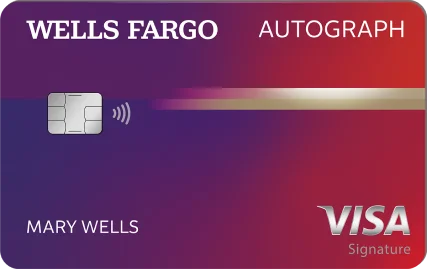
Wells Fargo Autograph Card
Best no-annual-fee rental-car fallback for unlimited 3X travel rewards
- Rewards
- Wells Fargo lists unlimited 3X points on travel, including vehicle and auto rentals, with a $0 annual fee and secondary auto rental collision damage waiver coverage in the United States.
- Annual fee
- $0
Pros
- No annual fee and official Wells Fargo terms include vehicle and auto rentals in the 3X travel category.
- Also covers common trip categories such as restaurants, gas, transit, streaming, and phone plans.
- Useful fallback when a premium card's annual fee or portal requirement does not fit.
Cons
- Wells Fargo's guide describes U.S. rental coverage as secondary, not primary.
- Coverage is capped and excludes some countries, vehicles, and rental situations.
- Lower ceiling than premium portal-booking rates when those bookings fit your plans.
Issuer terms are authoritative. Card links may point to issuer pages or approved partners when available.
Rental cars are a Travel purchase, but the best card is not always the card with the largest Travel multiplier. A rental can involve booking portals, agency merchant codes, collision-damage waiver terms, excluded vehicles, country limits, annual fees, and whether coverage is primary or secondary.
The short version: use a card that combines reliable rental-car rewards with the protection level you actually need. For many travelers, primary rental-car collision coverage can beat a slightly higher points rate. For occasional renters, a no-annual-fee Travel card may be enough if secondary coverage is acceptable.
Which credit card should you use for rental cars?
Use the card with the best net combination of rental-car protection, rewards, booking flexibility, and annual-fee value. Start with coverage first if you would decline the rental company’s collision damage waiver, then compare points or cash back.
Madeen’s current in-app fallback catalog shows why rental cars deserve their own decision instead of being folded into a generic Travel answer. Across 3,944 cards, only 5 card records have reward rules that explicitly mention car rentals, representing 7 rental-car reward rules. Yet 1,223 card records include rental-car or auto-rental benefit language, and 761 of those have no annual fee.
That split is the key insight: a card can be useful for rental-car protection even when the runtime reward rule does not single out car rentals. The best rental-car card is often the one whose benefit terms match the trip, not just the one with the highest advertised Travel category.
For the source hierarchy behind this analysis, see the Madeen editorial methodology and Madeen Card Rules Index. The catalog supports cross-card comparison; issuer benefit guides control the actual rental-car coverage terms.
What are the best credit cards for rental cars right now?
The best rental-car card depends on whether you want primary coverage at a moderate annual fee, premium portal rewards, or a no-annual-fee fallback:
- Chase Sapphire Preferred Card: best mid-fee rental-car choice when primary auto rental coverage is the deciding feature.
- Capital One Venture X Rewards: best premium option when you book rental cars through Capital One Travel and can use the broader Travel benefits.
- Wells Fargo Autograph Card: best no-annual-fee fallback because Wells Fargo lists vehicle and auto rentals in its 3X Travel category and includes auto rental collision damage waiver coverage.
Issuer terms are authoritative. Before applying for a card or declining coverage at the counter, verify the current annual fee, reward rate, booking channel, benefit administrator rules, country exclusions, vehicle exclusions, rental length limit, claim process, and whether the rental must be paid in full with the card.
Is primary rental car coverage worth more than extra points?
Primary rental car coverage can be worth more than extra points when the card’s benefit applies. Primary coverage generally means the card benefit can respond before your personal auto insurance for covered damage or theft to the rental vehicle, subject to the card’s terms.
That can matter because a rental-car damage claim may involve deductibles, loss-of-use charges, administrative fees, and paperwork. An extra 1X on a $500 rental may be worth only a few dollars. Coverage that avoids or reduces a covered claim hassle can be more valuable than that reward difference.
Primary coverage is not magic, though. It is not personal liability insurance, health insurance, or coverage for every vehicle and trip. You still need to read the benefit guide and understand what is excluded before declining the rental company’s coverage.
When is Chase Sapphire Preferred best for a rental car?
Chase Sapphire Preferred is best when you want primary rental-car collision coverage without jumping to a premium annual fee. Chase’s Sapphire rental-car coverage guide describes primary auto rental coverage for Sapphire Preferred and Sapphire Reserve cardmembers when the rental is paid with the card or eligible Chase points, the cardmember is the primary renter, and the rental company’s collision damage waiver is declined.
That makes Sapphire Preferred a strong rental-car card for travelers who rent a few times per year and value protection more than the biggest portal-booking multiplier. The current annual fee is far lower than premium Travel cards, so the break-even point can be easier to reach.
The tradeoff is that you still need to fit Chase’s benefit terms. Coverage has limits and exclusions, including rental length and vehicle restrictions. If the rental is unusual, expensive, exotic, peer-to-peer, off-road, or outside normal rental-agency rules, check the Chase benefit guide before relying on the card.
When is Capital One Venture X best for rental cars?
Capital One Venture X is best when you already use Capital One Travel, rent cars often enough to care about a high portal rate, and can justify the premium annual fee with Travel credits and benefits beyond one rental.
Capital One’s official materials describe 10X miles on rental cars booked through Capital One Travel, 2X miles on other purchases, and a $395 annual fee. Its rental-car insurance materials explain that cardholders generally need to decline the rental company’s collision damage waiver and pay for the rental with the eligible card for coverage to apply.
The main caution is booking-channel dependence. A 10X portal rate is attractive only if the portal price, rental agency, cancellation terms, loyalty handling, and pickup details work for your trip. If booking direct is cheaper or more flexible, the Venture X card may fall back to its ordinary purchase rate.
When is Wells Fargo Autograph enough for a rental car?
Wells Fargo Autograph can be enough when you want no annual fee, straightforward 3X Travel rewards, and you are comfortable with secondary rental-car coverage in the United States.
Wells Fargo’s current Autograph page says the card earns unlimited 3X points on Travel and specifically includes airfare, hotels, car rentals, cruises, and more. The same page lists a $0 annual fee. Its guide to benefits describes auto rental collision damage waiver coverage with a $50,000 maximum, up to 15 consecutive days in the United States and 31 consecutive days outside the United States, with U.S. coverage described as secondary.
That makes Autograph a practical fallback for occasional renters, especially if a mid-fee or premium Travel card does not fit the rest of your wallet. It is not the same as primary coverage, so travelers who want the stronger coverage posture should compare Chase Sapphire Preferred vs Capital One Venture, Venture X vs Sapphire Reserve, or another primary-coverage card. For broader summer trip planning, see summer travel, the July 2026 travel spoke, and flights.
Should you book the rental direct or through a card Travel portal?
Book through a card Travel portal only when the total package is better than booking direct. Compare the base rate, taxes and fees, cancellation terms, agency location, loyalty number handling, pickup rules, and the card’s reward rate.
A portal can be attractive when it unlocks a much higher multiplier, such as Capital One Venture X’s 10X rental-car rate through Capital One Travel. A direct booking can be better when the agency price is lower, the cancellation terms are cleaner, you need corporate or membership rates, or you want fewer intermediaries if the reservation changes.
Use this quick framework:
| Rental situation | Usually compare first | Why |
|---|---|---|
| Ordinary U.S. rental where coverage matters | Primary-coverage Travel card | Protection may matter more than a small reward difference |
| Capital One Travel price is competitive | Venture X through Capital One Travel | High portal rate can be valuable if the booking terms fit |
| Occasional rental and no annual-fee preference | Wells Fargo Autograph or similar Travel card | Solid Travel rewards without paying for a premium card |
| International rental | Benefit guide before rewards rate | Country exclusions, primary/secondary status, and local rules matter |
| Peer-to-peer, exotic, moving truck, or long rental | Rental-company or separate coverage terms | Card benefits often exclude these situations |
If the portal and direct prices are close, coverage and flexibility should decide. If the portal is materially more expensive, the extra points may not cover the difference.
How do you tell if your credit card covers Rental car insurance?
Tell by reading the exact guide to benefits for the card product you will use, not by relying on the card network logo or a generic issuer summary. Two cards from the same issuer can have different coverage, and the same card can have different rules for U.S. rentals, international rentals, business use, or rentals booked through a portal.
Confirm these points before you pick up the car:
- Eligible card and account status. The benefit may require an open account in good standing.
- Payment method. Many benefits require paying the full rental cost with the eligible card or associated rewards.
- Waiver requirement. Collision coverage from the card often requires declining the rental company’s collision damage waiver or loss damage waiver.
- Coverage status. Check whether coverage is primary or secondary where you are renting.
- Covered costs. Collision damage waiver benefits usually focus on theft or damage to the rental vehicle, not liability, injury, or other people’s property.
- Trip limits. Rental length, country, vehicle type, and use-case exclusions can decide whether the benefit applies.
What rental-car exclusions should you check before relying on a card?
Check exclusions before the trip, not after damage occurs. Rental-car benefits are contract benefits with specific conditions.
At minimum, confirm these details:
- Payment requirement. Many benefits require paying the full rental cost with the eligible card or associated rewards.
- Declining the agency waiver. Collision coverage from the card often requires declining the rental company’s collision damage waiver or loss damage waiver.
- Primary versus secondary status. U.S. coverage may be primary on some cards and secondary on others.
- Rental length. Many guides cap covered rentals at a set number of consecutive days.
- Country exclusions. Some benefits exclude specific countries or require a coverage letter.
- Vehicle exclusions. Exotic cars, antique cars, trucks, motorcycles, vans, peer-to-peer rentals, and off-road use may be excluded.
- What is not covered. Card collision coverage typically does not replace personal liability, personal injury, or coverage for other people’s property.
This is also why a “best rental car card” answer should not stop at the reward rate. The practical winner depends on the trip, vehicle, country, agency, and your own insurance situation.
How can Madeen help choose a rental-car card?
Madeen helps by keeping the reward side of the decision tied to cards you already carry. You select your cards on your iPhone, choose the relevant purchase category, and Madeen compares local reward rules without bank login, card numbers, or transaction history.
For rental cars, use Madeen as the reward starting point, then layer in benefit-guide terms. The app can surface a strong Travel or flat-rate card in your wallet, but the final rental-car choice should also account for primary versus secondary coverage, portal rules, agency coding, annual fees, and exclusions.
For privacy details, read the Madeen Privacy Policy or the product note on why Madeen does not ask for your bank login. For the broader Travel-card framework, compare this guide with which credit card to use for travel and the summer travel card guide. If you are pairing a rental with concert or game Travel, see the concerts hub and the best credit card for sports tickets for separate ticket-fee decisions.
What should you do before picking up the rental car?
Decide before you reach the counter. Choose the card, confirm whether the booking must be paid in full with that card, read the benefit guide, and know whether you plan to decline the rental company’s collision damage waiver.
At pickup, make sure the primary renter’s name matches the cardholder requirements, inspect and photograph the car, keep the rental agreement, and save every receipt. If damage happens, benefit administrators usually ask for the rental agreement, accident report, repair estimate, demand letter, card statement, and other documentation. The reward points are nice, but the paperwork is what makes the benefit usable.
Related encyclopedia topics
Frequently asked questions
Which credit card should I use for rental cars?
Use the card that gives the best mix of rental-car protection, reliable rewards, and booking flexibility. A card with primary collision-damage waiver coverage can be better than a slightly higher rewards rate if you want to avoid involving your personal auto insurance for a covered rental-car damage claim.
Is primary rental car coverage better than more points?
Often yes for rentals where a covered damage claim would be expensive or inconvenient. Primary coverage can matter more than an extra point per dollar, but only if the rental, driver, vehicle, country, rental length, and payment method qualify under the card's benefit terms.
Should I book a rental car through a credit card travel portal?
Book through a credit card travel portal when the portal price, cancellation terms, rewards rate, loyalty treatment, and rental agency rules are better than booking direct. A high portal multiplier is not worth it if the base rental price, flexibility, or coverage terms are worse.
Is a no-annual-fee card enough for rental cars?
A no-annual-fee card can be enough if you mainly want solid travel rewards and can accept secondary coverage. Frequent renters, international renters, or travelers who value primary coverage should compare a mid-fee or premium travel card carefully.
Does Chase Sapphire Preferred cover rental car insurance?
Chase Sapphire Preferred can provide primary auto rental collision coverage when you pay for the rental with the card, decline the rental company's collision damage waiver, and meet the benefit guide's terms. Read the current Chase benefit guide for country, vehicle, and rental-length exclusions before declining agency coverage.
Which credit card companies protect you when you rent a car?
Chase Sapphire Preferred and Reserve, Capital One Venture X, and several United cards can provide primary auto rental collision coverage when you pay with the card, decline the rental company's collision damage waiver, and meet the benefit guide's terms. Wells Fargo Autograph and many no-fee cards offer secondary coverage instead.
Do you have to decline rental car insurance to use credit card coverage?
Usually yes. Card collision benefits typically require declining the rental company's collision damage waiver or loss damage waiver and paying the full rental with the eligible card. Read the guide to benefits before you reach the counter.
Which credit card is best for Enterprise car rental?
Chase Sapphire Preferred is a common Enterprise pick because it combines primary U.S. rental collision coverage with a moderate annual fee. Compare the portal price and benefit terms against Capital One Venture X if you book through Capital One Travel.
Can Madeen choose a rental-car card without bank login?
Madeen can compare local reward rules for cards you select without bank login or card numbers, but rental-car coverage terms, portal booking rules, rental agency coding, and claim exclusions still decide the final best card.
How do I tell if my credit card covers rental car insurance?
Read the exact guide to benefits for the card you will use, then confirm payment requirements, whether the rental company's waiver must be declined, primary versus secondary status, rental length, country limits, vehicle exclusions, and what types of damage are not covered.
Sources and notes
- Madeen analysis Madeen card catalog rental-car reward and benefit analysis - Madeen Accessed 2026-05-21.
- Issuer terms Chase Sapphire Preferred Credit Card - Chase Accessed 2026-05-21.
- Issuer terms The Chase Sapphire Auto Rental Coverage Guide - Chase Accessed 2026-05-21.
- Issuer terms Capital One Venture X Rewards - Capital One Accessed 2026-05-21.
- Issuer terms Understanding rental car insurance benefits - Capital One Accessed 2026-05-21.
- Issuer terms Wells Fargo Autograph Card - Wells Fargo Accessed 2026-05-21.
- Issuer terms Wells Fargo Autograph Visa Card Guide to Benefits - Wells Fargo Accessed 2026-05-21.