Which Credit Card Should You Use for Amazon Purchases in June 2026?
Best credit card for Amazon in July 2026: Prime Visa vs Amazon Visa, online-shopping caps, Whole Foods, Amazon Pay rules, and 2% fallbacks before Prime Day carts.
Madeen compares public issuer terms with its card-rule catalog. Issuer pages control rewards, fees, benefits, exclusions, and eligibility; Madeen does not issue cards, make approval decisions, or provide financial advice.
What are the best credit cards for Amazon purchases right now?
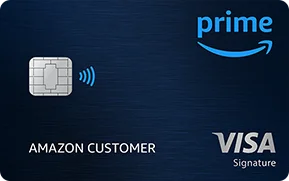
Prime Visa
Best for eligible Prime members who shop often at Amazon.com, Amazon Fresh, and Whole Foods Market
- Rewards
- Current Chase materials list unlimited 5% back at Amazon.com, Amazon Fresh, Whole Foods Market, and Chase Travel with an eligible Prime membership, plus 2% back at gas stations, restaurants, and local transit and commuting, and 1% elsewhere, with no annual fee.
- Annual fee
- $0
Pros
- Highest straightforward Amazon rate for eligible Prime members under current Chase materials.
- Also covers Amazon Fresh and Whole Foods Market in the main 5% category.
- No annual fee and no foreign transaction fees under current Chase materials.
Cons
- The headline 5% rate depends on having an eligible Prime membership.
- It is less compelling if you rarely shop at Amazon or Whole Foods.
- Amazon Pay, third-party merchants, gift cards, and special financing choices need separate term checks.
Issuer terms are authoritative. Card links may point to issuer pages or approved partners when available.
- Rewards
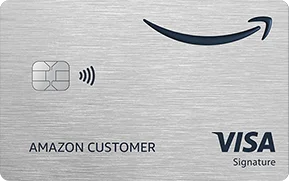
- Current Chase materials list 3% back at Amazon.com, Amazon Fresh, Whole Foods Market, and Chase Travel, 2% back at gas stations, restaurants, and local transit and commuting, and 1% elsewhere, with no annual fee.
- Annual fee
- $0
Pros
- Clear Amazon-specific option when you do not have eligible Prime membership.
- Can beat a 2% flat-rate card on qualifying Amazon and Whole Foods purchases.
- No annual fee under current Chase materials.
Cons
- Lower Amazon rate than Prime Visa for eligible Prime members.
- A capped online-shopping card can match 3% when the purchase qualifies and cap room remains.
- The card is still most useful if Amazon and Whole Foods are recurring purchases.
Issuer terms are authoritative. Card links may point to issuer pages or approved partners when available.
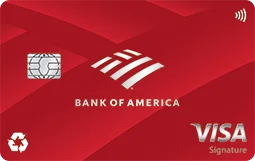
Bank of America Customized Cash Rewards
Best for Amazon.com orders when online shopping is selected and the quarterly cap has room
- Rewards
- Bank of America lists 3% cash back in a chosen category such as online shopping, 2% at grocery stores and wholesale clubs, and 1% elsewhere, with the 3% and 2% rewards capped on the first $2,500 in combined purchases each quarter.
- Annual fee
- $0
Pros
- Bank of America's official online-shopping examples include Amazon.
- Choice category can be changed monthly if another category becomes more useful.
- Useful beyond Amazon when several online merchants qualify.
Cons
- The 3% and 2% rewards share a quarterly cap before dropping to 1%.
- Phone, mail, in-person, and online orders paid in store do not qualify as online shopping.
- Prime Visa can be stronger for eligible Prime members buying directly from Amazon.
Issuer terms are authoritative. Card links may point to issuer pages or approved partners when available.
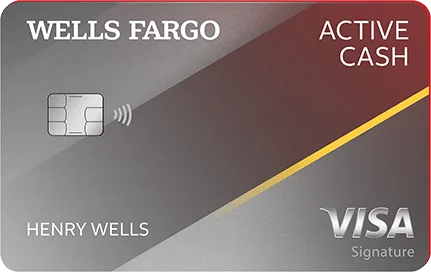
Wells Fargo Active Cash Card
Best simple fallback when Amazon category rules, caps, or checkout paths are unclear
- Rewards
- Wells Fargo lists unlimited 2% cash rewards on purchases with no categories to track and a $0 annual fee.
- Annual fee
- $0
Pros
- Simple 2% benchmark for marketplace, third-party, and uncertain purchases.
- No Prime requirement, selected category, or quarterly activation.
- Useful as an everyday fallback outside Amazon.
Cons
- Lower ceiling than qualifying 3% or 5% Amazon-specific rewards.
- Does not add Amazon-specific redemption, Prime, or Whole Foods benefits.
- Some nonpurchase transactions, cash equivalents, fees, and excluded activity do not earn rewards under Wells Fargo terms.
Issuer terms are authoritative. Card links may point to issuer pages or approved partners when available.
Amazon purchases look simple until the checkout path changes. A household may buy from Amazon.com, Amazon Fresh, Whole Foods Market, a marketplace seller, Subscribe & Save, an Amazon Pay merchant, a gift-card page, or a special-financing offer, and those details can change the best card.
The short version: eligible Prime members should start with Prime Visa for qualifying Amazon.com, Amazon Fresh, and Whole Foods purchases. Non-Prime shoppers should compare Amazon Visa, a selected online-shopping card, and a 2% flat-rate fallback. Use the fallback when Amazon Pay, gift cards, third-party merchants, caps, or special financing make the reward path unclear.
Which credit card should you use for Amazon purchases?
Use the card that matches your Amazon membership and checkout path. Prime Visa is the cleanest starting point for eligible Prime members. Amazon Visa is the Amazon-specific alternative for non-Prime shoppers. A broad online-shopping card can compete when the order qualifies and the cap has room.
Madeen’s current in-app fallback catalog shows why Amazon needs a narrower answer than “use an online shopping card.” The catalog has 3,944 card records and 3,944 active personal cards. Five active personal records mention Amazon or Whole Foods, nine active personal records use online-shopping language, and 328 active personal cards earn at least 2x or 2% on base purchases.
That pattern matters. Amazon-specific cards are uncommon, online-shopping categories are broader but capped or conditional, and flat-rate cards are plentiful. The best answer depends on whether you are a Prime member, whether the merchant is Amazon or a third party, and whether a category cap or special checkout option changes the return.
What are the best credit cards for Amazon purchases right now?
The best Amazon card depends on whether you want Prime-specific rewards, a non-Prime Amazon card, a flexible online-shopping category, or a no-guessing fallback:
- Prime Visa: best for eligible Prime members who frequently buy at Amazon.com, Amazon Fresh, and Whole Foods Market.
- Amazon Visa: best for non-Prime shoppers who still want an Amazon-specific card.
- Bank of America Customized Cash Rewards: best when online shopping is selected and the quarterly cap has room.
- Wells Fargo Active Cash Card: best fallback when the Amazon purchase path is unclear.
Issuer terms are authoritative. Before applying for a card or moving a large Amazon order, verify the current annual fee, reward rate, Prime requirement, Amazon.com and Whole Foods treatment, Amazon Pay rules, cap, financing option, gift-card exclusion, and whether the purchase is made directly with Amazon or through another merchant.
When is Prime Visa the best Amazon card?
Prime Visa is best when you have an eligible Prime membership and the purchase qualifies under Chase’s Amazon terms. Current Chase materials list unlimited 5% back at Amazon.com, Amazon Fresh, Whole Foods Market, and Chase Travel for eligible Prime members, plus 2% back at gas stations, restaurants, and local transit and commuting, and 1% elsewhere.
That makes Prime Visa the straightforward benchmark for frequent Amazon households. If you buy household basics, groceries through Amazon Fresh, Whole Foods runs, electronics, school supplies, gifts, and subscriptions through Amazon, a clear 5% category can beat most general online-shopping cards.
The Prime requirement is the first caveat. If you do not keep eligible Prime membership, the Amazon-specific comparison changes. The second caveat is that the card’s value is concentrated around Amazon and Whole Foods. If Amazon is only an occasional purchase, a flexible card you already carry may be enough.
What should non-Prime shoppers use at Amazon?
Non-Prime shoppers should compare Amazon Visa with any online-shopping category card and a flat-rate fallback. Current Chase materials list Amazon Visa at 3% back at Amazon.com, Amazon Fresh, Whole Foods Market, and Chase Travel, 2% at gas stations, restaurants, and local transit and commuting, and 1% elsewhere, with no annual fee.
That 3% Amazon-specific rate can beat a 2% flat-rate card when the purchase qualifies. It can also be simpler than tracking a chosen category if most of your online spending is on Amazon. But it is not automatically better than every card you already carry.
For example, Bank of America Customized Cash Rewards can also earn 3% in the selected online-shopping category, and Bank of America’s official category page lists Amazon as an online-shopping merchant example. If you use that category across Amazon, Walmart, Etsy, streaming, and other qualifying online merchants, the broader card may fit better than a retailer-specific card.
Can an online-shopping card beat an Amazon card?
An online-shopping card can beat or match an Amazon card when the purchase qualifies, the cap has room, and you value flexibility across retailers. Bank of America says its Online Shopping category includes purchases made online via a website or digital application, relying on merchant-provided information, and it lists Amazon as a merchant example.
The cap matters. Bank of America says the 3% choice category and 2% grocery and wholesale-club rewards apply to the first $2,500 in combined purchases each quarter, then earn 1%. A large laptop, appliance, school-supply haul, or holiday order can use much of that quarterly room.
The checkout path matters too. Bank of America excludes phone, mail, and in-person purchases from online shopping, including online orders paid in store. In-store mobile-wallet and contactless purchases are not online purchases under those terms. If an Amazon-related purchase runs through a non-Amazon merchant or a different payment flow, do not assume it receives the same treatment.
When is a 2% flat-rate card enough for Amazon?
A 2% flat-rate card is enough when the purchase is not clearly eligible for a stronger Amazon or online-shopping rate. Wells Fargo Active Cash is a useful benchmark because Wells Fargo lists unlimited 2% cash rewards on purchases with no categories to track and a $0 annual fee.
That benchmark is especially useful for marketplace ambiguity. Amazon orders can involve third-party sellers, subscriptions, digital goods, gift cards, refurbished items, business purchases, Amazon Pay, or special financing choices. Some purchases may still qualify for Amazon-specific rewards, but the point is to compare before assuming.
The fallback is not the highest possible return. It is the no-drama answer when a 3% or 5% card has a cap, a membership requirement, a selected category, or unclear terms. If the better category is obvious, use it. If not, a clean 2% can be better than guessing wrong and earning 1%.
What is the best credit card for Prime Day?
Eligible Prime members should default to Prime Visa for qualifying Amazon.com Prime Day orders. For a July 2026 Prime Day stacking walkthrough, see best credit card for Prime Day and the July online-shopping spoke. Prime Day stacks the same merchant-coding rules as everyday Amazon shopping — marketplace sellers, Amazon Pay checkouts, and gift-card purchases may not earn the headline rate. Before a large cart, confirm cap room on any online-shopping card you plan to use as a backup.
Non-Prime shoppers should compare Amazon Visa against a broad online shopping card and a 2% flat-rate fallback. If you also shop Costco or warehouse clubs, remember Visa-only rules before you assume every Amazon co-brand fits your whole wallet.
Pair card rewards with portal math only when the portal actually beats your card — see shopping portal vs card rewards for when stacking helps and when it does not.
Do Whole Foods, Amazon Pay, gift cards, and marketplace sellers count the same way?
No. Treat each Amazon-adjacent purchase as its own checkout path. Whole Foods Market is explicitly named in current Chase Amazon card materials, but Amazon Pay, gift cards, and marketplace transactions can involve different rules.
Amazon Pay is a good example. Amazon’s Amazon Pay page for the Amazon Store Card says purchases made using the Amazon Store Card and Prime Store Card through Amazon Pay are not eligible to earn reward points. That does not describe every Amazon card or every checkout path, but it shows why Amazon Pay should not be treated as automatically identical to Amazon.com.
Gift cards, cash equivalents, special financing, third-party sellers, Whole Foods in-store payment methods, Subscribe & Save, business purchases, and promotional offers can each have separate terms. For expensive orders, check the issuer page and the checkout screen before you choose a card.
How can Madeen help choose an Amazon purchase card?
Madeen helps by keeping the card comparison tied to the cards you already carry. You select your cards on your iPhone, choose the closest spending category, and Madeen compares local reward rules without bank login, card numbers, or transaction history.
For Amazon purchases, use Madeen as the wallet check, then add the Amazon-specific facts: Prime status, direct Amazon checkout, Whole Foods, online-shopping cap room, Amazon Pay, gift cards, and special financing. That keeps the decision practical instead of turning every Amazon order into a generic “online shopping” answer.
For privacy details, read the Madeen Privacy Policy or the product note on why Madeen does not ask for your bank login. Reward comparisons follow the Madeen editorial methodology. For adjacent decisions, compare which credit card to use for online shopping, Best Buy electronics, Amazon AI shopping, and which credit card to use for everyday purchases.
What should you check before paying at Amazon?
Check the exact purchase path before checkout, especially when the order is large or timed around Prime Day, back-to-school shopping, holiday gifts, or a household restock.
Before paying, review:
- Prime status. Prime Visa’s headline Amazon rate depends on eligible Prime membership under current Chase materials.
- Merchant. Amazon.com, Amazon Fresh, Whole Foods Market, a marketplace seller, and an Amazon Pay merchant may not be identical.
- Category cap. A selected online-shopping card may drop to a lower rate after the quarterly cap.
- Gift cards and cash equivalents. These often have special exclusions or may not earn rewards.
- Special financing. Promotional financing can change the reward choice and should only be used when the repayment plan fits.
- Issuer terms. Use official issuer pages and checkout disclosures as the source of truth.
Amazon is a good example of why the best card is not always the broadest online-shopping card. Use the Amazon-specific card when the Amazon terms fit, use an online-shopping card when the category and cap fit, and keep a flat-rate fallback ready when the checkout path is uncertain.
Related encyclopedia topics
Frequently asked questions
Which credit card should I use for Amazon purchases?
Prime members should usually start with Prime Visa for qualifying Amazon.com, Amazon Fresh, and Whole Foods purchases. Non-Prime shoppers can compare Amazon Visa, a capped online-shopping card, and a 2% flat-rate card. The best answer depends on Prime status, cap room, merchant coding, and the exact checkout path.
Is Prime Visa better than an online-shopping credit card?
Prime Visa is usually stronger for eligible Prime members because current Chase materials list 5% back at Amazon.com, Amazon Fresh, and Whole Foods Market. A 3% online-shopping card can still make sense if you do not want an Amazon-specific card or if you use the category across many online merchants.
What card should non-Prime shoppers use at Amazon?
Non-Prime shoppers should compare Amazon Visa's Amazon-specific 3% rate with any online-shopping category card they already carry and a reliable 2% flat-rate fallback. The best card is the one that still wins after caps, exclusions, and merchant coding.
Do Amazon Pay purchases earn the same rewards as Amazon.com purchases?
Not automatically. Amazon Pay can involve a different merchant and payment flow. Amazon's Amazon Pay page says purchases made with Amazon Store Card or Prime Store Card through Amazon Pay are not eligible to earn reward points, so check the exact card and checkout terms.
Can Madeen choose an Amazon card without bank login?
Madeen can compare local reward rules for cards you select without bank login or card numbers, but Prime status, Amazon Pay, Whole Foods, category caps, special financing, and issuer terms still decide the final best card.
What is the best credit card for Prime Day?
Eligible Prime members should start with Prime Visa for qualifying Amazon.com orders during Prime Day. Non-Prime shoppers should compare Amazon Visa, a selected online-shopping card with cap room, and a 2% flat-rate fallback. Stack shopping portals only when the portal rate beats your card after exclusions.
Do any credit cards give Amazon Prime for free?
Some cards bundle a limited-time or promotional Prime membership, but most Amazon co-branded cards do not replace an ongoing Prime subscription. Prime Visa's headline 5% rate depends on eligible Prime membership under current Chase materials — verify whether any welcome offer includes Prime before you count on it.
Which credit card gives the best discount on Amazon?
For eligible Prime members, Prime Visa usually delivers the highest straightforward discount via 5% back on qualifying Amazon.com, Amazon Fresh, and Whole Foods purchases. Non-Prime shoppers should compare Amazon Visa at 3%, a selected online-shopping card with cap room, and a 2% flat-rate fallback when checkout path or merchant coding is unclear.
Sources and notes
- Madeen analysis Madeen card catalog Amazon, online-shopping, and flat-rate analysis - Madeen Accessed 2026-05-25.
- Issuer terms Prime Visa Credit Card - Chase Accessed 2026-05-25.
- Issuer terms Amazon Visa Credit Card - Chase Accessed 2026-05-25.
- Issuer terms Amazon Store Card - Amazon Pay - Amazon Pay Accessed 2026-05-25.
- Issuer terms Bank of America Customized Cash Rewards Card: Categories and Exclusions - Bank of America Accessed 2026-05-25.
- Issuer terms Wells Fargo Active Cash Credit Card - Wells Fargo Accessed 2026-05-25.