Is Discover it or Chase Freedom Unlimited Better in June 2026?
Discover it Cash Back vs Chase Freedom Unlimited compared on base earn, first-year match, dining and drugstore bonuses, foreign fees, network acceptance, and who should pick each starter card.
Madeen compares public issuer terms with its card-rule catalog. Issuer pages control rewards, fees, benefits, exclusions, and eligibility; Madeen does not issue cards, make approval decisions, or provide financial advice.
Discover it vs Chase Freedom Unlimited vs Chase Freedom Flex at a glance

Chase Freedom Unlimited®
Year-round 3% on dining and drugstores plus 5% Chase Travel without quarterly activation
- Rewards
- 5% on Chase Travel, 3% on dining and drugstores, 1.5% on all other purchases under current Chase terms; $0 annual fee.
- Annual fee
- $0
Pros
- Permanent 3% on dining and drugstores — no quarterly calendar guesswork.
- Visa network — widely accepted, including Costco warehouses.
- Pairs with Sapphire cards for Ultimate Rewards transfer value.
Cons
- No first-year match — base earn is lower than doubled Discover quarters when categories align.
- 3% foreign transaction fee on international purchases.
- Bonus categories still lose to rotating 5% when your spend fits the active quarter.
Issuer terms are authoritative. Card links may point to issuer pages or approved partners when available.
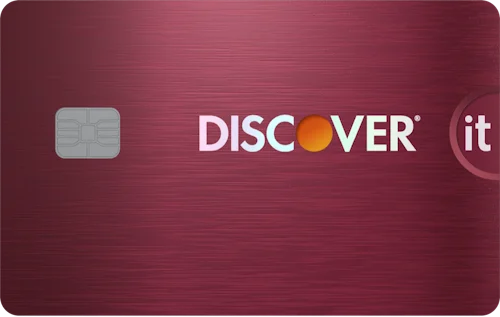
Discover it® Cash Back
First-year Cashback Match when rotating 5% categories match your spend
- Rewards
- 5% cash back in quarterly rotating categories on up to $1,500 in purchases each quarter after activation, 1% elsewhere; Cashback Match doubles all first-year rewards under current Discover terms; $0 annual fee.
- Annual fee
- $0
Pros
- Cashback Match can make the first year extremely valuable on aligned categories.
- No foreign transaction fees on many Discover products — verify your card page.
- Simple cash-back redemption with no transfer-partner math.
Cons
- Discover acceptance is narrower than Visa at some merchants and abroad.
- 5% requires activation and a $1,500 quarterly cap per category.
- After year one, value depends heavily on whether quarterly calendars fit your spend.
Issuer terms are authoritative. Card links may point to issuer pages or approved partners when available.

Chase Freedom Flex®
Chase ecosystem users who want rotating 5% plus permanent 3% dining and drugstores
- Rewards
- 5% on Chase Travel and quarterly rotating categories (activation required), 3% on dining and drugstores, 1% elsewhere; $0 annual fee.
- Annual fee
- $0
Pros
- Combines Freedom Unlimited's 3% dining/drugstores with Flex-style 5% quarters.
- Useful third option if you already lean Chase but want category depth.
- Same Ultimate Rewards pairing path as Freedom Unlimited.
Cons
- Rotating 5% still needs activation and shares quarterly caps with other Chase Freedom cards.
- Another card to manage if you only wanted a single starter.
- 3% foreign transaction fee.
Issuer terms are authoritative. Card links may point to issuer pages or approved partners when available.
Discover it Cash Back and Chase Freedom Unlimited are two of the most common no-annual-fee starter cards, but they optimize for different spend patterns. Freedom Unlimited favors steady 3% Dining and drugstores on Visa; Discover it favors first-year Cashback Match when you activate rotating 5% quarters.
Madeen’s catalog tracks hundreds of fixed-multiplier and rotating-category rules across issuers — see Card Rules for how we compare them.
Is Discover it or Chase Freedom Unlimited better?
Chase Freedom Unlimited wins for everyday predictability: 3% Dining and drugstores, 1.5% elsewhere, and Visa acceptance. Discover it Cash Back wins in year one when Cashback Match doubles rotating 5% categories you activate — but only if your spend fits the quarterly calendar and you enroll each quarter.
Discover it vs Chase Freedom Unlimited comparison table
| Card | Base earn | Best bonus lanes | Network | Foreign fees |
|---|---|---|---|---|
| Chase Freedom Unlimited | 1.5% general | 3% Dining & drugstores; 5% Chase Travel | Visa | 3% FTF |
| Discover it Cash Back | 1% general | 5% rotating (cap $1,500/qtr) + first-year match | Discover | Often none — verify card page |
Pairwise deep dive: /compare/chase-freedomunlimited-vs-discover-cashback/.
Who should pick Chase Freedom Unlimited?
Choose Freedom Unlimited when you want one card for restaurants, pharmacies, and broad Visa acceptance without quarterly homework. It also stacks into Chase Ultimate Rewards if you later add a Sapphire card.
Related: Freedom Unlimited vs Citi Double Cash and Freedom Flex vs Discover it.
Who should pick Discover it Cash Back?
Choose Discover it when your first-year spend lines up with Discover’s 5% calendar and you will activate each quarter. Cashback Match can beat Freedom Unlimited’s base rates on those purchases — but after year one, compare again.
How Madeen picks between them
Add both cards to Madeen and select a category at checkout. The app compares effective rates among cards you already own — no bank login required. Get Madeen on iPhone when you want the math done before you tap pay.
Related encyclopedia topics
Frequently asked questions
Is Discover it or Chase Freedom Unlimited better?
Chase Freedom Unlimited is better for predictable 3% on dining and drugstores and Visa acceptance. Discover it Cash Back is better in the first year when Cashback Match doubles rotating 5% categories you actually activate — if you remember quarterly enrollment.
Which card has better everyday earn?
Freedom Unlimited earns 1.5% on general purchases versus Discover's 1% outside bonus quarters. Over a full year without aligned 5% categories, Freedom Unlimited's base rate usually wins.
Can I hold both Discover it and Freedom Unlimited?
Yes. Many wallet builders use Freedom Unlimited for dining and drugstores and Discover it when the quarterly calendar matches big purchases. Madeen picks the higher effective rate among cards you own at checkout.
Which card is better for building credit?
Both are no-annual-fee options, but approval depends on your credit profile — neither issuer guarantees approval. Pay balances in full and keep utilization low; see our credit-building guides for context.
How does this compare to Freedom Flex vs Discover it?
Freedom Flex adds rotating 5% on top of 3% dining and drugstores. See our [Freedom Flex vs Discover it](/blog/chase-freedom-flex-vs-discover-it/) comparison for the rotating-category angle, or [Freedom Flex vs Freedom Unlimited](/blog/chase-freedom-flex-vs-freedom-unlimited/) for the Chase-only choice.
Sources and notes
- Issuer terms Chase Freedom Unlimited benefits
- Issuer terms Discover it Cash Back
- Issuer terms Chase Freedom Flex benefits
- Madeen analysis Madeen catalog — no-annual-fee cash back cards - Madeen