Is Capital One Savor or Amex Gold Better in June 2026?
Capital One Savor vs Amex Gold compared on dining and grocery earn, annual fees, Membership Rewards flexibility, entertainment coding, and who should pick cash back or points.
Madeen compares public issuer terms with its card-rule catalog. Issuer pages control rewards, fees, benefits, exclusions, and eligibility; Madeen does not issue cards, make approval decisions, or provide financial advice.
Capital One Savor vs Amex Gold vs SavorOne at a glance

American Express® Gold Card
Best for heavy dining and U.S. supermarket spend when points value clears the annual fee
- Rewards
- 4x Membership Rewards at restaurants worldwide (up to $50k/year) and U.S. supermarkets (up to $25k/year) under current issuer terms.
- Annual fee
- $250
Pros
- Industry-leading dining and U.S. supermarket multipliers on high caps.
- Membership Rewards transfer partners for travel upside.
- Monthly dining and Uber credits can offset the fee if used.
Cons
- $250 annual fee requires real spend and credit usage.
- Amex acceptance is narrower than Mastercard at some merchants.
- Supermarket and restaurant definitions exclude some stores.
Issuer terms are authoritative. Card links may point to issuer pages or approved partners when available.
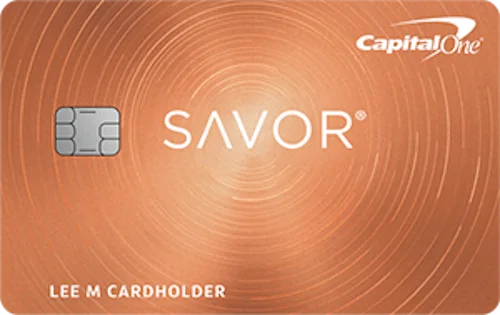
Capital One Savor Cash Rewards Credit Card
Best cash-back pick for dining plus entertainment without points complexity
- Rewards
- Unlimited 4% cash back on dining and entertainment, 3% at grocery stores, and 1% elsewhere under current Capital One terms.
- Annual fee
- Verify on Capital One site
Pros
- Simple cash back — no points valuation required.
- Strong entertainment category alongside dining.
- Mastercard acceptance at more merchants than Amex alone.
Cons
- Annual fee applies — compare to no-fee SavorOne.
- Grocery rate is below Gold's 4x on U.S. supermarkets.
- Entertainment and dining definitions follow Capital One rules.
Issuer terms are authoritative. Card links may point to issuer pages or approved partners when available.

Capital One SavorOne Cash Rewards Credit Card
Best no-fee alternative when Savor's annual fee is not worth it
- Rewards
- Unlimited 3% cash back on dining, entertainment, popular streaming, and grocery stores under current issuer terms.
- Annual fee
- $0
Pros
- No annual fee with solid dining and entertainment rates.
- Easier to justify for moderate restaurant spend.
- Useful companion to Amex Gold when Amex is not accepted.
Cons
- Lower rates than premium Savor or Amex Gold.
- Cash back only — no transfer partners.
- Category definitions still control qualification.
Issuer terms are authoritative. Card links may point to issuer pages or approved partners when available.
Short answer: Amex Gold wins for heavy U.S. supermarket and worldwide restaurant spend when Membership Rewards value and monthly credits clear the $250 Annual fee. Capital One Savor wins for Entertainment-heavy households who want simple Cash Back on Dining and events without points math. SavorOne is the no-fee fork when neither premium fee clears.
Is Capital One Savor or Amex Gold better?
State your spend mix before picking a winner:
| Criteria | Capital One Savor | Amex Gold |
|---|---|---|
| Dining | 4% Cash Back (issuer-defined Dining) | 4x MR at restaurants worldwide |
| U.S. supermarkets | 3% Cash Back | 4x MR up to $25k/year |
| Entertainment | 4% Cash Back | Base rate only |
| Reward type | Cash Back | Membership Rewards points |
| Network | Mastercard | American Express |
| Annual fee | Lower than Gold (verify live) | $250 |
Gold wins when groceries and restaurants dominate and you will use points transfers or portal redemptions above ~1¢ per point. Savor wins when you value Cash Back simplicity and Entertainment spend is meaningful.
Who should pick Amex Gold?
Choose Gold if:
- U.S. supermarket spend is $500+ per month and stores qualify under Amex definitions.
- You dine out often enough that 4x restaurants beats Savor after the fee.
- You will use Dining and Uber credits bundled with the card.
- You already value Membership Rewards transfers.
Gold is not the default pick for light spend or for readers who will not track credits. See what credit score for Amex Gold before applying.
Who should pick Capital One Savor?
Choose Savor if:
- You want Cash Back without cents-per-point homework.
- Concerts, movies, and Entertainment are a large share of wallet spend — see dining hub for overlap.
- You need Mastercard acceptance where Amex is declined.
- Your Grocery spend is moderate — Savor’s 3% may be enough without Gold’s fee.
Compare Savor vs SavorOne if the premium Annual fee is the blocker.
How do the annual fees compare?
Madeen catalog analysis as of 2026-06-01 shows annual-fee cards cluster in travel and premium Cash Back — fee cards only win when category bonuses plus credits exceed the fee on your ledger, not a generic budget.
Run break-even math:
- Estimate annual Dining + Grocery + Entertainment on each card.
- Subtract credits you will actually use.
- Compare net rewards in dollars, not multiplier headlines.
Pairwise depth: /compare/capitalone-savor-vs-amex-gold/ · Related: Amex Gold vs Chase Sapphire Preferred · Citi Custom Cash vs Amex Gold
Where does Madeen fit?
Madeen compares effective rate among cards you already own at checkout — without bank login. If you carry both Savor and Gold, Madeen surfaces which wins for this merchant after coding and caps.
Madeen does not recommend new applications or estimate approval odds. It answers: which card in my wallet should I use right now?
Related encyclopedia topics
Frequently asked questions
Is Capital One Savor or Amex Gold better?
Amex Gold wins for heavy U.S. supermarket and worldwide restaurant spend when Membership Rewards value clears the $250 annual fee. Capital One Savor wins for entertainment-heavy households who prefer simple cash back and broader merchant acceptance on the Mastercard network.
Which card is better for dining?
Amex Gold earns 4x at restaurants worldwide on a high annual cap. Savor earns elevated cash back on dining and entertainment under Capital One's category list — compare effective cents per dollar after annual fees for your actual restaurant spend.
Does Savor or Gold win on groceries?
Amex Gold earns 4x at U.S. supermarkets up to a $25,000 annual cap under current terms. Savor does not offer a dedicated U.S. supermarket bonus — Gold wins for grocery-heavy budgets.
Can you hold both Savor and Amex Gold?
Yes. Many optimizers use Gold for groceries and restaurants and Savor for entertainment or merchants that do not accept Amex. Madeen compares effective rates among owned cards at checkout.
Which card has the lower annual fee?
Capital One Savor carries a lower annual fee than Amex Gold under current issuer pricing — verify live terms before applying. SavorOne is the no-fee alternative with lower category rates.
Sources and notes
- Issuer terms Capital One Savor Cash Rewards Credit Card - Capital One Accessed 2026-06-20.
- Issuer terms American Express® Gold Card - American Express Accessed 2026-06-20.
- Madeen analysis Madeen card catalog analysis - Madeen Accessed 2026-06-20.