What Are the Best Credit Cards for EV Charging in June 2026?
Best EV charging credit cards in June 2026: compare 4X capped vs 3X unlimited rates, merchant coding, home charging rules, and no-annual-fee picks.
Madeen compares public issuer terms with its card-rule catalog. Issuer pages control rewards, fees, benefits, exclusions, and eligibility; Madeen does not issue cards, make approval decisions, or provide financial advice.
What are the top picks for June 2026?

U.S. Bank Altitude Connect Visa Signature Card
Best high-rate no-annual-fee EV charging card if the quarterly cap fits
- Rewards
- 4X points at gas stations and EV charging stations on the first $1,000 each quarter, plus no annual fee under current U.S. Bank materials.
- Annual fee
- $0
Pros
- Official U.S. Bank materials list 4X at gas stations and EV charging stations.
- No annual fee under current U.S. Bank materials.
- Also earns elevated rewards on travel, dining, streaming, and grocery purchases.
Cons
- 4X gas and EV charging rewards are capped at the first $1,000 each quarter.
- U.S. Bank excludes discount stores, supercenters, wholesale clubs, grocery stores, and supermarkets from the gas/EV bonus.
- Merchant category coding decides whether a charger qualifies.
Issuer terms are authoritative. Card links may point to issuer pages or approved partners when available.
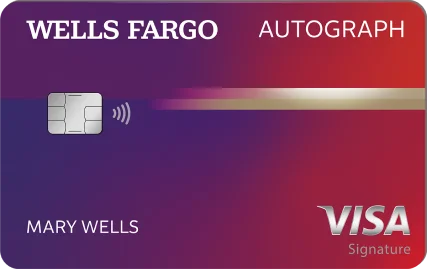
Wells Fargo Autograph Card
Best no-annual-fee EV card when you want unlimited 3X across charging, gas, transit, and travel
- Rewards
- Unlimited 3X points on gas stations and electric vehicle charging stations, plus restaurants, travel, transit, popular streaming services, and phone plans.
- Annual fee
- $0
Pros
- Official Wells Fargo materials include electric vehicle charging stations in the 3X gas category.
- No annual fee and no quarterly cap stated for the 3X bonus categories.
- Pairs EV charging with transit, tolls, parking, rideshare, travel, dining, streaming, and phone-plan categories.
Cons
- Lower EV charging ceiling than a qualifying 4X capped card.
- Rewards are Wells Fargo points, so redemption choices affect practical value.
- Visa merchant category codes and issuer exclusions still control bonus eligibility.
Issuer terms are authoritative. Card links may point to issuer pages or approved partners when available.
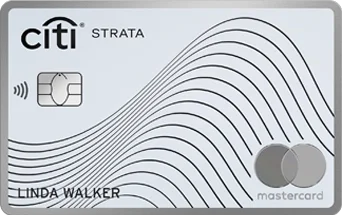
Citi Strata Card
Best no-annual-fee Citi option for EV charging plus supermarkets and select transit
- Rewards
- 3 ThankYou Points per dollar on gas and EV charging stations, supermarkets, and select transit, plus one eligible self-select category under current Citi materials.
- Annual fee
- $0
Pros
- Official Citi materials list gas and EV charging stations as a 3X category for Citi Strata.
- No annual fee and useful companion categories for commuters.
- Self-select category can cover another recurring spending area if Citi ThankYou points fit your wallet.
Cons
- ThankYou point value depends on redemption method.
- Citi category terms exclude some merchants that do not use eligible gas or EV charging merchant categories.
- Not as high a public-charging rate as a qualifying 4X card.
Issuer terms are authoritative. Card links may point to issuer pages or approved partners when available.
June 2026 update: This month’s picks reflect Madeen’s catalog snapshot 2026-05-01. For the evergreen guide, see which credit card for EV charging and best credit card for gas. Browse gas category rankings and Altitude Connect details.
Quick answer: best credit card for EV charging
Use a card that explicitly lists electric vehicle charging stations in its gas or travel bonus category. For no-annual-fee public charging, the U.S. Bank Altitude Connect (4X on the first $1,000 per quarter) and Wells Fargo Autograph (unlimited 3X) are common starting points — home utility bills usually need a different card; see utility bills.
What are the best credit card picks for June 2026?
For June 2026, the best card depends on what you already carry, whether the purchase codes in the bonus category you expect, and whether an annual fee is worth it for your spend level. Madeen’s catalog tracks 3,944 U.S. cards — use the picks below as starting points, then confirm issuer terms before you apply.
What changed since last month?
This is the first monthly installment in this series — there is no last month spoke to compare yet. Card picks below use Madeen’s latest catalog snapshot.
Best cards for ev charging in June 2026
EV charging is easy to confuse with gas rewards, travel rewards, utility bills, parking, or app-store purchases. Some issuers now name electric vehicle charging stations directly, but the best card still depends on where the charge posts.
The short version: use a card that explicitly rewards EV charging stations when you pay a public charging network. If the cost is bundled into parking, a hotel stay, an app wallet, or your home electric bill, compare the relevant category or a flat-rate fallback instead.
Which credit card should you use for EV charging?
Use the card with the highest reliable return for the exact charging purchase. A public fast charger, workplace charger, parking-garage charger, hotel charger, highway travel plaza, app wallet reload, and home utility bill can all post differently.
Madeen’s current in-app fallback catalog shows EV charging is much deeper than many narrow categories. Across 3,944 cards, 426 cards have reward rules that mention EV charging or electric vehicle charging, representing 494 EV-related reward rules. The catalog also has 220 cards at 3x or better on an EV-related rule, but only 26 of those have no annual fee. At 4x or better, the set narrows to 197 cards, and only 4 are no-annual-fee cards.
That is the decision rule: prioritize explicit EV charging language, then check the cap, annual fee, and merchant coding. Do not assume every electricity-related payment is an EV charging-station purchase.
What are the best credit cards for EV charging right now?
The best EV charging card depends on whether you want the highest no-fee rate, simple unlimited 3X, or a Citi ThankYou setup:
- U.S. Bank Altitude Connect Visa Signature Card: best high-rate no-annual-fee option because current U.S. Bank materials list 4X points at gas stations and EV charging stations on the first $1,000 each quarter.
- Wells Fargo Autograph Card: best no-annual-fee unlimited 3X option because Wells Fargo includes electric vehicle charging stations in its 3X gas category and also covers transit, travel, restaurants, streaming, and phone plans.
- Citi Strata Card: best Citi no-annual-fee option because current Citi materials list 3X on gas and EV charging stations, plus supermarkets, select transit, and one eligible self-select category.
Issuer terms are authoritative. Before applying for a card or moving a large recurring charging bill, verify the current rewards, annual fee, caps, exclusions, merchant examples, redemption value, and whether the charging network posts under an eligible category.
Do EV charging stations count as gas stations?
Sometimes, but only when the issuer says so and the merchant code cooperates. U.S. Bank, Wells Fargo, and Citi all publish current materials that explicitly pair gas and EV charging for the cards discussed here. That is stronger than assuming a generic gas card covers charging.
Even with explicit EV language, coding matters. U.S. Bank states that each merchant’s business is identified by a Visa category code and that U.S. Bank does not determine those category codes. Wells Fargo’s Autograph terms similarly tie bonus rewards to retailers whose Visa merchant code is classified in eligible categories, including gas stations, automated fuel dispensers, and electric vehicle charging stations.
The practical test is not “Was electricity delivered to my car?” The test is “Did the merchant post as an eligible EV charging station under my issuer’s terms?”
When is U.S. Bank Altitude Connect best for EV charging?
U.S. Bank Altitude Connect is best when you want a high no-annual-fee public-charging rate and your charging spend fits the cap. Current U.S. Bank materials describe 4X points at gas stations and EV charging stations on the first $1,000 each quarter, plus no annual fee.
The quarterly cap is important. A household that spends $150 per month on public charging uses about $450 per quarter and sta
…
See Madeen methodology for how effective rates are calculated.
Related encyclopedia topics
Frequently asked questions
Which credit card should I use for EV charging?
Use a card that explicitly includes EV charging stations in its gas or travel rewards category. If your charger, app, parking garage, hotel, or home utility bill does not code as EV charging, use your best flat-rate or relevant category card instead.
Do EV charging stations count as gas stations for credit card rewards?
Sometimes. Some issuers explicitly include electric vehicle charging stations in the gas category, while others do not. The merchant category code assigned to the charging network or payment processor controls the final reward.
Is a 4X EV charging card better than an unlimited 3X card?
A 4X card is better when the purchase qualifies and the quarterly cap has room. An unlimited 3X card can be better after the cap is used, when you want simpler tracking, or when your EV charging spend is spread across uncertain merchants.
Should home EV charging go on an EV charging card?
Usually no. Home charging normally increases your electric utility bill, so an EV charging station category should not be assumed to apply. Compare a home-utilities card, processing fees, and your best flat-rate fallback instead.
Can Madeen choose an EV charging card without bank login?
Madeen can compare local reward rules for cards you select without bank login or card numbers, but charging-network merchant coding, issuer category terms, caps, and utility-bill treatment still decide the final reward.
Sources and notes
- Madeen analysis Madeen card catalog EV charging and base-reward analysis - Madeen Accessed 2026-05-25.
- Issuer terms U.S. Bank Altitude Connect Visa Signature Card - U.S. Bank Accessed 2026-05-25.
- Issuer terms Wells Fargo Autograph Card - Wells Fargo Accessed 2026-05-25.
- Issuer terms Citi Strata Card - Citi Accessed 2026-05-25.
- Issuer terms What Citi Credit Cards Offer Gas and EV Charging Rewards? - Citi Accessed 2026-05-25.
- Reference Electric Vehicle Charging Station Locations - U.S. Department of Energy Alternative Fuels Data Center Accessed 2026-05-25.