Which Credit Card Should You Use for Home Improvement in May 2026?
Choose a home improvement credit card by comparing hardware and furniture category rewards, store-card discounts, project-size caps, contractor coding, and flat-rate fallback cards.
Madeen compares public issuer terms with its card-rule catalog. Issuer pages control rewards, fees, benefits, exclusions, and eligibility; Madeen does not issue cards, make approval decisions, or provide financial advice.
What are the best credit cards for home improvement right now?
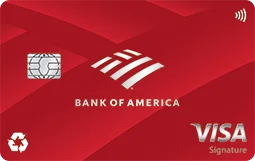
Bank of America Customized Cash Rewards
Best flexible home improvement category card when your project fits the quarterly cap
- Rewards
- 3% cash back in one chosen category, including Home Improvement & Furnishings, plus 2% at grocery stores and wholesale clubs on the first $2,500 in combined quarterly choice-category, grocery, and wholesale-club purchases, then 1%.
- Annual fee
- $0
Pros
- Official category list includes home supply warehouses, lumber stores, hardware stores, nurseries, furniture stores, and residential contractors.
- Choice category can be changed once per calendar month for future purchases.
- No annual fee, with a higher potential rate for eligible Preferred Rewards members.
Cons
- The 3% and 2% rewards share a $2,500 combined quarterly cap.
- Business-to-business merchants and wholesale distributors are excluded from the Home Improvement & Furnishings category.
- Merchant category coding decides whether a contractor or supplier qualifies.
Issuer terms are authoritative. Card links may point to issuer pages or approved partners when available.

MyLowe's Rewards Credit Card
Best for frequent Lowe's shoppers who value an immediate store discount over transferable rewards
- Rewards
- Lowe's current credit-card materials describe 5% off eligible purchases at U.S. stores and Lowes.com when using the card, subject to exclusions and promotional-offer limits.
- Annual fee
- $0 in Madeen's current catalog; verify current Synchrony pricing before applying
Pros
- Immediate store discount can be easier to value than points on Lowe's purchases.
- Useful when the purchase is clearly at Lowe's and no broader category cap is available.
- Can be paired with a separate flat-rate card for non-Lowe's contractors or suppliers.
Cons
- Store card value is narrow if your project spending is split across many merchants.
- Discount terms exclude some purchases and generally cannot be combined with special financing or other credit promotions.
- Rewards do not help at Home Depot, Ace, IKEA, contractors, or local suppliers.
Issuer terms are authoritative. Card links may point to issuer pages or approved partners when available.
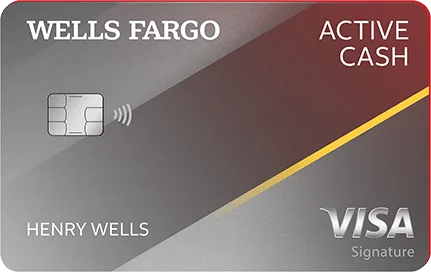
Wells Fargo Active Cash Card
Best flat-rate fallback for uncapped project spending and merchants that do not code as home improvement
- Rewards
- Unlimited 2% cash rewards on purchases under current Wells Fargo terms, with no categories to select or quarterly activations.
- Annual fee
- $0
Pros
- Simple unlimited 2% cash rewards on eligible purchases.
- No home-improvement category definition, store limitation, or quarterly cap to track.
- Useful after a category cap is used or when a contractor's merchant code is uncertain.
Cons
- Lower ceiling than a qualifying 3% category or 5% store discount.
- Does not add home-improvement-specific financing or store perks.
- Foreign transaction fee applies under current Wells Fargo terms, though that usually does not matter for U.S. home projects.
Issuer terms are authoritative. Card links may point to issuer pages or approved partners when available.
Short answer: For a single-store hardware or furniture run, start with a store card when the listed discount clearly beats your other cards. For projects split across Home Depot, Lowe’s, contractors, and online merchants, use Bank of America Customized Cash Rewards with Home Improvement & Furnishings selected only while the shared quarterly cap has room; otherwise default to a 2% flat-rate card. See how credit card reward caps work and the category caps reference before stacking appliance and lumber charges on one card.
Home improvement purchases can be too large for a casual card choice. A weekend hardware run, new appliance, furniture order, contractor deposit, or full renovation may involve different merchants, caps, store-card discounts, financing offers, and category codes. For The Home Depot specifically, see best credit card for Home Depot. For Lowe’s, see best credit card for Lowe’s.
The short version: use a home-improvement category card when the merchant qualifies and the cap has room. Use a store card only when the store discount or financing terms are clearly better for that purchase. Use a flat-rate card when the project is uncapped, split across merchants, or likely to code unpredictably.
Which credit card should you use for home improvement?
Use the card in your wallet with the highest reliable net value for the exact project purchase. A hardware-store transaction, furniture order, contractor payment, online home decor purchase, and Lowe’s checkout can all point to different cards.
Madeen’s current in-app fallback catalog shows why this is a narrow category. Across 3,944 cards, only 8 card records have reward-rule language that explicitly mentions home improvement or furnishings, and all 8 are from the Bank of America Customized Cash Rewards family. The catalog also has 2 Lowe’s-related card records.
By contrast, 1,035 cards earn at least 1.5x or 1.5% on base purchases, and 328 cards earn at least 2x or 2% on base purchases. That makes home improvement a clear example of checking for a specific bonus first, then falling back to a simple everyday card when the merchant, store, or cap does not fit.
What are the best credit cards for home improvement right now?
The best home improvement card depends on whether you want a broad category, a store-specific discount, or an uncapped fallback:
- Bank of America Customized Cash Rewards: best broad category choice when you select Home Improvement & Furnishings and your combined quarterly spending stays under the cap.
- MyLowe’s Rewards Credit Card: best for eligible Lowe’s purchases when the store-card discount applies and beats the rewards you would earn elsewhere.
- Wells Fargo Active Cash Card: best flat-rate fallback when the purchase is outside a home-improvement category, above a cap, or spread across contractors and suppliers.
Issuer and store terms are authoritative. Before applying for a card or moving a project payment, verify current rewards, fees, caps, exclusions, promotional financing rules, and merchant-category treatment on the issuer or store pages.
What counts as home improvement for credit card rewards?
Home improvement usually depends on merchant category code, not what you personally bought. The item may feel home-related, but the payment network and issuer look at how the merchant is categorized.
Bank of America’s Home Improvement & Furnishings category is one of the clearest public definitions. Its current category page says the category includes purchases in merchant categories such as home supply warehouse stores, lumber and building materials stores, paint and wallpaper stores, hardware stores, nurseries, lawn and garden supply stores, and general contractors primarily engaged in construction of residential buildings.
Bank of America also lists example merchants such as Ace Hardware, Crate & Barrel, IKEA, Pottery Barn, Sherwin-Williams, The Home Depot, Wayfair, and Williams-Sonoma. The important caveat is that merchant examples are not guarantees, and Bank of America says merchants categorize and submit purchases, so some purchases may not fall where you expect. Business-to-business merchants and wholesale distributors are also excluded from that category.
Is a home improvement category card better than a store card?
A home improvement category card is better when your project is spread across multiple merchants or when you want rewards outside one store. A store card is better only when the store-specific value clearly beats the broader card for that exact checkout.
Bank of America Customized Cash Rewards is the broad example. It can earn 3% Cash Back in the Home Improvement & Furnishings choice category, while also earning 2% at grocery stores and wholesale clubs and 1% elsewhere. The catch is the cap: Bank of America says the 3% and 2% rewards apply on the first $2,500 in combined choice-category, grocery, and wholesale-club purchases each quarter, then purchases earn 1%.
That cap changes project math quickly. A $400 hardware run fits easily. A $3,500 appliance-and-furniture month may not. After the cap, a 2% flat-rate card can beat the category card’s 1% post-cap rate.
When is a Lowe’s card the better choice?
A Lowe’s card can be the better choice when the purchase is at Lowe’s, the store-card discount applies, and you are not choosing special financing or another promotion that replaces the discount.
Lowe’s current credit-card materials describe 5% off eligible purchases at U.S. stores and Lowes.com when using the MyLowe’s Rewards Credit Card, subject to exclusions. Those exclusions matter. Lowe’s materials describe limits around special financing offers, some other credit promotions, services, fees, taxes, gift cards, and selected brands or programs.
The practical rule: treat a Lowe’s card as a Lowe’s-specific tool, not a universal home-improvement card. It may be strong for eligible Lowe’s purchases, but it does not help at Home Depot, Ace Hardware, IKEA, local contractors, lumber yards, or furniture stores outside the Lowe’s ecosystem.
When is a 2% flat-rate card better for a home project?
A 2% flat-rate card is better when reliability matters more than a higher headline rate. Home projects often involve merchants that do not fit cleanly into a single card category.
Use a flat-rate fallback when:
- The category cap is used up. A capped 3% card can drop below a 2% card after the quarterly limit.
- The merchant code is uncertain. Contractors, design firms, local suppliers, installers, and specialty merchants may not code the way you expect.
- The store card is too narrow. A Lowe’s card is not useful for non-Lowe’s merchants.
- The project has many vendors. One flat-rate card can be easier than tracking which merchant earns which bonus.
- You are comparing rewards to financing. A promotional financing offer may be useful, but only if you understand the terms and pay as required; it is not the same as Cash Back.
Wells Fargo Active Cash is the simple fallback example because Wells Fargo lists unlimited 2% cash rewards on purchases with no categories to track or quarterly activations. For broader fallback strategy, read Madeen’s guide to which credit card to use for everyday purchases.
How should you compare a 3% category, 5% store discount, and 2% flat rate?
Compare the next dollar of project spending, not the best advertised rate. The best card can change as soon as a cap is reached, a merchant falls outside a category, or a store-card discount is unavailable.
Use this quick framework:
| Purchase situation | Usually compare first | Why |
|---|---|---|
| Hardware, furniture, paint, nursery, or residential contractor that clearly qualifies | Home improvement category card | Broad category can beat a flat-rate card before the cap |
| Eligible Lowe’s checkout | Lowe’s store card versus your best rewards card | Immediate store discount may beat ordinary rewards |
| Large project above a quarterly cap | Flat-rate fallback after the cap | Post-cap earnings may drop to 1% |
| Contractor, installer, supplier, or design service with uncertain coding | Flat-rate card | Avoid relying on a category that may not trigger |
| Online home decor purchase | Online-shopping card versus home-improvement card | The merchant and issuer definition decide which category applies |
This is also why home improvement is different from the warehouse club guide. Warehouse purchases often start with payment-network and membership rules; home projects start with merchant category, cap size, store-card limitations, and whether the project spans several vendors.
How can Madeen help choose a home improvement card?
Madeen helps because home improvement is wallet-specific. You select the cards you already carry, choose a purchase category, and Madeen compares local reward rules on your iPhone without bank login, card numbers, or transaction history.
The catalog data is useful because explicit home-improvement rewards are uncommon compared with flat-rate rewards. If your wallet includes a home-improvement category card, Madeen can surface it. If not, the app can point you back to a reliable everyday card instead of pretending every hardware, furniture, or contractor purchase earns a bonus.
For privacy details, read the Madeen Privacy Policy or the product note on why Madeen does not ask for your bank login.
What should you do next?
List the project purchases before choosing a card: store checkout, online order, contractor deposit, furniture, appliance, materials, or finishing supplies. Then check whether each merchant is eligible, whether the category cap has room, and whether a store-card discount or financing offer changes the calculation.
For small qualifying purchases, a home-improvement category card can be the winner. For Lowe’s-specific purchases, a store card may be better. For large or messy projects, a 2% flat-rate card is often the cleanest fallback after caps, exclusions, and uncertain merchant coding.
Related encyclopedia topics
Frequently asked questions
Which credit card should I use for home improvement?
Use a home-improvement category card when the merchant qualifies and the cap has room, a store card when you are buying at that store and the discount beats rewards, and a flat-rate card when the project is uncapped, split across merchants, or coded unpredictably.
Is a Lowe's card better than a general rewards card?
A Lowe's card can be better for eligible Lowe's purchases when the store discount applies, but a general rewards card is usually better for contractors, other hardware stores, furniture stores, or purchases that exceed a category cap.
Do contractors and furniture stores count as home improvement?
Sometimes. Bank of America's Home Improvement & Furnishings category includes examples such as home supply warehouses, hardware stores, furniture stores, nurseries, and some residential contractors, but merchant category coding and exclusions control the final reward.
When is a 2% cash back card better for a home project?
A 2% flat-rate card is better when a home-improvement bonus is capped out, the merchant does not qualify, the purchase is outside a store-card ecosystem, or the project spans several merchants with uncertain coding.
Can Madeen choose a home improvement card without bank login?
Madeen can compare local reward rules for cards you select without bank login or card numbers, but issuer terms, store-card exclusions, caps, and merchant coding still decide whether a purchase qualifies.
Sources and notes
- Madeen analysis Madeen card catalog home improvement, Lowe's, and base-reward analysis - Madeen Accessed 2026-05-25.
- Issuer terms Bank of America Customized Cash Rewards Credit Card - Bank of America Accessed 2026-05-25.
- Issuer terms Bank of America Customized Cash Rewards Categories and Exclusions - Bank of America Accessed 2026-05-25.
- Issuer terms MyLowe's Rewards Credit Card - Lowe's Accessed 2026-05-25.
- Issuer terms MyLowe's Rewards Card Account terms - Lowe's and Synchrony Bank Accessed 2026-05-25.
- Issuer terms Wells Fargo Active Cash Credit Card - Wells Fargo Accessed 2026-05-25.
- Issuer terms Wells Fargo Active Cash Credit Card terms and conditions - Wells Fargo Accessed 2026-05-25.