Which Credit Card Should You Use for Apple Purchases in May 2026?
Choose an Apple purchase credit card by comparing Apple Card Daily Cash, Apple Card Monthly Installments, online-shopping categories, caps, and flat-rate cash-back fallbacks.
Madeen compares public issuer terms with its card-rule catalog. Issuer pages control rewards, fees, benefits, exclusions, and eligibility; Madeen does not issue cards, make approval decisions, or provide financial advice.
What are the best credit cards for Apple purchases right now?

Apple Card
Best for direct Apple purchases, Apple Pay, and eligible Apple Card Monthly Installments
- Rewards
- Apple lists 3% Daily Cash on everything you buy from Apple, 2% Daily Cash when using Apple Card with Apple Pay, 1% where Apple Pay is not accepted, and no annual fee.
- Annual fee
- $0
Pros
- Clear official 3% Daily Cash language for direct Apple purchases.
- Eligible Apple products can use Apple Card Monthly Installments when selected at checkout.
- No annual fee, late fee, or foreign transaction fee under current Apple materials.
Cons
- The best Apple-specific value is tied to Apple purchases and Apple Pay.
- Apple Card Monthly Installments are subject to credit approval, credit limit, eligible products, and checkout rules.
- A different card can win if a store-specific offer, welcome bonus, or online-shopping category is more valuable.
Issuer terms are authoritative. Card links may point to issuer pages or approved partners when available.
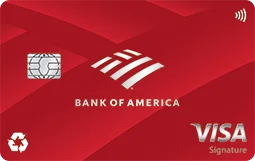
Bank of America Customized Cash Rewards
Best for apple.com or Apple Store app purchases when online shopping is the selected category
- Rewards
- Bank of America lists 3% cash back in a chosen category such as online shopping, 2% at grocery stores and wholesale clubs, and 1% elsewhere, with the 3% and 2% rewards capped on the first $2,500 in combined purchases each quarter.
- Annual fee
- $0
Pros
- Can match Apple Card's 3% rate for qualifying online Apple purchases when online shopping is selected.
- Choice category can be changed monthly if another category becomes more useful.
- No annual fee under current Bank of America promotional materials.
Cons
- In-store Apple purchases, phone orders, and online orders paid in store do not qualify as online shopping under Bank of America's category rules.
- The 3% and 2% rewards share a quarterly cap before dropping to 1%.
- Category eligibility depends on merchant data, and excluded merchant classes do not qualify.
Issuer terms are authoritative. Card links may point to issuer pages or approved partners when available.
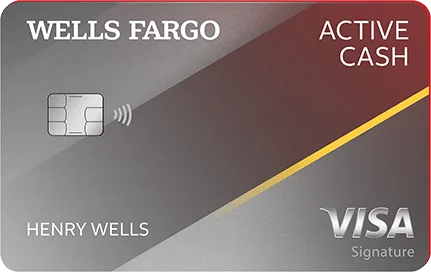
Wells Fargo Active Cash Card
Best simple fallback when Apple-specific or online-shopping rules are uncertain
- Rewards
- Wells Fargo lists unlimited 2% cash rewards on purchases with no categories to track and a $0 annual fee.
- Annual fee
- $0
Pros
- Simple 2% cash rewards benchmark for Apple accessories, repairs, third-party retailers, and uncertain coding.
- No quarterly categories, selected retailers, or Apple Pay requirement.
- Useful beyond Apple purchases as an everyday fallback card.
Cons
- Lower ceiling than a qualifying 3% Apple or online-shopping card.
- Does not provide Apple Card Monthly Installments.
- Some nonpurchase transactions, cash equivalents, fees, and excluded activity do not earn rewards under Wells Fargo terms.
Issuer terms are authoritative. Card links may point to issuer pages or approved partners when available.
Apple purchases are often big enough that a one-point reward difference matters. A MacBook, iPhone, iPad, Apple Watch, AppleCare plan, accessory bundle, or back-to-school upgrade can run through Apple, a carrier, a retailer, a campus store, or a third-party marketplace, and each path can change the best card.
The short version: use Apple Card for direct Apple purchases when you want Apple-specific 3% Daily Cash or eligible Apple Card Monthly Installments. Use an online-shopping category card only when the purchase is actually online and the cap has room. If the merchant path is unclear, compare everything against a reliable 2% flat-rate card.
Which credit card should you use for Apple purchases?
Use the card that matches the Apple purchase channel. Direct Apple purchases favor cards with explicit Apple terms. Apple.com and Apple Store app purchases can also fit some online-shopping categories. In-store, carrier, reseller, repair, and accessory purchases need separate checks.
Madeen’s current in-app fallback catalog shows why Apple purchases deserve a narrow answer. The catalog has 3,944 card records and 1,123 active personal card records, but only 4 active personal records mention Apple anywhere in the runtime export. By contrast, 231 active personal cards mention online shopping and 328 active personal cards earn at least 2x or 2% on base purchases.
That pattern matters. Apple-specific reward language is rare, but online-shopping and flat-rate fallback options are common. The best answer is not simply “use an electronics card.” It depends on whether the charge is direct from Apple, paid with Apple Pay, bought online, financed through Apple Card Monthly Installments, purchased from a third-party retailer, or capped by the card’s quarterly limit.
What are the best credit cards for Apple purchases right now?
The best Apple purchase card depends on whether you want direct Apple rewards, online-shopping Cash Back, or a simple fallback:
- Apple Card: best for direct Apple purchases, Apple Pay, and eligible Apple Card Monthly Installments.
- Bank of America Customized Cash Rewards: best for qualifying apple.com or Apple Store app purchases when online shopping is selected and the quarterly cap has room.
- Wells Fargo Active Cash Card: best simple fallback when a retailer, repair charge, accessory purchase, or merchant code is uncertain.
Issuer terms are authoritative. Before applying for a card or moving a large Apple purchase, verify the current reward rate, annual fee, purchase channel, online-shopping category rules, financing terms, caps, exclusions, and whether the purchase is made by Apple, a carrier, a retailer, a school, or a marketplace.
When is Apple Card best for Apple purchases?
Apple Card is best when the purchase is made directly from Apple and you want the cleanest Apple-specific reward. Apple lists 3% Daily Cash on everything you buy from Apple, 2% Daily Cash when using Apple Card with Apple Pay, and 1% where Apple Pay is not accepted. Apple also states that Apple Card has no annual, late, or foreign transaction fees.
Apple Card is also the card to evaluate when financing matters. Apple says Apple Card Monthly Installments can provide a 0% APR payment option for eligible products when selected at checkout in the U.S. through Apple Store locations, apple.com, the Apple Store app, or by phone. Apple Support lists different installment lengths by product type, such as 24 months for eligible iPhone purchases with supported carrier selection, 12 months for Mac, iPad, Apple Watch, Apple Vision Pro, Studio Display, and eligible accessories, and 6 months for Apple TV, AirPods, and Beats Flex.
The important caveat is that financing is not the same as free money. Apple Card Monthly Installments are subject to credit approval, credit limit, eligible-product rules, checkout selection, and Apple terms. Apple also notes that taxes and shipping are subject to the standard purchase APR, not the 0% APR installment. If you do not need financing, compare the reward rate against other cards you already carry.
When can an online-shopping card beat or match Apple Card?
An online-shopping card can match Apple Card when the purchase is made through a qualifying online channel and the card’s category rules still apply. Bank of America Customized Cash Rewards is the clearest catalog-backed example because Bank of America lists online shopping as one of the 3% choice categories.
Bank of America says its Online Shopping category includes purchases made online through a website or digital application, relying on information provided by the merchant. The same official category page says phone, mail, and in-person purchases do not qualify, including online orders paid in store. It also says in-store mobile-wallet or contactless payments are not online purchases.
That distinction matters for Apple shoppers. An apple.com or Apple Store app order may be a good fit when the Online Shopping category is selected. A purchase made inside an Apple Store with a mobile wallet is not an online-shopping purchase under Bank of America’s terms. A campus store, carrier store, repair shop, refurbished marketplace, or retailer may code differently even when the product is made by Apple.
The cap matters too. Bank of America says the 3% choice category and 2% grocery and wholesale-club rewards apply to the first $2,500 in combined purchases each quarter, then earn 1%. A single Mac, iPhone, AppleCare plan, and accessories can use much of that quarterly room. After the cap, a 2% flat-rate card may be better than a capped category card earning 1%.
Is a 2% flat-rate card enough for Apple products?
A 2% flat-rate card can be enough when the purchase is not clearly eligible for a 3% Apple or online-shopping rate. Wells Fargo Active Cash is a useful benchmark because Wells Fargo lists unlimited 2% cash rewards on purchases with no categories to track and a $0 annual fee.
That benchmark is useful for Apple-adjacent purchases. A charger from a third-party retailer, a repair paid to a non-Apple merchant, an accessory bought in store, a carrier bill, a campus bookstore, a used-device marketplace, or a mixed electronics order may not fit the same Apple or online-shopping terms. A clean 2% can beat guessing wrong and earning 1%.
The flat-rate card is not automatically best. For a direct Apple purchase that earns 3% Daily Cash, Apple Card has a higher reward rate. For a qualifying apple.com order inside an uncapped online-shopping category, Bank of America Customized Cash Rewards can also be strong. The 2% card is the no-drama fallback when the category is unclear or the cap is already used.
How should you choose a card for a Mac, iPhone, or AppleCare?
Choose based on the exact checkout path, not the product name. “Apple purchase” can mean a direct Apple Store transaction, an Apple.com order, a carrier installment, a school purchase, a repair, a third-party retailer, or a marketplace listing.
Use this order:
| Apple purchase | Usually compare first | Why |
|---|---|---|
| Direct Apple Store, apple.com, or Apple Store app purchase | Apple Card and online-shopping card | Apple Card has direct Apple language; online-shopping cards may work online |
| Eligible Apple Card Monthly Installment | Apple Card and payoff plan | The financing option only matters if you choose it at checkout and can pay as agreed |
| Apple.com order with online-shopping category selected | Bank of America Customized Cash Rewards and Apple Card | A 3% online category can compete when the purchase qualifies and cap room remains |
| In-store Apple purchase with mobile wallet | Apple Card and flat-rate card | Mobile wallet use in store is not the same as Bank of America’s online-shopping category |
| Carrier, campus, or third-party retailer purchase | Retailer card, online-shopping card, and flat-rate card | The merchant of record may not be Apple |
| Repairs, parts, and accessories from non-Apple merchants | Flat-rate card first | These purchases may code as retail, service, electronics, or another category |
Also check purchase protections, return windows, device insurance, carrier discounts, trade-in values, education pricing, and store financing. A slightly higher reward rate is not worth losing a meaningful discount or accepting a payment plan you would not otherwise use.
How can Madeen help choose an Apple purchase card?
Madeen helps by keeping the reward comparison tied to cards you already carry. You select your cards on your iPhone, choose the relevant category where available, and Madeen compares local reward rules without bank login, card numbers, or transaction history.
For Apple purchases, use Madeen as the wallet check, then add the checkout details. The app can help surface an online-shopping, flat-rate, or other candidate in your wallet, but Apple-specific terms, Apple Pay use, installment eligibility, quarterly caps, and merchant coding still decide the final best card.
For privacy details, read the Madeen Privacy Policy or the product note on why Madeen does not ask for your bank login. Reward comparisons follow the Madeen editorial methodology. For broader online checkout decisions, compare which credit card to use for online shopping and which credit card to use for everyday purchases.
What should you check before buying from Apple?
Check the purchase channel before you pay, especially if you are buying an expensive device or using a financing offer. The right card should still make sense after rewards, caps, discounts, terms, and repayment risk are included.
Before checking out, review:
- Merchant of record. Apple, a carrier, a school, and a third-party retailer can post differently.
- Apple Pay. Apple Card’s non-Apple 2% rate requires Apple Pay, while direct Apple purchases can earn 3% under Apple terms.
- Online-shopping rules. Online category cards may exclude phone, mail, in-person, and online orders paid in store.
- Caps. A single device can consume a quarterly category cap.
- Financing terms. Apple Card Monthly Installments require eligible products and checkout selection, and taxes and shipping may not receive the 0% APR treatment.
- Discounts and protections. Education pricing, trade-ins, carrier offers, return windows, and device protection can matter more than a small reward difference.
- Issuer terms. Use official issuer pages as the source of truth for rewards, exclusions, fees, caps, APRs, and benefits.
Apple purchases are a good example of why the best card is not always the highest visible multiplier. Use the Apple-specific card when the Apple terms fit, use an online-shopping category only when the checkout qualifies, and keep a 2% fallback ready when the merchant path is uncertain.
Related encyclopedia topics
Frequently asked questions
Which credit card should I use for Apple purchases?
For direct Apple purchases, Apple Card is the cleanest starting point because Apple lists 3% Daily Cash at Apple. For apple.com or Apple Store app orders, a chosen online-shopping card can also compete. If eligibility is unclear, compare against a simple 2% flat-rate card.
Is Apple Card better than a 2% cash back card?
Apple Card is usually better for direct Apple purchases that earn 3% Daily Cash, but a 2% flat-rate card can be better for non-Apple merchants, uncertain coding, or shoppers who do not want an Apple-specific card.
Does Bank of America online shopping work at Apple?
It can work for qualifying online purchases when online shopping is the selected category, but Bank of America excludes phone, mail, in-person, and online orders paid in store from the online-shopping category.
Should I use Apple Card Monthly Installments for a Mac or iPhone?
Apple Card Monthly Installments can be useful for eligible Apple products when you choose that option at checkout and can pay as agreed. It is subject to credit approval, credit limit, eligible-product rules, and Apple terms.
Can Madeen choose an Apple purchase card without bank login?
Madeen can compare local reward rules for cards you select without bank login or card numbers, but Apple purchase channel, Apple Pay use, online-shopping category rules, caps, financing terms, and issuer terms still decide the final best card.
Sources and notes
- Madeen analysis Madeen card catalog Apple purchase, online-shopping, and flat-rate analysis - Madeen Accessed 2026-05-25.
- Issuer terms Apple Card - Apple Accessed 2026-05-25.
- Issuer terms Apple Card Daily Cash - Apple Accessed 2026-05-25.
- Issuer terms Apple Card Monthly Installments - Apple Accessed 2026-05-25.
- Issuer terms Products you can buy from Apple with Apple Card Monthly Installments - Apple Support Accessed 2026-05-25.
- Issuer terms Bank of America Customized Cash Rewards Card: Categories and Exclusions - Bank of America Accessed 2026-05-25.
- Issuer terms Bank of America Customized Rewards promotional terms - Bank of America Accessed 2026-05-25.
- Issuer terms Wells Fargo Active Cash Credit Card - Wells Fargo Accessed 2026-05-25.