Is Citi Custom Cash or Chase Freedom Flex Better in June 2026?
Citi Custom Cash vs Chase Freedom Flex compared on 5% earn structures, category caps, dining and drugstore bonuses, activation rules, and who should pick each no-annual-fee card.
Madeen compares public issuer terms with its card-rule catalog. Issuer pages control rewards, fees, benefits, exclusions, and eligibility; Madeen does not issue cards, make approval decisions, or provide financial advice.
Citi Custom Cash vs Freedom Flex vs Freedom Unlimited at a glance
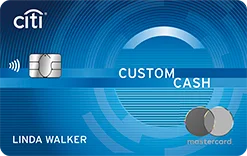
Citi Custom Cash® Card
Automatic 5% on your top eligible spend category each billing cycle up to $500
- Rewards
- 5% cash back on purchases in your top eligible spend category each billing cycle on up to $500 spent, then 1% thereafter; 1% on all other purchases under current Citi terms; $0 annual fee.
- Annual fee
- $0
Pros
- No quarterly activation — top category is automatic each cycle.
- Strong when one category dominates monthly spend (gas, groceries, dining, etc.).
- Simple $500-per-cycle cap is easy to model.
Cons
- $500 monthly cap on 5% earn can bite heavy category spenders.
- 3% foreign transaction fee.
- Does not include Chase Travel 5% or permanent 3% dining/drugstores lanes.
Issuer terms are authoritative. Card links may point to issuer pages or approved partners when available.

- Rewards
- 5% on Chase Travel and quarterly rotating categories (activation required), 3% on dining and drugstores, 1% elsewhere; $0 annual fee.
- Annual fee
- $0
Pros
- 3% on dining and drugstores every month — not subject to Custom Cash's top-category rule.
- 5% quarters can exceed Custom Cash's $500 cycle cap when spend is high.
- Pools into Chase Ultimate Rewards with eligible Sapphire cards.
Cons
- Requires quarterly activation and shares Freedom-family caps.
- 1% base rate outside bonus lanes.
- 3% foreign transaction fee.
Issuer terms are authoritative. Card links may point to issuer pages or approved partners when available.

- Rewards
- 5% on Chase Travel, 3% on dining and drugstores, 1.5% on all other purchases; $0 annual fee.
- Annual fee
- $0
Pros
- Honest third option when neither 5% structure fits.
- Higher 1.5% base than Flex's 1%.
- Same issuer stack as Freedom Flex.
Cons
- No automatic or rotating 5% outside Chase Travel.
- 3% foreign transaction fee.
- Another card if Custom Cash already covers your top category.
Issuer terms are authoritative. Card links may point to issuer pages or approved partners when available.
Citi Custom Cash and Chase Freedom Flex both advertise 5% Cash Back, but the mechanics differ: Custom Cash auto-applies 5% to your top eligible category each billing cycle (up to $500), while Freedom Flex uses quarterly rotating categories you must activate, plus 3% on Dining and drugstores.
Is Citi Custom Cash or Chase Freedom Flex better?
Citi Custom Cash is better when one category dominates each month and stays under the $500 5% cap without calendar guesswork. Chase Freedom Flex is better when quarterly 5% categories match large purchases, you want 3% Dining and drugstores every month, or you plan to pair with Chase Sapphire for transfers.
Among Madeen’s 3,944 catalog cards (snapshot 2026-06-01), these two are frequent starter-card comparisons — see category caps before you treat 5% as unlimited.
Citi Custom Cash vs Chase Freedom Flex comparison table
| Card | 5% structure | Dining / drugstores | Cap mechanics | Annual fee | Best for |
|---|---|---|---|---|---|
| Citi Custom Cash | Auto top category / cycle | 1% unless top category | $500/cycle at 5% | $0 | Concentrated monthly category spend |
| Chase Freedom Flex | Quarterly activation | 3% permanent | Quarterly Freedom cap | $0 | Chase ecosystem + Dining/drugstores |
| Chase Freedom Unlimited | No rotating 5% | 3% permanent | N/A | $0 | Simple Chase catch-all |
Programmatic compare: /compare/citi-customcash-vs-chase-freedomflex/.
Who should pick Citi Custom Cash?
Pick Custom Cash when your spend clusters — a heavy gas month, Grocery month, or Dining month — and you will stay under $500 in that top category per cycle.
Who should pick Chase Freedom Flex?
Pick Freedom Flex when Chase quarters line up with back-to-school, holiday, or gas seasons, or when 3% Dining and drugstores matters more than Custom Cash’s automatic 5% on a single lane.
Cluster links: Freedom Flex vs Freedom Unlimited · which credit card for dining.
How Madeen helps
These cards reward different spend shapes. Madeen compares effective rates on cards you already carry — no bank login. Try Madeen on iPhone.
Related encyclopedia topics
Frequently asked questions
Is Citi Custom Cash or Chase Freedom Flex better?
Citi Custom Cash is better when one eligible category dominates each month and stays under the $500 5% cap. Chase Freedom Flex is better when quarterly 5% calendars align with big purchases or you want permanent 3% on dining and drugstores.
Does Custom Cash require activation?
No. Citi applies 5% to your top eligible category automatically each billing cycle. Chase Freedom Flex requires activating each quarterly 5% category.
Which card has the higher cap?
Freedom Flex quarterly 5% caps are typically higher in total than Custom Cash's $500-per-cycle limit, but only when the quarter matches your spend. Model your own numbers before picking.
Can I hold both cards?
Yes. Many optimizers use Custom Cash for a concentrated monthly category and Freedom Flex when Chase quarters overlap. Madeen picks the higher effective rate among owned cards at checkout.
How does Freedom Unlimited fit?
See [Chase Freedom Flex vs Freedom Unlimited](/blog/chase-freedom-flex-vs-freedom-unlimited/) for the sibling comparison inside Chase.
Sources and notes
- Issuer terms Citi Custom Cash Card
- Issuer terms Chase Freedom Flex
- Issuer terms Chase Freedom Unlimited
- Madeen analysis Madeen category-cap reference - Madeen